
How to Wash Hair After Oiling: Get the Oil Out in One or Two Washes
How do you wash hair after oiling?
How to wash hair after oiling: put a coin-sized amount of shampoo straight onto the oiled scalp before adding much water, massage it for a minute, add a little water to build a lather, rinse with lukewarm water, and repeat with a smaller amount if the roots still feel coated. A heavy or overnight oiling usually needs two quick rounds.
Baalon se tel kaise nikalen? Pehle shampoo ko tel lagi sookhi scalp par lagayein, thoda paani milakar jhaag banayein, phir gunguna paani se achhe se dho lein. Zaroorat ho to kam shampoo se doosri baar dohrayein.
The rest of this guide explains why that order works, how it differs from the usual wet-first wash, how warm the water should be, what to do when you have no shampoo, and how to read greasy roots afterwards. It is general household advice from a family workshop, not medical advice.
Key takeaways
- Oil and water do not mix, so water alone cannot wash oil out. A shampoo’s cleansing molecules grab the oil so that water can carry it away.
- Shampoo the scalp and let the suds run down the lengths. Dermatologists advise against rubbing shampoo into the length of the hair.
- Putting shampoo on dry, oiled hair first is a practical technique, not a dermatology rule. If you prefer to wet first, expect to need two rounds.
- Use lukewarm to warm water. Hot water dries skin, and cold water leaves oils such as coconut oil firm and hard to shift.
- A light oiling can come out in one wash. A heavy or overnight oiling usually takes two short rounds with less shampoo each time.
- Greasy roots after a wash usually mean too little massage, a rushed rinse or mineral film from hard water, not a failed shampoo.
Why can’t you wash oil out of hair with plain water?
Because oil and water repel each other. Chemistry LibreTexts explains that water cannot remove oil because the two are of opposite polarity, and that soap-type cleansers work as a bridge: one end of each molecule dissolves into the oil while the other end faces the water, so the oil breaks into tiny droplets that stay suspended and rinse away.
Shampoo, and traditional plant cleansers such as reetha and shikakai, work on the same principle, which is why a long rinse under the tap leaves oily hair oily. The cleanser has to touch the oil, spread through it and then be rinsed out. Everything else in this guide is about making that happen with the least shampoo and the least effort.
Shampoo on dry oiled hair first, or wet your hair first?
For hair that is properly oiled, putting shampoo on the dry scalp first is the technique many people find needs less shampoo and fewer rounds, because the cleanser reaches the oil directly instead of meeting it through water. For hair that is only lightly oiled, wetting first is fine. No dermatology body prescribes either, so regard this as practical know-how and judge by your own result.
The American Academy of Dermatology’s shampooing steps (written for parents teaching children, but general in nature) start by wetting hair and scalp with warm water, which is the right order for ordinary hair. Oiled hair is the exception, because the oil you are trying to remove is the thing keeping the water off.
| Shampoo on dry hair first | Wet hair first | |
|---|---|---|
| How it goes | Shampoo on the oiled scalp, massage, then add a little water to lather | Wet hair fully, then shampoo and lather |
| Suits | Heavy, overnight or thick oiling; long or thick hair | Light oiling of 30 to 60 minutes; short or fine hair |
| Feels like | Thin and slippery at first, then lathers once water is added | Lathers quickly but may feel as if nothing is happening |
| Rounds usually needed | One or two | Two |
| Watch for | Using too much shampoo because it feels thin | Water beading on the oil and running off before the shampoo reaches the scalp |
How to wash hair after oiling, step by step
This is the dry-first method for a normal weekly oiling. If you have just done an overnight oiling, the same steps apply, with a second round almost certain.
- Prepare the water. Fill a bucket with comfortably warm water and test it on the inside of your wrist, or set the shower to lukewarm. Keep your hair dry for now.
- Measure the shampoo. Use about a coin-sized amount for shoulder-length hair. A bigger blob does not clean more; it only takes longer to rinse.
- Apply to the scalp. Rub the shampoo between your palms, then work it into the oiled scalp in sections with your fingertips, not your nails. Massage for about a minute. It will feel thin and slippery, which is normal.
- Add water slowly. Pour a mug of lukewarm water over your head and keep massaging. The lather builds as the shampoo takes up the oil.
- Let the suds run down. The American Academy of Dermatology advises massaging shampoo into the scalp and letting it flow through the length of the hair, rather than rubbing it into the lengths. Squeeze the suds gently down the lengths and ends.
- Rinse thoroughly with lukewarm water, running your fingers through each section until the water runs clear and the hair no longer feels slippery. Check the hairline and behind the ears.
- Check the roots. Press a dry finger to your scalp. If it feels slick, do a second round: wet hair, a smaller amount of shampoo, a one-minute massage, rinse.
- Dry gently. Wrap your hair in a towel instead of rubbing it, as the AAD advises, and comb with a wide-tooth comb: straight hair after it has dried a little, curly or textured hair while still damp, which is the AAD’s advice.
- Rinse the bathroom floor. Oil makes tiles slippery.
How many times should you shampoo after oiling?
Usually twice, in two short rounds. One round can be enough after a light oiling (a teaspoon or two for 30 to 60 minutes) if you shampoo the dry scalp first, but heavy, thick or overnight oiling nearly always needs a second, smaller wash.
The second round is not a repeat of the first. Use less shampoo (half the first amount is plenty), because most of the oil is already gone and the second lather mostly catches what the first left behind. Our own weekly champi guide says the same: you may need two gentle lathers. If your hair feels squeaky-clean at the roots after the first round, skip the second.
What temperature should the water be?
Lukewarm to warm, around comfortable body heat or slightly above. Cleveland Clinic’s dermatologist puts the ideal shower temperature at lukewarm to warm, around 100 °F (about 38 °C), and notes that anything hotter can leave skin dry or irritated. The AAD’s shampooing steps likewise use warm water.
Cold water has its own problem with oiled hair. Oils such as coconut oil firm up in cool conditions, so a cold-water wash on a winter morning can leave a waxy film that shampoo then has to fight. If you wash with a bucket in winter, mix it warm, and finish with a slightly cooler mug if you like.
Do you need conditioner after washing oil out?
Not necessarily. A 2022 review of Indian hair oils in the International Journal of Trichology says the primary function of most hair oils is to act as an emollient, a softening coat, so freshly oiled hair rarely needs more softening. The AAD advises conditioner after every shampoo, and if your ends feel dry or tangled, a small amount on the lengths and ends is enough.
Keep conditioner off the scalp if you are trying to get rid of oil there. If you did a full overnight oiling and two rounds of shampoo, you may well choose to skip it.
How do you remove oil from hair without shampoo?
You need something that works like a cleanser, and a traditional herbal wash is the real alternative. Powders that only soak up oil are a stopgap, and plain water does little. Here is how the options compare.
| Option | How it works | How to use it | Honest limits |
|---|---|---|---|
| Reetha and shikakai wash (often with amla) | Traditional plant-based cleansers that foam softly in water | Mix the powders with warm water into a thin paste or strained liquid and wash as you would with shampoo | Low, soft lather; can sting if it enters the eyes; a heavy oiling may need two passes; make it fresh |
| Besan (gram flour) paste | A traditional kitchen cleanser rubbed on and rinsed off | Mix with water or curd to a thin paste, massage in, rinse well | Gritty and messy; we would keep it for a light oiling |
| Dry shampoo or powder | Particles soak up oil | Sprinkle on the oily roots and brush out | The AAD says dry shampoo absorbs oil but does not clean hair, so it is only a stopgap |
| Plain warm water only | Rinses loose dirt | Long rinse with fingers | Does not lift oil; oil and water do not mix |
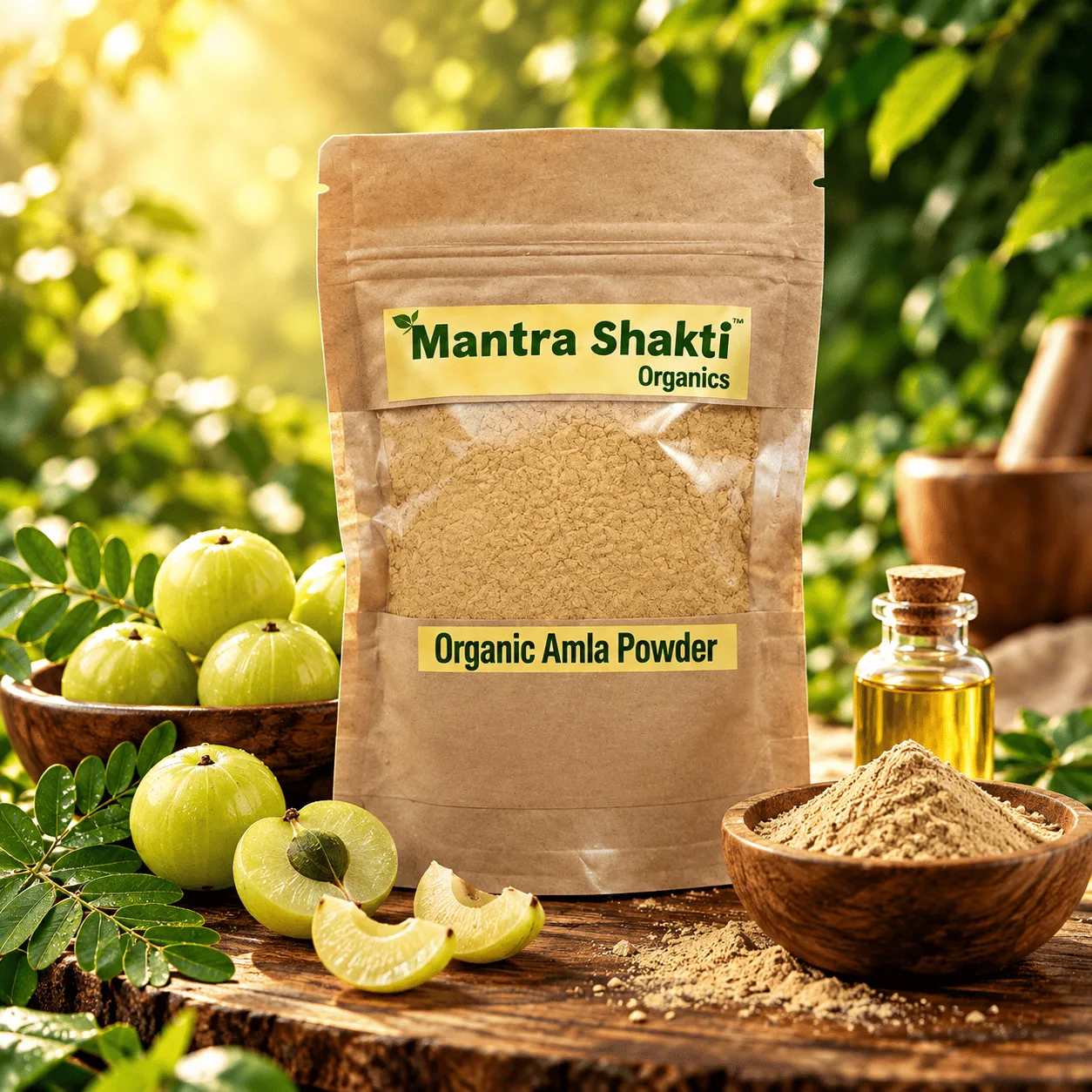
The honest summary is that for a real oiling, a cleanser (shampoo, or a traditional herbal wash) is what does the work. If you are away from your usual shampoo, a herbal wash is a reasonable fallback. Our Amla Powder (100 g, ₹280) is the usual third ingredient in that wash. As with any new paste, patch-test behind your ear first and keep it out of your eyes.
Why is my hair still greasy after washing out the oil?
Usually the shampoo never properly met the oil, or the rinse was too short. Look at where and how the hair feels, and the cause is usually easy to read.
| What you notice | Most likely reason | What to do |
|---|---|---|
| Slick, flat roots once dry | The shampoo was not massaged into the scalp, or too little was used for the amount of oil | Second round with a smaller amount and a full minute of scalp massage |
| Sticky or waxy ends | Too much oil on the lengths; the suds flowed past without enough contact | Squeeze suds through the ends, rinse longer, and use less oil next time |
| Dull, coated, heavy but not oily to touch | Mineral film from hard water or product build-up, which feels like oil | Rinse for longer and finish with softer water; see our hard-water washing routine |
| Waxy in winter | Cold water set the oil | Wash again with warmer water |
| Oily again by the next evening | Your scalp’s own oil returning, which is normal | Not a failed wash. The AAD says to wash according to how quickly your scalp gets oily |
How do you wash out oil that was left in overnight?
Wash it first thing in the morning with the dry-first method, using a little less shampoo than you think you need on the first round and expecting a second round. An overnight oiling has had more time to spread, so be patient with the rinse.
- Comb out the lengths gently before you start, to separate the oil-matted sections.
- Massage the first round into the scalp for a full minute or two before adding water.
- Rinse in the order scalp, lengths, ends, then check the nape of your neck, where oil collects.
- Do not wait until the evening. Oil that stays on through the day collects dust and sweat.
Common mistakes when washing oil out
- Pouring on more shampoo for one big wash. Two small rounds beat one big blob.
- Scrubbing the lengths. The AAD’s page on hair-care habits that can damage hair advises massaging shampoo into the scalp and resisting the urge to rub it into the hair. Let the suds do the rest.
- Using very hot water. It dries the skin, and warm water already thins most oils, so it adds little.
- Using cold water in winter. Coconut oil and similar oils set and cling.
- Stopping at the first lather. If the roots still feel slick, the first round did not finish the job.
- Rinsing in a hurry. A rushed rinse leaves shampoo and oil behind and looks like greasy hair.
- Mixing cleaning tricks. Add one thing at a time, and skip any rinse that stings or itches.
- Rubbing hair dry with a towel. Wrap it instead.
If your scalp itches, burns, flakes or feels sore after oiling or washing, stop using what you changed and ask a doctor, since a shampoo or an oil cannot answer that question.
How we make our shampoo and oil
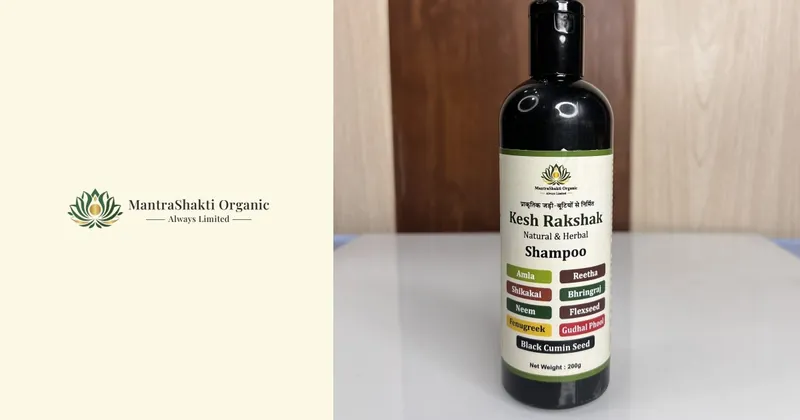
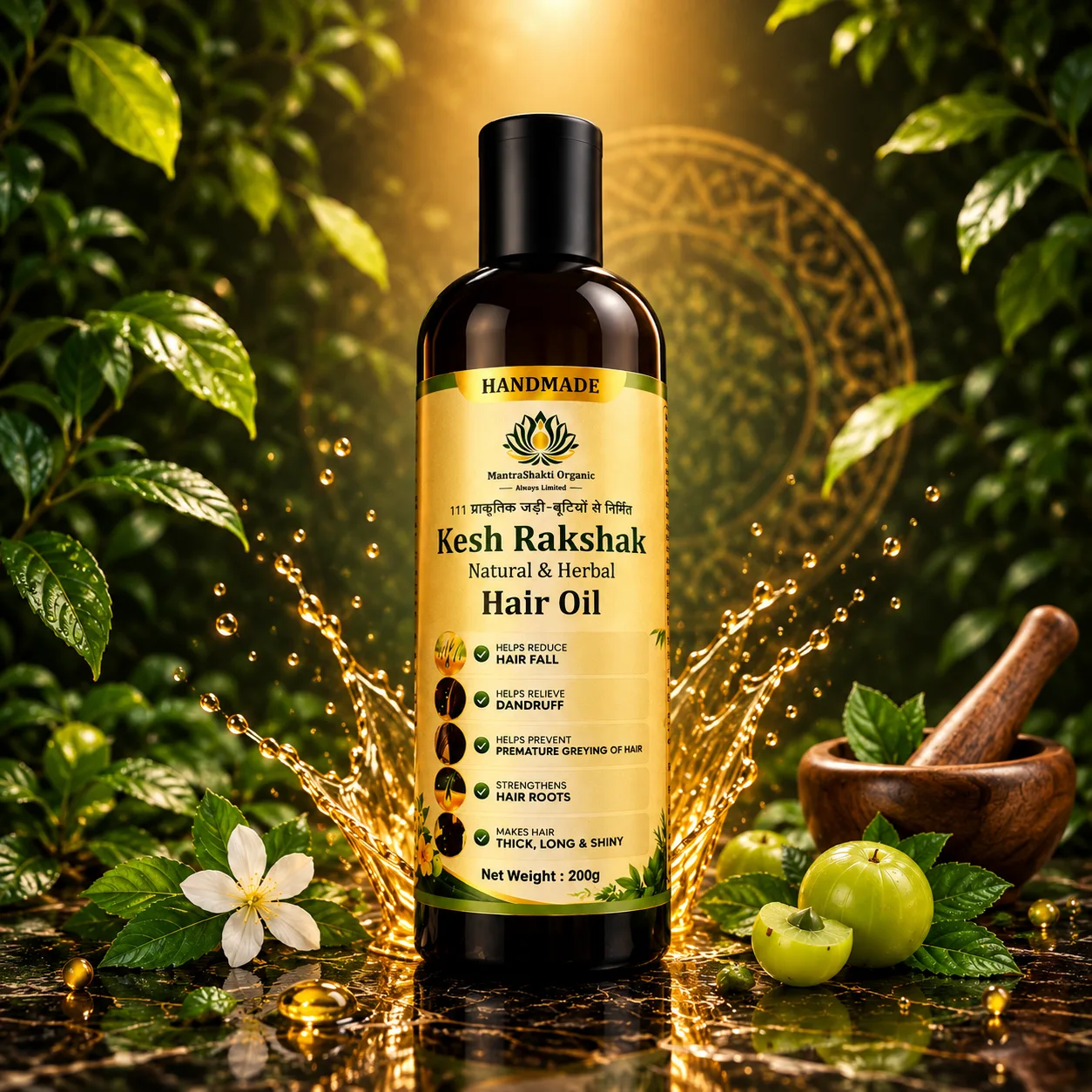
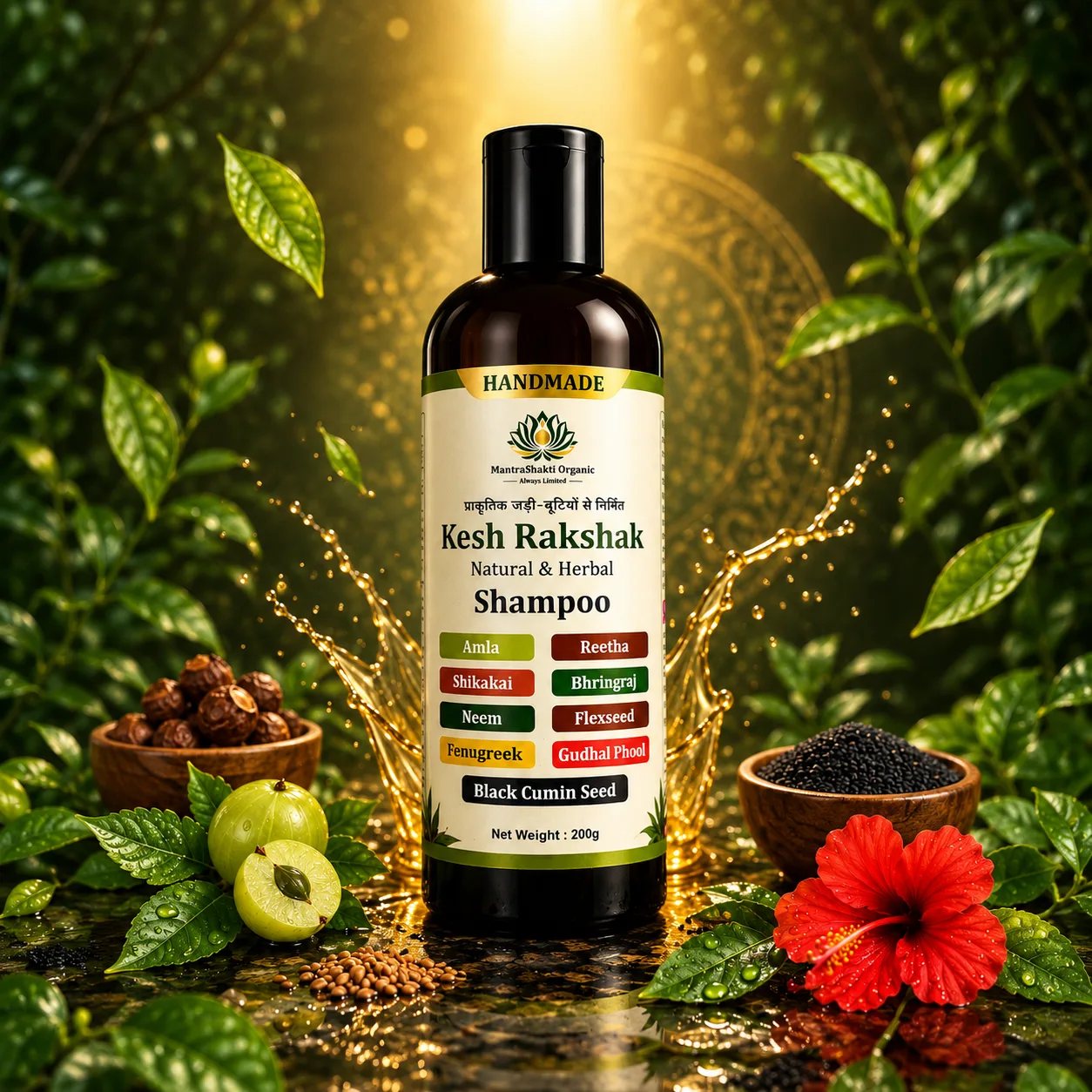
If you oil weekly, our Kesh Rakshak Hair Oil (200 g, ₹480) is a hand-infused herbal oil that names Bhringraj, Brahmi, Amla and Jatamansi, and our Kesh Rakshak Herbal Shampoo (200 g, ₹335) is a herbal shampoo that names nine herbs: Amla, Reetha, Shikakai, Bhringraj, Neem, Flaxseed, Fenugreek, Gudhal (hibiscus) and Black cumin seed. Both are made in small batches at our Chinhat workshop in Lucknow. Our weekly champi guide covers the oil step. The full range is in Hair Care.
Frequently asked questions
How do you wash oil out of your hair properly?
Put a coin-sized amount of shampoo on the oiled scalp before adding much water, massage for a minute, then add a little lukewarm water to build a lather. Let the suds run down the lengths, rinse until the water runs clear, and do a second, smaller round if the roots still feel slick.
How many times should you shampoo after oiling?
Usually twice, in two short rounds. One round can be enough after a light oiling, but heavy, thick or overnight oiling nearly always needs a second wash with about half the shampoo. If your roots feel squeaky-clean after the first round, skip the second.
Should shampoo go on dry or wet hair when it is oiled?
For a properly oiled head, dry first usually works well, because the shampoo meets the oil directly rather than through water, which beads off the oil. No dermatology body prescribes it, so it is practical advice. For a light oiling, wetting first is fine; just expect two rounds.
How can you remove oil from hair without shampoo?
A traditional reetha and shikakai wash is the real alternative, because both are plant cleansers that foam softly in water. Besan paste can handle a light oiling but is gritty. Dry shampoo only absorbs oil and does not clean, per the American Academy of Dermatology, and plain water does little. Patch-test first and keep herbal washes out of your eyes.
Why is my hair still greasy after washing out the oil?
Usually the shampoo was not massaged into the scalp, too little was used, or the rinse was rushed. Mineral film from hard water can also feel like oil, and cold water can leave oils such as coconut oil waxy. Do a second, smaller round with a full minute of scalp massage and rinse for longer.
How do I wash out oil that was left in overnight?
Wash it first thing in the morning with the dry-first method. Comb out the lengths, massage a little shampoo into the dry scalp for a minute or two, add lukewarm water to lather, rinse thoroughly and plan on a second, smaller round. Do not leave it until the evening.
Does warm water help, and how warm?
Yes. Use lukewarm to warm water, around comfortable body heat. Cleveland Clinic's dermatologist gives about 100 degrees Fahrenheit (38 degrees Celsius) as the ideal for showers and says hotter water can dry and irritate skin. Cold water can leave oils such as coconut oil waxy and harder to rinse.
How do I get all the oil out in one wash?
Use less oil for a shorter time, put the shampoo on the dry oiled scalp first, massage it for a full minute, then add water and rinse thoroughly. That can work after a light oiling. After a heavy or overnight oiling, two small rounds are more reliable than one big one.
Sources and further reading
- Chemistry LibreTexts: 14.8 Cleaning with Soap — why water alone cannot remove oil and how cleansing molecules bridge oil and water
- American Academy of Dermatology: 10 hair care habits that can damage your hair — massaging shampoo into the scalp, not rubbing it into the lengths; towel wrapping; conditioner
- American Academy of Dermatology: Teaching your child hair care habits — the basic shampooing steps with warm water
- American Academy of Dermatology: Dry shampoo, dermatologists' tips — why dry shampoo absorbs oil but does not clean hair
- Cleveland Clinic Newsroom: Temp Check, Are Your Showers Too Hot? — the ideal lukewarm-to-warm shower temperature of about 100 degrees Fahrenheit
- International Journal of Trichology (2022): Hair Oils: Indigenous Knowledge Revisited — hair oils as emollients and the usual weekly oiling before shampooing
Written by the MantraShakti Organic workshop team, Chinhat, Lucknow. We make by hand and we are not medical professionals; this guide is general household information, not medical advice.
Shop this guide
Made by hand in small batches in Lucknow.
More from the Journal
23 Oct 2026 · 13 min
How Long to Keep Oil in Hair Before Washing: 30 Minutes to Overnight
Read more →