How to Apply Hair Oil Properly: Champi Kaise Kare, Step by Step
How to apply hair oil properly: the short answer
To apply hair oil properly, warm 2 to 3 teaspoons (for shoulder-length hair) until comfortably warm on your inner wrist. Part dry, detangled hair into sections, massage the oil into the scalp with your finger pads for 5 to 10 minutes, smooth the rest down the lengths and tie your hair up loosely.
Key takeaways
- Start with 2 to 3 teaspoons for shoulder-length hair (about 1 for short hair, 4 to 6 for waist-length) and add more only if needed.
- Warm the oil in a small bowl standing in hot water, never in a closed bottle in a microwave. On your inner wrist it should feel like pleasant bath water.
- Use finger pads, never nails, and press just firmly enough to move the scalp over the bone. Five to ten minutes covers the whole head.
- Oil the scalp first, along each parting, then smooth what is left down the lengths.
- Tie your hair up loosely; the American Academy of Dermatology advises wearing hair loosely pulled back.
- Patch-test any new oil, and skip the massage if your scalp is sore, broken or reacting.
That routine is champi, the weekly Indian head massage with oil. Below you will find how much oil your hair length needs, how to warm it safely, what to do with your fingers and which mistakes to avoid. It is general household information, not medical advice.
What is champi, and what else is it called?
Champi is the Indian practice of massaging oil into the scalp and hair with the fingers, usually warmed and usually once a week. Families also call it maalish (massage), tel maalish (oil massage), sir ki champi (head champi) or tel lagana (putting on oil); a head massage with hair oil, by any name, is the same idea.
Champi is related to the Hindi verb champna, to press or knead, which is also where English got shampoo. AramcoWorld tells how Sake Dean Mahomed, born in Patna, sold “shampooing”, a massage, at his Brighton bathhouse, and notes that only later did shampoo come to mean washing hair.
A 2022 review of Indian hair oils in the International Journal of Trichology describes the usual routine as combing, then oiling from roots to tips, often once a week before shampooing. In many homes that is a Sunday ritual, the one morning with no rush; other families keep other days, and none is a rule.
The same review says the main job of most hair oils is to act as an emollient, a softening coat, and cautions that the science is limited and that exaggerated claims are made. So this guide promises nothing about what oil does to hair itself. It covers technique, and what people enjoy: unhurried minutes, and hair that feels soft and looks glossy after the wash.
What do you need before you start?
You need two bowls, a wide-tooth comb, an old towel and about 25 minutes.
- A small steel katori with the oil (pour out only what you need, so oily fingers stay out of the bottle) and a larger bowl of hot water to stand it in.
- A clean, dry wide-tooth comb and four hair clips or soft bands.
- An old towel for your shoulders, and a folded cloth to tuck along the hairline if oil runs towards your eyes.
- A thin cotton scarf or dupatta for afterwards, and a chair or stool on a dry mat, because oil on tiles is slippery.
How much hair oil should you use for your hair length?
Start with 2 to 3 teaspoons (10 to 15 ml) for shoulder-length hair and scale from there; a teaspoon is 5 ml. These are starting points from everyday practice, not a standard: thick or very dry hair may want a little more, fine hair a little less.
| Hair length | Start with | Where most of it goes |
|---|---|---|
| Cropped or very short | Half to 1 teaspoon (2.5 to 5 ml) | The scalp, with almost none on the lengths |
| Ear to chin length | 1 to 2 teaspoons (5 to 10 ml) | The scalp, then a light hand over the lengths |
| Shoulder-length | 2 to 3 teaspoons (10 to 15 ml) | The scalp first, then the lengths |
| Mid-back | 3 to 4 teaspoons (15 to 20 ml) | Split between scalp and lengths |
| Waist-length or very thick | 4 to 6 teaspoons (20 to 30 ml) | The scalp, section by section; the rest through the lengths in sections |
Add oil a few drops at a time. The right amount leaves the scalp coated rather than wet and the lengths glossy rather than dripping. If a drop runs down your neck when you tilt your head, blot it and use less next time.
How do you warm hair oil safely?
Pour what you need into a small bowl, stand it in a larger bowl of hot (not boiling) water for 2 to 3 minutes, and test a drop on your inner wrist before it goes near your scalp. It should feel pleasantly warm, like bath water, not hot like tea. Use the wrist rather than a fingertip, whose skin is tougher and tolerates more heat, and test again whenever you reload your fingers, because the oil cools as you work. Warming is a comfort step, not a requirement: it helps oil flow and feels good on a cold morning.
| Method | What happens | Our advice |
|---|---|---|
| Small bowl standing in hot water | The oil warms gently and cannot get hotter than the water | Use this |
| Open bowl in a microwave | Heats unevenly, so a scalding pocket can sit beside warm oil | Avoid; if you must, use very short bursts, then stir and test |
| Closed bottle in a microwave | Uneven heat, plastic that can warp, and a sealed bottle with nowhere for expanding air to go | Never |
| Pan on a flame or stove | The oil overheats quickly, can burn skin and can catch fire if left | Never |
If hot oil lands on your skin, hold the area under cool running water for 20 minutes, as the NHS advises for burns and scalds, and do not put creams, oils or butter on it. Get medical help for a burn that is large, deep or on your face. In India, call 112 or go to the nearest hospital.
How to do champi: the hair oiling steps, one by one
Do champi on dry, tangle-free hair, one section at a time, in the order below. The whole routine takes about 25 minutes, of which 5 to 10 are the massage itself. These times and the quantities above are everyday rules of thumb, not research findings, so adjust them to your hair and comfort.
- Detangle. Comb dry hair gently with the wide-tooth comb, from the ends up, before your hands are oily. The American Academy of Dermatology advises removing tangles gently.
- Set up. Wash your hands, drape the towel over your shoulders, tuck the folded cloth along your hairline if you need it and sit with your back supported. Warm the oil and check it on your wrist.
- Section the hair. Part it down the middle from forehead to nape, then from ear to ear over the crown, to make four sections, and clip three away. For short hair, work in rows from front to back.
- Oil the scalp, parting by parting. In the open section, part the hair with a fingertip, dip two or three fingertips in the oil and draw a line along the scalp. Move a finger-width over and repeat until the section is done, then clip it up and open the next. A nozzle bottle, a dropper or a cotton ball also works.
- Massage the scalp. Release the clips and massage for 5 to 10 minutes, using the movements below.
- Do the lengths. Rub what is left of the oil between your palms and smooth it down the mid-lengths and ends, squeezing gently. Do not rub strands against each other in circles, which knots them.
- Comb through with the wide-tooth comb, from the ends upwards, to spread the oil evenly and ease out tangles before you wash.
- Tie up loosely, wipe any drips from the floor and wash your hands.
What is the right hair oil massage technique?
The right technique is to press with the pads of your fingers, never your nails, firmly enough that the scalp moves over the bone beneath, and to make slow circles about the size of a one-rupee coin. Think pressing and kneading, not scrubbing: that is what champna means.
| Movement | How to do it | Where | About |
|---|---|---|---|
| Press and circle | Lay the pads of three or four fingers flat, press until the scalp moves with them, make 5 or 6 slow circles, lift, shift a finger-width and repeat | Start at the crown and work outward to the sides and hairline | 3 to 5 minutes |
| Scalp shift | Spread your fingers wide, press, and move the scalp about a centimetre forward, then back, over the skull rather than sliding over the skin | Crown and sides | 1 to 2 minutes |
| Temples | Two fingers, very light pressure, small slow circles | Temples and just above the ears | 30 seconds |
| Nape | Thumbs on either side of the spine, press up and inwards, then circle slowly | Base of the skull and back of the neck | 1 minute |
How hard should you press? Hard enough to move the scalp, never hard enough to hurt. A 2012 letter in the International Journal of Trichology notes that head massage with herbal oils is common in India and involves vigorous rubbing, and warns that vigorous rubbing may make a sensitive scalp worse in some people. If you notice prickling, burning or tingling, stop and wash the oil off.
In what order, and for how long? Crown first, then outward, then temples and nape, so no patch is missed. The order is a convention, not a rule. Five to ten minutes covers the whole head; stop sooner if your hands tire. Avoid nails, scrubbing, tugging the hair, and pressing on cuts, sores or any spot that hurts.
Can you do a scalp massage with oil at home by yourself?
Yes. Sit at a table with your elbows resting on it or on a cushion so your arms are not held in the air, keep your wrists straight, use a mirror the first time, and rest when your forearms tire. The back of the head and nape are the hardest places to reach alone, so do them while your arms are fresh, or ask someone to help. If someone else oils your hair, tell them whether to press more or less.
Should the oil go on the scalp, the lengths, or both?
For champi, put oil on the scalp first, because that is where the massage happens, and then smooth what is left over the lengths. The split depends on how quickly your scalp turns oily and how your ends feel; the ends are the oldest part of the hair, so they often feel the driest.
| Your hair | On the scalp | On the lengths and ends |
|---|---|---|
| Scalp turns oily within a day of washing | Light: a thin line along each parting | Most of the oil, from ear level down |
| Scalp or ends feel dry | A line along every parting, full massage | A little extra on the ends |
| Short hair or a crop | All of the oil | Almost none |
| Long or thick hair | Every parting, section by section | Smoothed through in sections, then a loose braid |
| Curly, wavy or coily hair | Partings made with fingertips, then a gentle press and circle | Smoothed down in small sections; do not scrub |
| Fine hair that looks flat quickly | Half the usual amount | Ends only |
How should you tie your hair up after oiling?
Tie it loosely: a soft low bun, a loose braid or a twist held with a soft band, never a tight ponytail. The American Academy of Dermatology lists pulling hair back tightly among the hair care habits to avoid. Cover your hair with a thin cotton scarf or dupatta if you will be around dust, a kitchen or furniture, and skip the plastic shower cap, which traps heat and sweat.
Champi kaise kare? Tel lagane ka sahi tarika
Baalon mein tel kaise lagaye, iska jawab chhota hai. Pehle sookhe baalon ko wide-tooth comb se halke haath se suljha lein. Tel ko ek chhoti katori mein nikaal kar garam paani ke bartan mein 2 se 3 minute rakhein, phir tel ki ek boond kalai ke andar lagakar dekhein: tel gunguna hona chahiye, garam nahi. Baalon ko 4 hisson mein baantein aur har parting par ungliyon se tel lagayein. Phir ungliyon ke sire (finger pads) se, nakhun se nahi, chhote gol chakkar mein 5 se 10 minute maalish karein. Bacha hua tel baalon ki lambai par haath se phira dein, comb karein aur dheela joora ya choti bana lein.
In English: detangle dry hair, warm the oil until it is only comfortably warm, oil the scalp in four sections, massage with finger pads for 5 to 10 minutes, smooth the rest down the lengths, comb gently and tie loosely.
What are the common mistakes when oiling hair?
- Using too much. More oil does not spread further; it drips, stains and makes the wash harder.
- Oil that is too hot, or a closed bottle in the microwave. Use a bowl in hot water and test on your wrist.
- Nails, hard pressing or vigorous rubbing. Use finger pads and moderate pressure.
- Rubbing the lengths in circles. Circles belong on the scalp; on the lengths, smooth downwards.
- Oiling tangled or dripping-wet hair. Oil and water do not mix, so oil does not spread evenly on wet hair. Detangle dry hair first.
- Tying the hair tight afterwards. Keep it loose.
- Letting oil run into your eyes. Tuck a folded cloth along the hairline. If oil gets into an eye, rinse with clean water and see a doctor if the stinging does not stop.
- Skipping the patch test with a new oil.
- Forgetting the floor. Wipe drips before you walk; oily feet slip on tiles.
Who should skip champi, and do you need a patch test first?
Skip the massage, wash the oil off and ask a doctor if your scalp is sore, red, itchy or flaking, has cuts or sores, or if the oil stings, tingles or burns. If you have a skin condition or an allergy, are pregnant, or take medication, ask a doctor before starting any new hair oil, and check the ingredient list on the pack against your allergies. This guide is written for adults; for babies and children, ask a paediatrician.
Yes, patch-test any new oil first. The 2012 letter notes that herbal oils can cause contact dermatitis, an irritated or allergic skin reaction, in some people. The American Academy of Dermatology’s method is to apply the product in your normal amount to a quarter-sized spot on the inner arm or the bend of the elbow, twice a day for 7 to 10 days. If the skin turns red, itchy or swollen, wash it off and do not use the product again. That is the thorough version; if you test for less time, regard a clear result as a partial answer. Swelling of the face or lips, or trouble breathing, is an emergency: call 112.
How long should the oil stay on, how do you wash it out, and how often?
Each of those questions deserves its own guide, and we cover them separately. In one line each: a common window for leaving the oil on is half an hour to a couple of hours; for washing, put shampoo on the oiled scalp first, add a little water, then rinse with lukewarm water; and once a week is the traditional rhythm.
How we make Kesh Rakshak Hair Oil
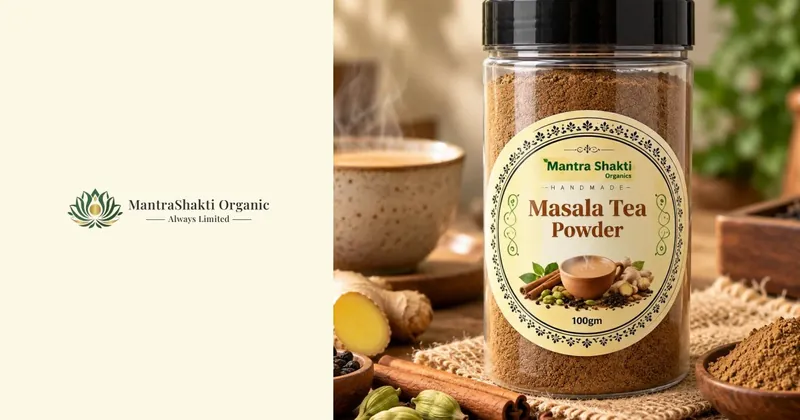
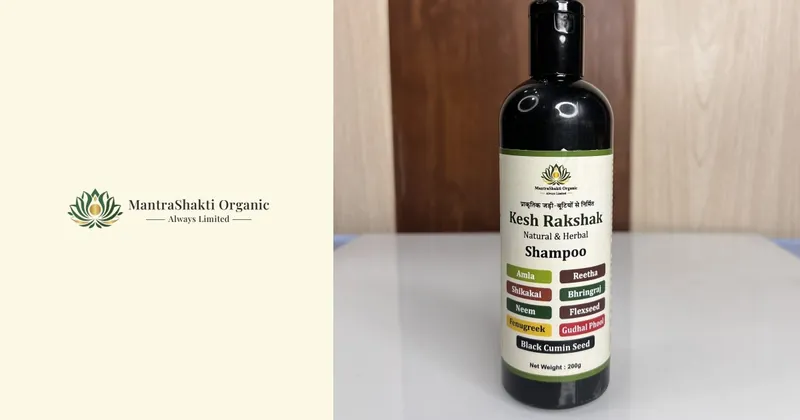
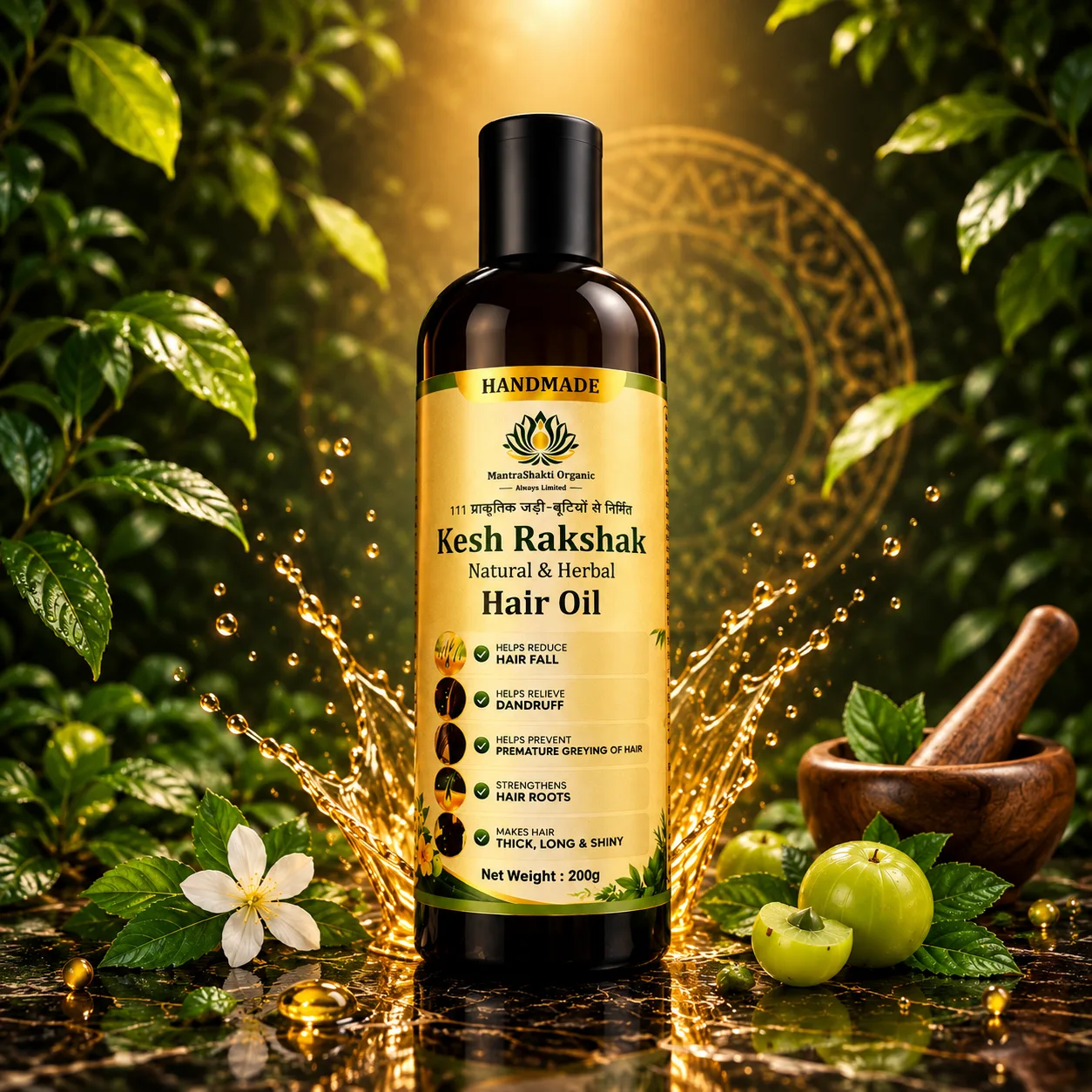
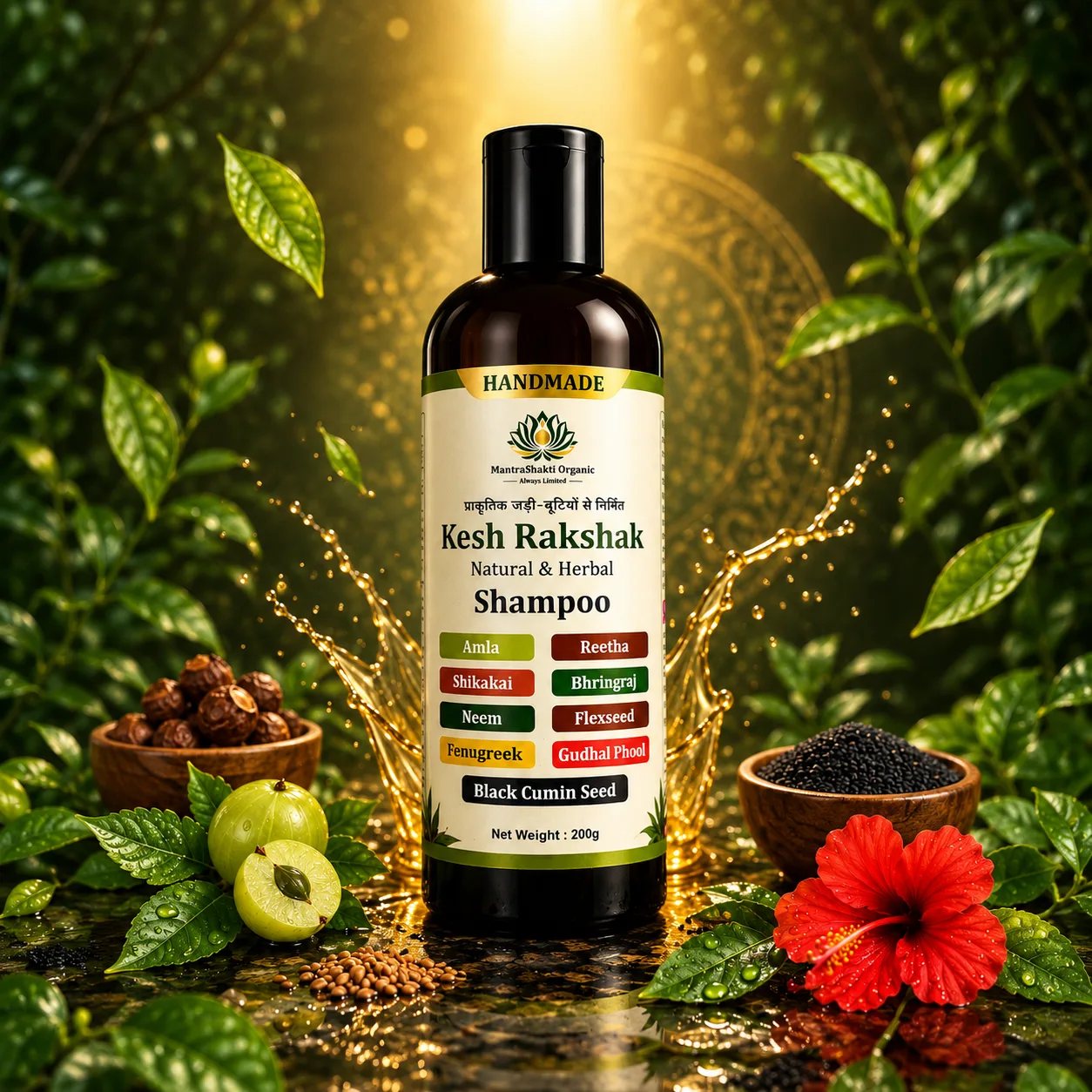
Kesh Rakshak Hair Oil with Bhringraj & Brahmi (200 g, ₹480) is a hand-infused herbal hair oil, made in small batches at our family workshop in Chinhat, Lucknow. The label names Bhringraj, Brahmi, Amla and Jatamansi, and we make it for exactly this weekly champi, to be washed out afterwards with a shampoo such as Kesh Rakshak Herbal Shampoo (200 g, ₹335), a herbal shampoo naming nine herbs. If your shampoo struggles to lather after oiling, our hard-water washing routine explains why. Amla, one of the herbs on the label, is covered in our amla season guide, and the rest of the range is in Kesh Rakshak hair care.
Frequently asked questions
How do you apply hair oil properly?
Warm 2 to 3 teaspoons of oil in a bowl set in hot water until pleasantly warm on your inner wrist. Part dry, detangled hair into four sections, draw a line of oil along each parting, and massage the scalp with finger pads for 5 to 10 minutes. Smooth the rest down the lengths, comb gently and tie loosely.
Champi kaise kare, aur tel lagane ka sahi tarika kya hai?
Sookhe, suljhe baalon par gunguna (garam nahi) tel lagayein. Baalon ko hisson mein baant kar har parting par tel lagayein, phir ungliyon ke sire se, nakhun se nahi, 5 se 10 minute gol chakkar mein maalish karein. Bacha tel lambai par phira dein, dheela joora bana lein. In English: warm oil, dry hair, sections, finger pads, loose tie.
How much hair oil should I use?
About 2 to 3 teaspoons (10 to 15 ml) for shoulder-length hair, 1 teaspoon or less for short hair and 4 to 6 teaspoons for waist-length or very thick hair. These are starting points, not a standard; add a few drops at a time.
Should I apply hair oil on wet or dry hair?
For a weekly champi, use dry, detangled hair: oil and water do not mix, so oil spreads more evenly and you can see where you have been. A few drops on towel-dried hair is a different, leave-in routine. Kesh Rakshak Hair Oil is made for the pre-wash champi, so we give no leave-in directions for it.
How warm should hair oil be, and can I microwave it?
Comfortably warm, like bath water, never hot; test a drop on your inner wrist. Warm it in a small bowl standing in hot water. Do not microwave a closed bottle: microwaves heat unevenly, you cannot stir oil inside a bottle, and a sealed bottle can build up pressure.
How hard, and for how long, should I massage the scalp with oil?
Firmly enough that the scalp moves over the bone, never hard enough to hurt, using finger pads in slow circles, for about 5 to 10 minutes over the whole head. A 2012 letter in the International Journal of Trichology says vigorous rubbing of herbal hair oil may aggravate a sensitive scalp, so stop if you feel tingling, prickling or burning.
Who should not do a hair oil massage?
Skip it and ask a doctor if your scalp is sore, red, itchy or flaking, has cuts or sores, or if the oil stings or burns. If you have a skin condition or an allergy, are pregnant or take medication, ask a doctor first. Patch-test any new oil, and keep this routine for adults.
Sources and further reading
- International Journal of Trichology (2022): Hair Oils: Indigenous Knowledge Revisited — the usual Indian routine, oils as emollients, and the caution about exaggerated claims
- International Journal of Trichology (2012): Sensitive Scalp — head massage with herbal oils in India, vigorous rubbing and contact dermatitis
- AramcoWorld (2018): The Shampooing Surgeon of Brighton — the Hindi word champna, to knead, and how shampoo came to mean washing hair
- American Academy of Dermatology: 10 hair care habits that can damage your hair — loosely pulled-back hair, and removing tangles gently
- American Academy of Dermatology: How to test skin care products — how to patch-test a product
- NHS: Burns and scalds — cooling a burn under running water for 20 minutes
Written by the MantraShakti Organic workshop team, Chinhat, Lucknow. We make by hand and we are not medical professionals; this guide is general household information, not medical advice.
Shop this guide
Made by hand in small batches in Lucknow.
More from the Journal