Amla Season in India: When to Buy It, How to Choose It, How to Keep It
When is amla in season in India?
Fresh amla is in season in India from roughly October to February, and it is at its best between October and January. Outside that window — through summer and the monsoon — what you find is stored, frozen or processed fruit rather than fruit off the tree. In the north, including here in Lucknow, the first lots reach the mandi around October and the supply thins out by late February.
The practical version is short: buy it in winter, buy firm fruit, store it cold. The rest of this guide is the detail behind that — a month-by-month table, how to spot amla that will brown in three days, and the storage methods we are willing to put our name to.
Amla availability in India, month by month
This is the pattern for northern India (Uttar Pradesh and the plains around it). The south runs a few weeks behind and can stretch later. Treat it as a buying calendar, not a guarantee — a hot October or an early cold snap moves the dates every year.
| Month | Fresh availability | Typical quality | Good for |
|---|---|---|---|
| January | Widely available | Firm, well-flavoured, still near peak | Eating fresh, juice, candy, murabba |
| February | Available, tapering off | Firm, at its most sour and astringent; tail of the season | Preserving, drying, juice |
| March | Scarce — mostly cold-stored stock | Softening, variable | Cooked uses, powder |
| April | Out of season | Dried, frozen or processed only | Powder, frozen pulp, supari |
| May | Out of season | Processed only | Powder, murabba from stored fruit |
| June | Out of season (monsoon sets in) | Processed only | Powder, juice |
| July | Out of season | Processed only | Powder |
| August | Out of season | Processed only | Powder |
| September | Mostly not yet; a little early fruit in some belts | Immature and small if present | Wait a few weeks if you can |
| October | Season opens — plentiful | Firm, bright, good | Everything: eating, candy, murabba |
| November | Peak — most plentiful and usually cheapest | Firm, uniform, best value of the year | Bulk buying and preserving |
| December | Plentiful | Firm, well-flavoured | Everything |
The one line to remember: November is the month to buy in quantity if you plan to preserve, and February is your last honest chance at fresh fruit.
What is amla, and who is this guide for?
Amla is the Indian gooseberry (Phyllanthus emblica), a small, round, pale-green sour fruit that grows across the Indian plains. This guide is for the home buyer — someone at a Lucknow sabzi mandi or a city grocery who wants to buy amla well, judge whether a lot is fresh, and keep it for a few weeks or a few months.
Most of India's amla comes from Uttar Pradesh, and within UP the Pratapgarh belt is the country's best-known growing zone. The fruit in front of you is likely a commercial variety such as Banarasi or Chakaiya, or one of the Narendra Aonla (NA) selections developed at the agricultural university in Ayodhya, such as NA-7 or Krishna. Banarasi tends to be larger and comes early; Chakaiya is smaller, firmer and more fibrous, and stores and dries well. You do not need to know the variety to buy well, but it explains why two lots on the same day can look and taste quite different.
Why is amla cheaper in winter?
Because that is when almost all of it is picked. The harvest runs from roughly mid-September through December, and supply peaks in October and November, so prices are lowest then and climb as the fresh fruit runs out. By March you are paying for cold storage; by summer, for processing. If you want value, buy at peak and store it yourself.
How do I pick good amla at the market?
Amla shows its age on the skin, so a quick inspection tells you most of what you need:
- Firmness. It should feel solid and heavy for its size. A little give is fine; soft or spongy fruit is already going.
- Skin. Smooth, faintly waxy, unbroken. Skip anything wrinkled, split or with soft brown patches.
- Colour. Pale translucent green to greenish-yellow, reasonably even across the lot. A dull, greyish cast usually means old stock.
- The natural lines. Amla has faint vertical segments; on fresh fruit they are shallow, while deep darkened grooves mean it has been sitting.
- Weight. A fresh amla is dense with juice. Very light fruit has dried out inside even if the skin still looks fine.
Buy loose over pre-bagged when you can — a sealed bag hides the two or three soft fruit that spoil the rest.
How to store amla so it actually lasts
There are three home methods we are comfortable recommending, because each is safe when you follow the stated condition and honest about its limit. We have deliberately left some popular methods off this list; there is a note on why below.
- Refrigerator, whole (2–3 weeks). Do not wash the fruit before storing — the skin is its barrier. Keep the amla whole and dry in a loosely closed container or perforated bag in the vegetable drawer; washing and then sealing airtight traps moisture and speeds up rot. Limit: this buys weeks, not months, and one soft fruit takes its neighbours with it, so check the box weekly.
- Freezer (up to about 6 months). Wash, dry thoroughly, deseed and cut into segments. Spread the pieces on a tray to freeze for an hour so they do not clump, then move them to a sealed freezer bag or box. Use straight from frozen; do not thaw and refreeze. Limit: the texture softens on thawing, so frozen amla is for cooking and blending, not eating raw and crisp.
- Sun-drying to slices or powder (months, dry storage). Steam or blanch the amla briefly until it segments, deseed, and dry the pieces fully — in strong winter sun over several dry days, or in a low oven or dehydrator — until they snap rather than bend. Store the slices, or the powder you grind from them, in a clean airtight jar kept genuinely dry. Limit: any residual moisture invites mould, so do this in the dry season or use the oven, not in a humid monsoon.
Why we are not giving you a murabba, achar or oil-preservation recipe. Traditional murabba, pickle and oil-submerged methods depend on getting sugar, salt or acid concentrations exactly right, and getting them wrong is a food-safety problem, not just a taste problem. As a licensed food business we are not going to publish a home method for anything anaerobic, acidified or stored at room temperature, because a recipe that reads as authoritative and is followed loosely can make someone ill. For those, follow a tested recipe from a source that specialises in home preserving — and if in doubt, don't.
Amla in Ayurvedic tradition
This section is traditional context, kept separate on purpose from anything measured. In Ayurveda amla is one of the most written-about fruits — it is the base of chyawanprash and one of the three fruits in triphala, and it has traditionally been used in daily tonics and in hair and skin preparations. Many households across UP simply eat a piece through the winter out of habit passed down the family.
Traditional use is not the same as clinical proof. Modern research on amla does exist, but reviews indexed in the U.S. National Library of Medicine's PubMed database generally describe the human studies as small and preliminary, so traditional reputation should not be read as a medical claim. If you are managing a health condition or taking medication, talk to a doctor before adding amla in any concentrated form — this guide is about buying and keeping the fruit, not about treating anything.
What to use when amla is out of season
From about March to September the fresh fruit is gone. Your options are your own frozen segments or dried powder from the winter, or shop-bought amla powder, dried amla and juice. Powder keeps well in a dry jar and covers most everyday uses; frozen fruit is closest to fresh for cooking.
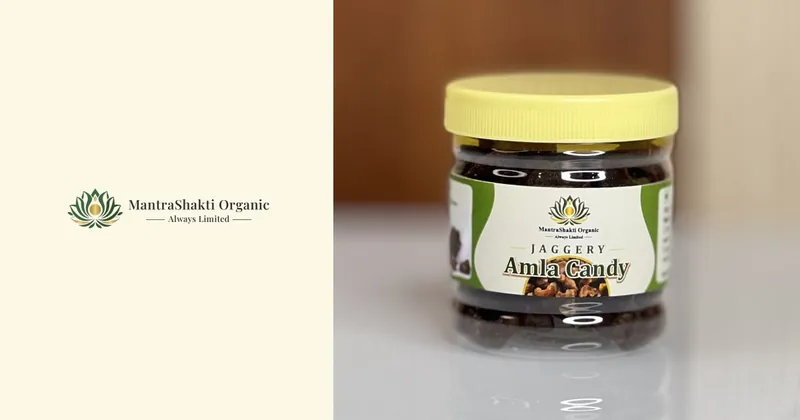
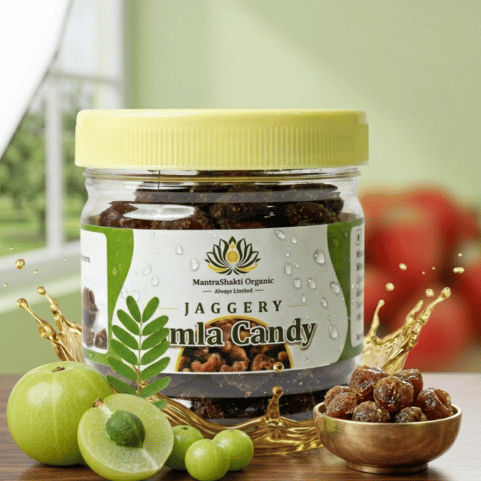
The other honest answer is that some winter uses are seasonal by nature. Our Jaggery Amla Candy is made from that season's fruit while it is good, in small handmade batches, and then it runs out until the next harvest — that is what "always limited" means for us, rather than a marketing line. When a batch is gone, it is gone until the fruit comes back. You can see the rest of what we make from the winter fruit in our amla and wellness foods, and if you want to know who is actually in the mandi buying it, read who makes MantraShakti Organic. Weighing our candy against the bright, sugar-dusted kind? We lay out the difference in Jaggery Amla Candy vs the sugar-coated kind.
Frequently asked questions
Which months is amla in season in India?
Fresh amla is in season from roughly October to February, and best between October and January. In the north the fruit arrives in the mandi around October, peaks for supply and price in November, and tapers off by late February. The south runs slightly later. Outside these months you are buying stored, frozen or processed amla.
Can you get fresh amla in summer?
Not really fresh. From around March to September the harvest is over, and anything sold as amla is cold-stored, frozen, dried or made into powder and juice. If you specifically want fresh fruit in summer, the realistic answer is that you keep your own from winter — frozen segments or dried slices — rather than buying it new.
How do I pick good amla at the market?
Choose fruit that is firm and heavy for its size, with smooth, unbroken, faintly waxy skin and an even pale-green to greenish-yellow colour. Avoid anything wrinkled, split, soft, or marked with brown patches. Buy loose rather than pre-bagged so you can see every fruit, since one soft amla spoils the ones around it.
How long does fresh amla keep in the fridge?
About two to three weeks. Keep it whole and unwashed — the skin is a natural barrier — in a loosely closed container or perforated bag in the vegetable drawer, and do not seal it airtight while damp. Check the container weekly and remove any fruit that has gone soft, because one spoiling amla will spread to its neighbours.
Can you freeze amla?
Yes, and it is the best way to keep it for months. Wash, dry, deseed and cut into segments, freeze the pieces on a tray for an hour so they stay separate, then store them in a sealed freezer bag for up to about six months. Use straight from frozen; the texture softens on thawing, so frozen amla suits cooking, chutneys and juice rather than eating raw.
Why does amla go soft and brown so quickly?
Because it is a high-moisture fruit and, once the skin is bruised, cut or wet, it browns and softens fast. Buying firm unblemished fruit, keeping it whole and unwashed until you use it, and refrigerating it slows this down. If you cannot use it within two to three weeks, freeze or dry it while it is still firm rather than waiting.
Written by the MantraShakti Organic workshop team, Chinhat, Lucknow. Last reviewed: 26 September 2026.
Shop this guide
Made by hand in small batches in Lucknow.
More from the Journal