
How to Use Reetha Shikakai Amla Powder for Hair Wash at Home
How to use reetha shikakai amla powder for hair wash: the short answer
How to use reetha shikakai amla powder for hair wash: mix equal parts (about 1 level tablespoon each for shoulder-length hair) with half a cup of warm water into a thin paste, rest it 15 minutes, work it through wet hair for a few minutes and rinse until the water runs clear. Keep it out of your eyes.
That is the quick powder method. The other classic route is to soak and simmer the three ingredients, strain the liquid and pour it over your hair. This guide gives the ratios for both, the soaking times, how to strain, how long the liquid keeps, and the cautions that matter most: eyes, spoilage and hard water. It describes a traditional household method from a family workshop and is not a medical product or advice.
In Hinglish: amla reetha shikakai kaise use kare? Barabar matra mein teeno powder lein (shoulder-length baalon ke liye ek-ek badi chammach), aadha cup garam paani milakar patla paste banayein, 15 minute rakhein, gile baalon aur scalp par lagakar kuch minute malish karein aur saaf paani aane tak dho lein. Aankhon se door rakhein.
Key takeaways
- Equal parts of the three powders is the easy starting ratio: 1 level tablespoon each for shoulder-length hair, with about half a cup of warm water for a paste.
- Two methods: a powder paste (no cooking, make it fresh) or a soaked-and-simmered liquid (more work, can be kept briefly in the fridge).
- The lather is soft and low. In one lab comparison, soapnut saponin foam reached only about 65 per cent of the height of a standard synthetic detergent's, so low foam is normal.
- Reetha and shikakai contain saponins, which can sting the eyes. Close your eyes, tilt your head back to rinse, and never swallow it.
- A homemade liquid has water, plant matter and no preservative. Make small batches, refrigerate at once, use within a day or two and bin anything that smells sour or looks slimy.
- Hard water may call for a stronger mix and a longer rinse. Do a trial wash before you rely on it.
What are reetha, shikakai and amla, and what does each do in a hair wash?
Reetha and shikakai are the two cleansing ingredients in this traditional wash, because both contain saponins, natural compounds that foam in water and lift oil and dirt. Amla is the third, long-standing partner, added for tradition and for a different feel rather than for lather.
- Reetha (soapnut, Sapindus mukorossi) is the dried fruit shell of a tree that grows across southern and eastern Asia, including India. A 2022 review of its saponins describes it as a natural detergent used by local people for washing.
- Shikakai (Acacia concinna) is the pod of the shikakai plant, dried and ground. Plants For A Future says the pods contain saponins, are widely used as a soap substitute in India and are very commonly used for washing hair.
- Amla (Indian gooseberry) is the dried fruit, usually used as a powder. It makes little lather, and it tints the liquid brownish, so expect some staining on pale towels.
You can buy all three whole (reetha shells, shikakai pods, dried amla pieces) or as powders. Powders are quicker and easier to measure but gritty and need good straining. Whole pieces need soaking and simmering but strain out cleanly. The tables below use powders, because a tablespoon is easier to repeat than a handful.
Reetha shikakai amla ratio: how much of each do you need?
Use equal parts of the three powders to begin with: 1 level tablespoon each, with about half a cup (120 ml) of warm water, makes one wash for shoulder-length hair. Traditional recipes vary (some use twice as much amla, some more reetha), so take equal parts as an easy baseline and adjust by feel.
| Powder paste | Soaked-and-simmered liquid | |
|---|---|---|
| Choose it when | You want one wash, quickly, with no stove | You want a pourable liquid, or two washes in one go |
| Quantities (one shoulder-length wash) | 1 level tbsp each of reetha, shikakai and amla powder, plus ½ cup (120 ml) warm water | 1 level tbsp each of the three powders for every cup (240 ml) of water; double for two washes |
| Soak or rest | 15 to 20 minutes | 15 to 30 minutes for powders; 2 to 3 hours for whole shells and pods |
| Heat | None; warm, not hot, water | Simmer gently for about 10 minutes |
| Straining | Optional; a fine steel sieve takes out the grit | Essential; fine cloth or double muslin, squeezed |
| Lather | Low | Low to medium, soft and bubbly |
| How long it keeps | It does not: use it within the hour | Fridge, a day or two; freeze in ice-cube trays for longer |
Scale the quantities to your hair, and add water until the mix pours like thin chaas:
| Hair length | Each powder | Warm water |
|---|---|---|
| Short (chin length or shorter) | 2 level tsp | ¼ cup (about 60 ml) |
| Shoulder length | 1 level tbsp | ½ cup (about 120 ml) |
| Mid-back | 2 level tbsp | ¾ cup (about 180 ml) |
| Waist length, or very thick hair | 3 level tbsp | 1 cup (about 240 ml) |
If you are working from whole pieces, roughly six reetha shells (seeds removed), six shikakai pods and six pieces of dried amla to 3 cups of water is a reasonable batch to simmer down to about 2 cups of liquid. That is two washes for shoulder-length hair, not a week's supply.
Soaking or boiling: which is better, and how long should you soak reetha?
Soak powders for 15 to 30 minutes and whole reetha shells for 2 to 3 hours in warm water, or overnight in the fridge. Simmering for about 10 minutes gives a stronger, frothier liquid at the cost of a stove and a strainer. No standard figure exists for either, so these are working ranges built on practice.
Soaking alone is the gentle route: it releases the saponins slowly, uses no fuel, and suits the powder paste. Simmering speeds the release, softens whole shells and pods so they can be mashed, and gives a more pourable result. The real limit on soaking is spoilage, not strength: in a warm Lucknow kitchen a soak left out overnight can turn sour, so put long soaks in the fridge.
How do you make the soaked-and-simmered liquid, step by step?
- Prepare. If you are using whole pieces, break the shikakai pods, remove the black seeds from the reetha shells and rinse everything quickly. Powders need no rinse.
- Soak. Put the three ingredients in a stainless-steel or glass pan with the water and soak for the time in the table.
- Simmer. Bring to a gentle simmer with the lid slightly ajar and cook for about 10 minutes. Use a pan much larger than it seems to need, because saponins froth and the pot can boil over.
- Cool and mash. Let it cool until lukewarm. Press soft shells and pods against the side of the pan with a spoon to release more.
- Strain. Pour through a fine steel sieve lined with double-layered muslin, and squeeze the cloth. Powders swallow water, so expect to get back noticeably less liquid than you put in. Bin the residue.
- Bottle. Pour into a clean, dry jar that has been rinsed with boiling water, label it with the date and put it in the fridge at once.
How long does a homemade reetha-shikakai liquid keep, and should it go in the fridge?
Think of it as a pot of soup. Refrigerate it as soon as it cools, use it within a day or two, and regard three days as an absolute ceiling and not a promise of safety. It contains water and plant matter and no preservative, so it can spoil.
The FDA's page on microbiological safety lists contaminated water or ingredients, an ineffective preservation system and poor storage among the ways cosmetic products become contaminated, and notes that preservatives exist to keep microorganisms from growing. Your liquid has none. For cooked food, USDA guidance relayed by North Carolina Cooperative Extension is to refrigerate within two hours and eat leftovers within three to four days, and it warns that some germs cannot be seen, smelled or tasted. A scalp wash that goes near your eyes deserves a shorter limit than a bowl of dal.
- Make less. One or two washes' worth is plenty.
- Keep it clean. Use a rinsed jar, wash your hands first and pour out a portion instead of dipping a mug or fingers into the jar.
- Freeze portions. Ice-cube trays give single-wash cubes; thaw a few in a cup of warm water.
- Bin it at the first sour or yeasty smell, slime, fizz, floating mould or odd colour. Do not “give it one more wash”.
Reetha shikakai se baal kaise dhoye? How to wash your hair with it
Wet your hair fully, work the paste or liquid into the scalp first with your fingertips for a few minutes, run it down the lengths gently and rinse until the water runs clear. The wash is the same for both methods.
- Detangle and wet. Brush out tangles, then wet hair thoroughly with lukewarm water.
- Apply to the scalp. Pour the liquid in stages, or rub the paste in, starting at the scalp. Massage with fingertips (not nails) for 2 to 3 minutes. Keep it away from your forehead and eyes.
- Work it down. Squeeze it gently through the lengths. Do not scrub or pile your hair on top of your head, which tangles it.
- Leave for a few minutes. Three to five minutes is plenty. No research gives an ideal time.
- Rinse well, tilting your head back so the run-off goes behind you, until the water runs clear. Check the hairline and behind the ears for grit.
- Finish with a mug of plain water and towel-dry gently.
If your hair is oiled, the same wash works to lift oil, since removing oil and dirt is what saponins do. A well-oiled head may need two passes: apply the first one with very little water and rinse, then do a second lighter wash.
Why doesn’t reetha-shikakai lather like shampoo, and does it still clean?
Because the saponins make a soft, low foam, not the dense, tall lather of a synthetic shampoo, and foam height is not a measure of cleaning. Expect a thin bubbly layer, not a mountain of suds.
In the 2022 review of soapnut saponins, one study measured the foam height of the saponin extract at 65 per cent of the height from SDS, a standard laboratory detergent, while another concluded that the saponin foam was more stable at room temperature than SDS foam. So it foams, just differently. Adding more powder to chase a bigger lather mainly makes the wash harsher on eyes and harder to rinse. Judge the result by how your hair and scalp feel once dry: clean at the roots and not coated.
How do you stop reetha and shikakai stinging your eyes?
Keep your eyes closed and your head tilted back during the wash and the rinse, and apply the mix to the scalp rather than the hairline. Saponins can sting the eyes, and nobody should swallow the liquid.
The reason for the rule is on the safety data sheet for lab-grade saponin, which classes it as causing serious eye irritation (hazard statement H319). A dilute herbal wash is far weaker than the concentrated compound, but it is enough reason to be careful.
- If it stings, flush with a gentle stream of cool or lukewarm running water straight away and do not rub. MedlinePlus advises flushing a chemical-exposed eye for 15 minutes and getting medical help right away. If the sting fades after a thorough flush, carry on with care; if pain, redness or blurred vision continues, see a doctor.
- Do not swallow it. The 2022 review reports that saponins can burst red blood cells in lab tests and calls for further toxicological study. In a wash you are rinsing it off, but keep it away from your mouth and out of children's reach.
- Patch-test first. Dab a little of the mix behind your ear and leave it for 48 hours. Stop if you see itching, redness or swelling.
If you have a skin condition, an allergy, are pregnant or take medication, ask a doctor before using a new herbal wash.
Does a reetha-shikakai-amla wash work in hard water?
We could not find a household trial, so the honest answer is that it varies, and hard water may call for a stronger mix and a longer rinse. Make your first wash a trial and note how your hair feels.
One lab study summarised in the 2022 review found that the concentration at which soapnut saponins start forming micelles, the clusters that do the cleaning, rose as the water got harder, which hints that you may need a little more of the mix in hard water. That is lab chemistry, not a bathroom result. In practice, rinse for longer than feels necessary and finish with a mug of softer water if you have one. Our hard-water hair-washing routine covers the hostel and PG situation in detail.
Homemade wash or ready-made herbal shampoo: how do they compare?
A homemade wash gives you control over every ingredient and costs very little, while a ready-made herbal shampoo gives consistency and convenience. Neither is more correct; it depends on your time and your bathroom.
| Homemade wash | Ready-made herbal shampoo | |
|---|---|---|
| Time | 20 to 40 minutes with soaking and straining | Seconds |
| Consistency | Changes with every batch | The same each time |
| Storage | Fresh only; fridge for a day or two | Kept on the bathroom shelf; follow the label |
| Hostel, PG or travel | Awkward: needs a pan, strainer and fridge | Easy: one bottle |
| Ingredient control | Complete | You rely on the label |
| Lather | Soft and low | Depends on the formula |
Common mistakes with a homemade herbal wash
- Soaking overnight on the counter in summer. It can sour. Use the fridge, or soak for a few hours only.
- Using too much reetha. More saponin means more sting and a harder rinse, not a better wash.
- Skipping the strainer. Specks of shell and pod end up in your hair and are slow to comb out.
- Simmering in a small pan. Saponins froth and boil over.
- Keeping a batch for a week. The fridge slows spoilage but does not stop it.
- Dipping fingers or a mug into the jar, which carries germs into the rest of the batch.
- Washing with your eyes open and then blaming the wash.
- Judging it by foam. Judge it by how your hair feels once it is dry.
How we make our herbal shampoo
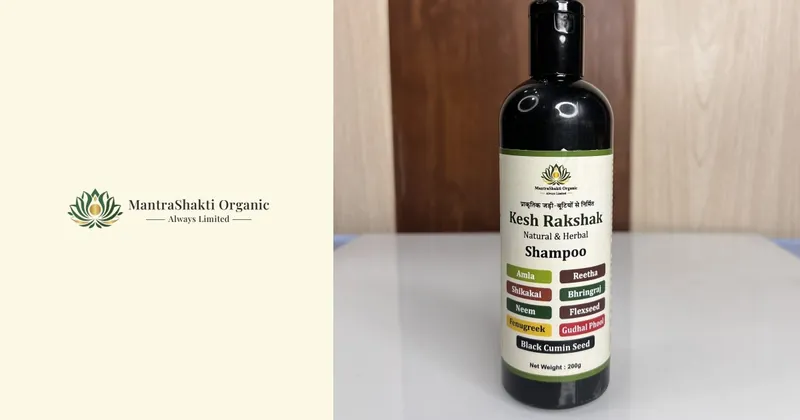
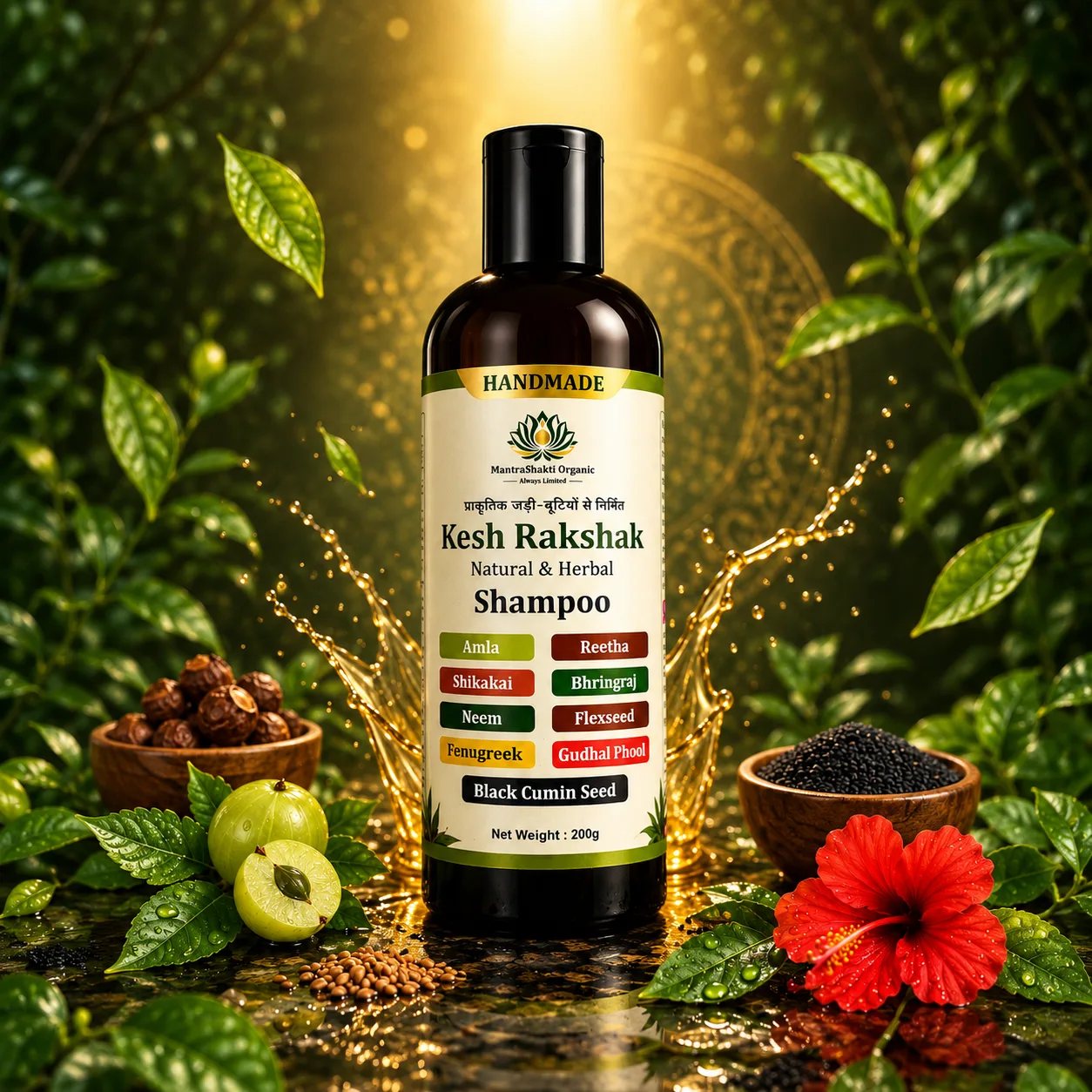
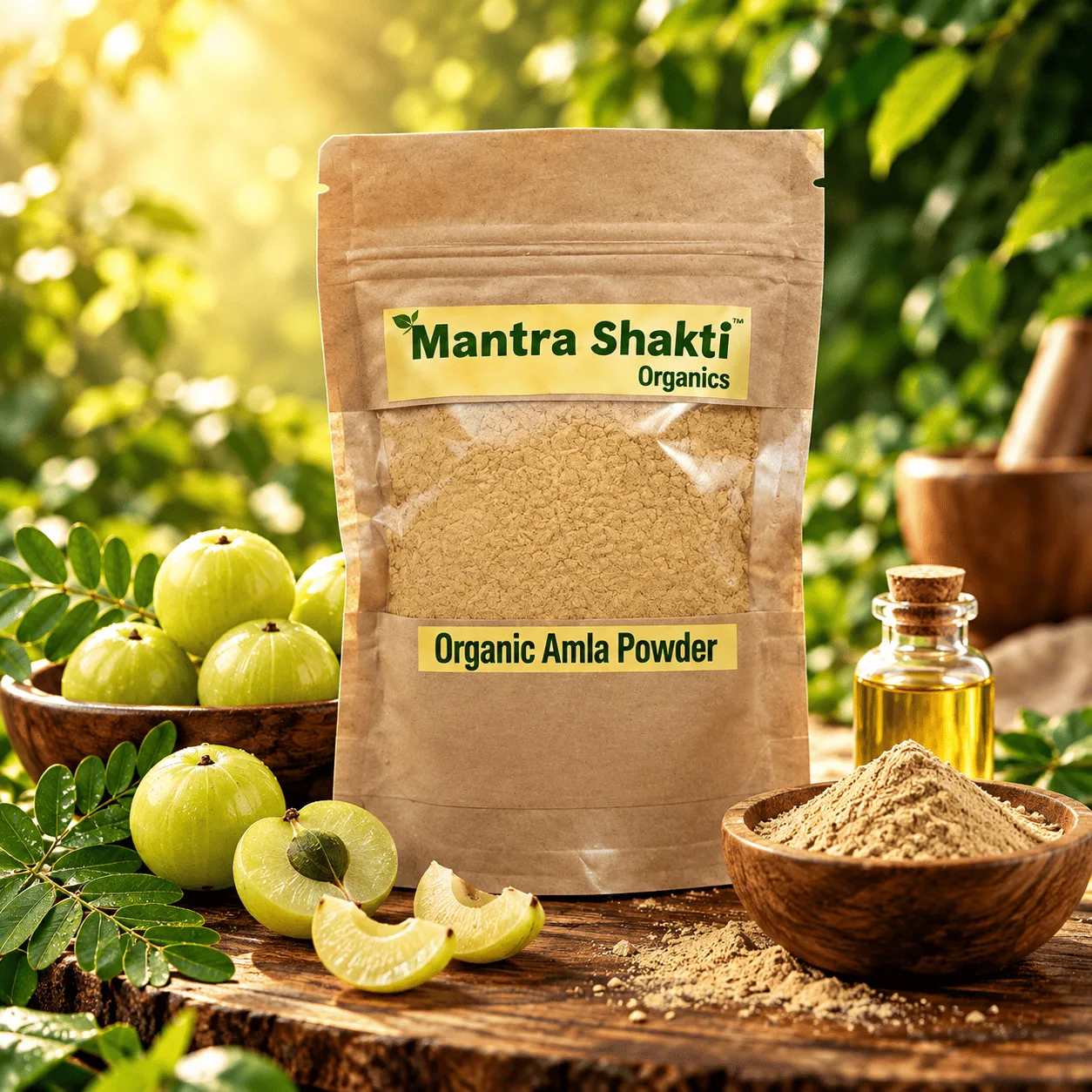
If the steps above are more than your week allows, our Kesh Rakshak Herbal Shampoo (200 g, ₹335) is the ready-made version. It is made in small batches at our workshop in Chinhat, Lucknow, and names nine herbs: Amla, Reetha, Shikakai, Bhringraj, Neem, Flaxseed, Fenugreek, Gudhal (hibiscus) and Black cumin seed. If you only want the amla for your own mix, our Amla Powder (100 g, ₹280) is a single-ingredient powder sold as a food product. The rest of our range is in Hair Care.
Frequently asked questions
What ratio of reetha, shikakai and amla do you use for a hair wash?
Start with equal parts: 1 level tablespoon of each powder with about half a cup of warm water for shoulder-length hair, or 1 tablespoon of each per cup of water for a simmered liquid. Recipes vary, with some using more amla or more reetha, so adjust by feel. More reetha means more sting and a harder rinse.
How long should you soak reetha before using it?
Soak reetha powder for 15 to 30 minutes, and whole shells for 2 to 3 hours in warm water or overnight in the fridge. No standard figure exists. The real limit is spoilage: in warm weather a soak left on the counter overnight can turn sour, so refrigerate any long soak.
Powder paste or boiled liquid: which method is easier?
The powder paste is easier: mix, rest 15 minutes, use, with no stove or straining. The simmered liquid takes longer and needs a strainer, but pours smoothly and gives a bit more lather. If you are new to this, start with the paste and move to the liquid if you prefer it.
How long does a homemade reetha-shikakai liquid keep, and should it go in the fridge?
Refrigerate it as soon as it cools and plan to use it within a day or two, with three days as an absolute ceiling and not a promise of safety. It has water and plant matter and no preservative. Freeze single-wash cubes for longer, and bin it at any sour smell, slime or mould.
Why doesn't reetha-shikakai lather like shampoo?
Its saponins make a soft, low foam, not the dense lather of a synthetic shampoo. In one lab comparison, soapnut saponin foam reached about 65 per cent of the height of a standard detergent's. Foam height is not a measure of cleaning, so judge the wash by how your hair feels once it is dry.
Can you use it to wash out hair oil?
Yes, lifting oil and dirt is what saponins do. A well-oiled head may need two passes: the first with very little water, then a lighter second wash. Rinse until the water runs clear. The wash is a traditional way to remove oil, though a thick, heavy oil can take more than one go.
How do you stop it stinging the eyes?
Keep your eyes closed, tilt your head back to rinse, and apply the mix to the scalp, not the hairline. If it stings, flush with running water straight away and do not rub; MedlinePlus advises 15 minutes of flushing for a chemical in the eye. See a doctor if pain, redness or blurred vision continues.
Does it work in hard water?
It varies. We found no household trial, but one lab study found that soapnut saponins needed a higher concentration to start working as water hardness rose, so hard water may call for a stronger mix and a longer rinse. Do a trial wash and see how your hair feels. Our hard-water routine has more.
Sources and further reading
- Plants (2022): Triterpenoid Saponins from Washnut (Sapindus mukorossi Gaertn.) — reetha's saponins as a natural detergent; foam and water-hardness findings; toxicology notes
- Plants For A Future: Acacia concinna (Shikakai, Soap-Pod) — shikakai pods, saponins and their use for washing hair in India
- MilliporeSigma safety data sheet: Saponin (CAS 8047-15-2) — why lab-grade saponin carries an eye-irritation warning
- U.S. FDA: Microbiological Safety and Cosmetics — how products without effective preservation become contaminated, and basic hygiene
- N.C. Cooperative Extension: Keep Those Leftovers Safe — USDA guidance on refrigerating within two hours and the three-to-four-day limit
- MedlinePlus: Eye emergencies — what to do if a chemical gets into the eye
Written by the MantraShakti Organic workshop team, Chinhat, Lucknow. We make by hand and we are not medical professionals; this guide is general household information, not medical advice.
Shop this guide
Made by hand in small batches in Lucknow.
 44% OFF
More from the Journal
23 Oct 2026 · 13 min
How Long to Keep Oil in Hair Before Washing: 30 Minutes to Overnight
Read more →