
How Often to Oil Hair in India: A Season-by-Season Weekly Plan

How often to oil hair: once a week, twice a week or every day?
How often to oil hair: for most people, once a week, timed before a wash. Dry, thick or curly hair can go to twice a week in winter. An oily scalp, or a hot or humid season, calls for every 10 to 14 days. Oil no more often than you can wash it out.
Balo me tel kitni baar lagana chahiye? Aam taur par hafte me ek baar, shampoo se pehle. Sardiyon me sookhe, ghane ya ghunghrale baalon ke liye hafte me do baar; garmi aur barsaat me chikne scalp ke liye 10 se 14 din me ek baar. Jitni baar tel lagayein, utni baar dho bhi sakein, bas yeh dhyan rakhein.
No study we could find sets an ideal number, so what follows is a practical plan built on how Indian households oil, how often different hair types need washing, and what Lucknow’s own weather does through the year. It is general household guidance from a family hair-oil workshop, not medical advice.
Key takeaways
- Once a week before a wash is the pattern a 2022 review of Indian hair oils describes as usual. It is a starting point, not a rule.
- Match oiling to wash days: one full oiling for each wash. Do not oil more often than you wash.
- Winter is when dry, thick or curly hair can take a second session each week. Summer and the monsoon call for fewer, lighter ones.
- Oiling every day is too much for most heads. The daily option is a few drops on damp lengths after washing.
- Let your scalp set the number: if the roots turn slick within a day of washing, oil less often or use less.
- Be wary of any promise about what a particular frequency will do. The same review warns that exaggerated claims are made about hair oils.
How often do Indians traditionally oil their hair?
In many Indian homes oiling is a weekly ritual that comes just before the head-wash. A 2022 review of Indian hair oils in the International Journal of Trichology describes the usual routine as combing the hair and oiling from roots to tips, often with a braid, once a week before shampooing.
That pattern is useful for one reason above all: it ties oiling to washing. The oil goes on, sits for a while, and comes off in the same day’s wash, so it never piles up. The review also says the main function of most hair oils is to act as an emollient, a softening coat, and it warns that exaggerated claims are made about their effects. So a weekly champi is tradition and routine, and the rest of this guide adjusts it for season and hair, without promising what oil can do. Our weekly champi guide covers the application.
How does the Indian season change how often you should oil?
Season changes two things that matter for oiling: how often you need to wash, and how your hair and scalp feel in the weather. Lucknow shows the pattern clearly, and the India Meteorological Department (IMD) has measured it.
IMD’s climatology of Lucknow divides the year into a cold season from December to the end of February, a hot season until about the first fortnight of June, a monsoon from then to September, and two transition months, October and November. The numbers behind that picture:
| Season | What IMD records for Lucknow | What it means for oiling |
|---|---|---|
| Winter (December to February) | Cold, with minimums around 7 to 10 °C, a few days at 3 to 4 °C, and mist and fog in the mornings | You wash less often, hair and scalp tend to feel drier, so oiling can be more regular |
| Summer (March to mid-June) | Very hot, averaging 38 to 39 °C, up to about 46 °C, with 4 to 6 heat-wave days; the air is dry, with afternoon humidity as low as 15 to 20 per cent | Sweat and heat; you wash more often, so oil less and keep it light |
| Monsoon (mid-June to September) | Humid: highest humidity around 90 per cent from late June, lowest 65 to 70 per cent; about 75 per cent of the year’s rain falls in these months | Sticky, damp air; a light hand, fewer sessions, and a proper wash |
| October and November (transition) | A bridge from monsoon to winter; the weather turns drier | Start moving towards the winter routine |
If you live elsewhere in India, follow the weather rather than the calendar. Coastal cities stay humid for much of the year and hill towns stay cold for longer, so use the monsoon column for any damp, sticky stretch, the winter column for cold weeks and the summer column for hot ones. Lucknow is simply the one place where we can back the picture with measurements.
The reasoning is simple. Hot, sweaty months mean frequent washing, and an oiling only makes sense when a wash follows it. Cooler months give you fewer washes and more patience, so longer gaps between washes can carry a second oiling.
What is the weekly oiling plan by season and hair type?
Match your hair to the nearest row, then your season to the column. The table counts full-head oilings, each followed by a wash, which are the only kind that count.
| Hair and scalp | Winter | Summer | Monsoon | In between |
|---|---|---|---|---|
| Oily scalp, fine or straight hair | Once a week | Every 10 to 14 days, mostly on the lengths | Every 10 to 14 days, or skip | Nothing; wash as often as the scalp needs |
| Normal scalp, medium thickness | Once a week, or twice if hair feels dry | Once a week | Once a week, light | A drop or two on the ends if they feel rough |
| Scalp that feels dry, or thick, wavy or curly hair | Twice a week | Once a week | Once a week | A few drops on damp lengths after washing |
| Long hair with dry ends | Once or twice a week, mostly lengths and ends | Once a week, ends only | Once a week or less, ends only | A drop on the tips on dry days |
| Short hair | Once a week | Every 10 to 14 days | Every 10 to 14 days | Nothing |
The in-between column matches what the American Academy of Dermatology suggests for curly hair: apply oil or a leave-in conditioner after you have finished washing and conditioning. For the washing side of the plan, the AAD says people with an oily scalp and straight hair may want to shampoo every day, while dry, textured, curly or thick hair needs shampooing only as needed, at least once every 2 to 3 weeks. So the oiling plan follows the washing plan, not the other way round.
What does a sample week look like in each season?
Here is one concrete week for a normal scalp and shoulder-length hair. Day 1 is whichever day suits you.
| Season | Oiling days | Wash days | Note |
|---|---|---|---|
| Winter | Day 1 and day 4 | Day 1 and day 4 | Warm the oil; wash with lukewarm water, and let hair dry before you go out in the fog |
| Summer | Day 1 only | Days 1, 3 and 5 | Keep the oiling short; plain washes on days 3 and 5 |
| Monsoon | Day 1 only | Days 1, 3 and 5 | Light hand; rinse thoroughly, as damp air makes leftover oil feel sticky |
| October and November | Day 1 only, adding a second oiling when the mornings turn cold | Days 1, 4 and 6 | Shift towards the winter plan as the nights cool |
The pattern is the same in every row: the oiling day is always a wash day. If you cannot wash on the day you oil, do not oil.
How do you work out your own oiling schedule, step by step?
Start from your washing, not from the oil: the number of times you wash decides the most you can oil.
- Count your washes. Note how many times a week you actually wash your hair now, and which season you are in.
- Pick one wash for oiling. Choose the wash day when you have the most time and start with a single full oiling a week.
- Check the table. Find your hair type and season. If the table says twice a week and you wash only once, stay at once. If it says every 10 to 14 days, let that set the gap.
- Add the small extras only if needed. A drop or two on the ends after a wash on dry days, and nothing more.
- Review after two weeks. Use the signals table further down. Change one thing by one step, then wait two more weeks before changing again.
Is oiling every day too much?
For a full-head oiling, yes. A daily oiling means a daily wash, and most hair does not need washing every day. The AAD says an oily scalp with straight hair may want a shampoo daily, and that thick, curly hair does not need washing daily or even weekly. Oil that is never washed out only stacks up on the scalp, the lengths and the pillow.
The daily option is much smaller: two or three drops of oil warmed between your palms and smoothed over the ends of damp hair after a wash, which follows the AAD’s leave-in suggestion for curly hair. That is a finishing touch, not an oiling, and it needs no extra wash.
How often should you oil if your scalp gets oily quickly?
Less often, and more on the lengths than at the roots. If your roots feel slick by the evening of a wash day, a full oiling every 10 to 14 days is plenty, and in summer you can skip a round. Oil the lengths and ends, keep the oil off the roots, and wash with a coin-sized amount of shampoo on the scalp.
Should your oiling days match your wash days?
Yes, for the pre-wash oiling that this guide is about. Each oiling should be followed by a wash within the day, or the next morning for an overnight session. Only the small after-wash drops on the ends can happen on days you do not wash.
Is oiling hair in winter good or bad?
It is a common, comfortable habit, and many households oil a little more in winter for plain reasons: hair and scalp tend to feel drier, you wash less often, and cold mornings make a warm champi pleasant. We make no claim beyond that. Two practical cautions apply: coconut oil sets solid in cool weather, so warm the bottle in a bowl of hot water first, and wash with lukewarm, not cold or very hot, water.
Should you oil your hair in the monsoon?
You can, with a lighter hand and fewer sessions. IMD records the monsoon as the humid months in Lucknow, with relative humidity reaching about 90 per cent at its highest. Damp air makes leftover oil feel sticky, so keep sessions short, use less oil and rinse thoroughly. If your hair already feels limp and clingy, skip a round.
Is hair oiling good in summer?
It is fine in moderation. Summer in Lucknow is very hot and dry, with an average of 38 to 39 °C and afternoon humidity that can fall to 15 to 20 per cent, according to IMD. Because you sweat and wash more, a full oiling every week or two is enough, and it should be a short, light one. Keep oil on the lengths if your scalp runs oily.
How can you tell if you are oiling too often or too little?
Your hair gives clear signals. Use them to adjust the plan by one step at a time, not several at once.
| What you notice | It suggests | What to change |
|---|---|---|
| Roots slick again within a day of washing | Too much oil or too often | Use less, or stretch the gap by a few days |
| You need two shampoos every time | Too much oil, or too long on the hair | Cut the amount; keep oil off the roots |
| Pillowcase greasy | Overnight sessions are too heavy | Use less, cover the pillow, or go back to daytime sessions |
| Ends rough or tangled between washes | The lengths want a little more | Add a drop or two on the ends after washing |
| Hair limp and sticky in humid weeks | The season is too damp for your usual dose | Shorter sessions, lighter hand, or skip a round |
| Itching, burning or soreness | A reaction to the oil or to something else | Wash it out, stop, and ask a doctor |
Common mistakes with oiling frequency
- Oiling on days you do not wash. The oil has nowhere to go, and it builds up.
- Copying a plan from a different climate. A routine written for a cold country does not suit a sweaty Lucknow June.
- Oiling daily because “more is better”. There is no evidence that it is, and it multiplies the washing.
- Doubling up in the monsoon. Humid weeks are the time to ease off, not add.
- Chasing a promise. If a label or video says a certain frequency will change your hair, remember that the trichology review warns about exaggerated claims.
- Ignoring hard water. If your hair feels coated after washing, oil and hard water can be the cause; our hard-water washing routine explains how to rinse.
- Changing everything at once. Adjust the frequency by one step, then wait two weeks to see how your hair feels.
Patch-test any new oil behind your ear for 48 hours. If you have a skin condition or an allergy, are pregnant or take medication, ask a doctor before using a new scalp product.
How we make our hair oil
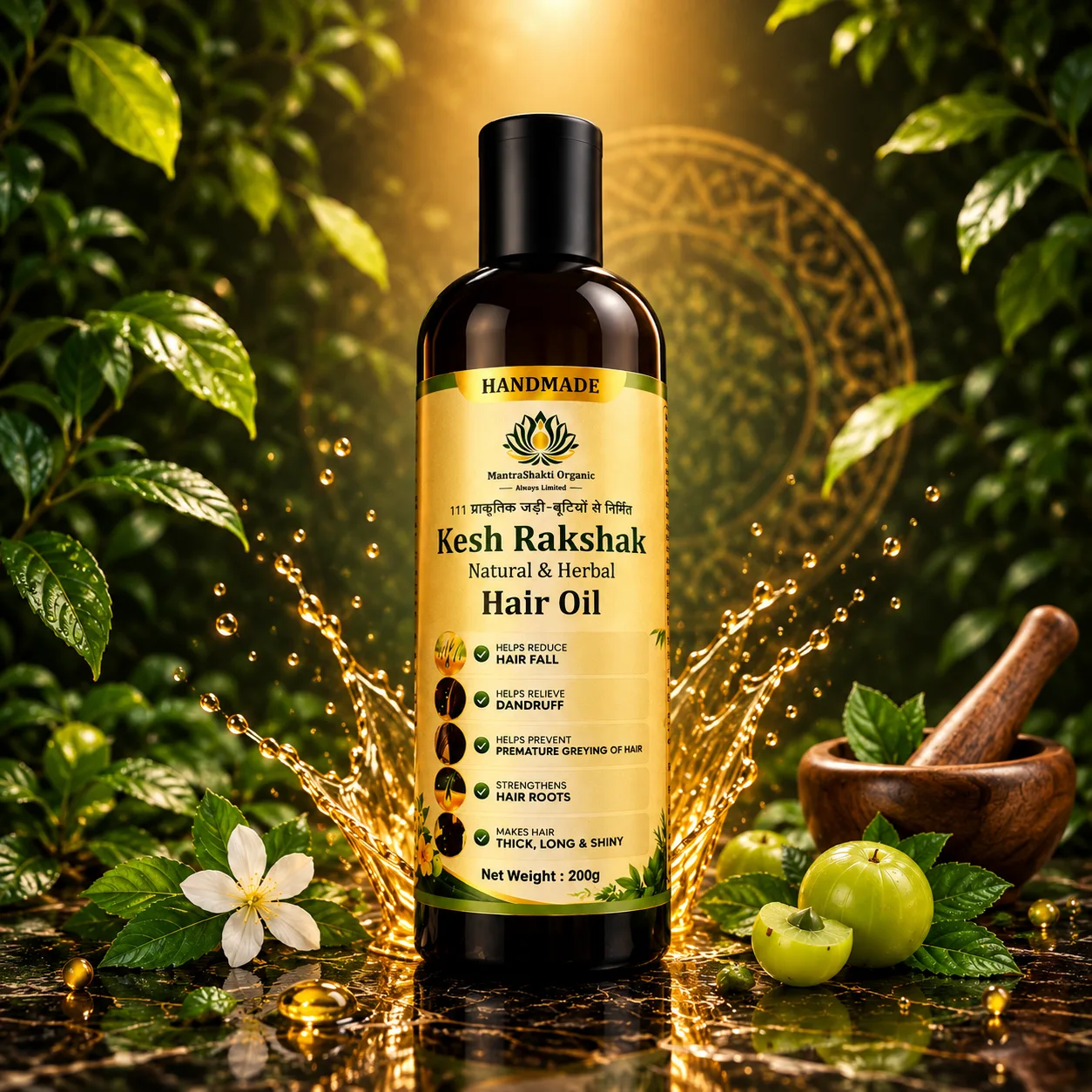
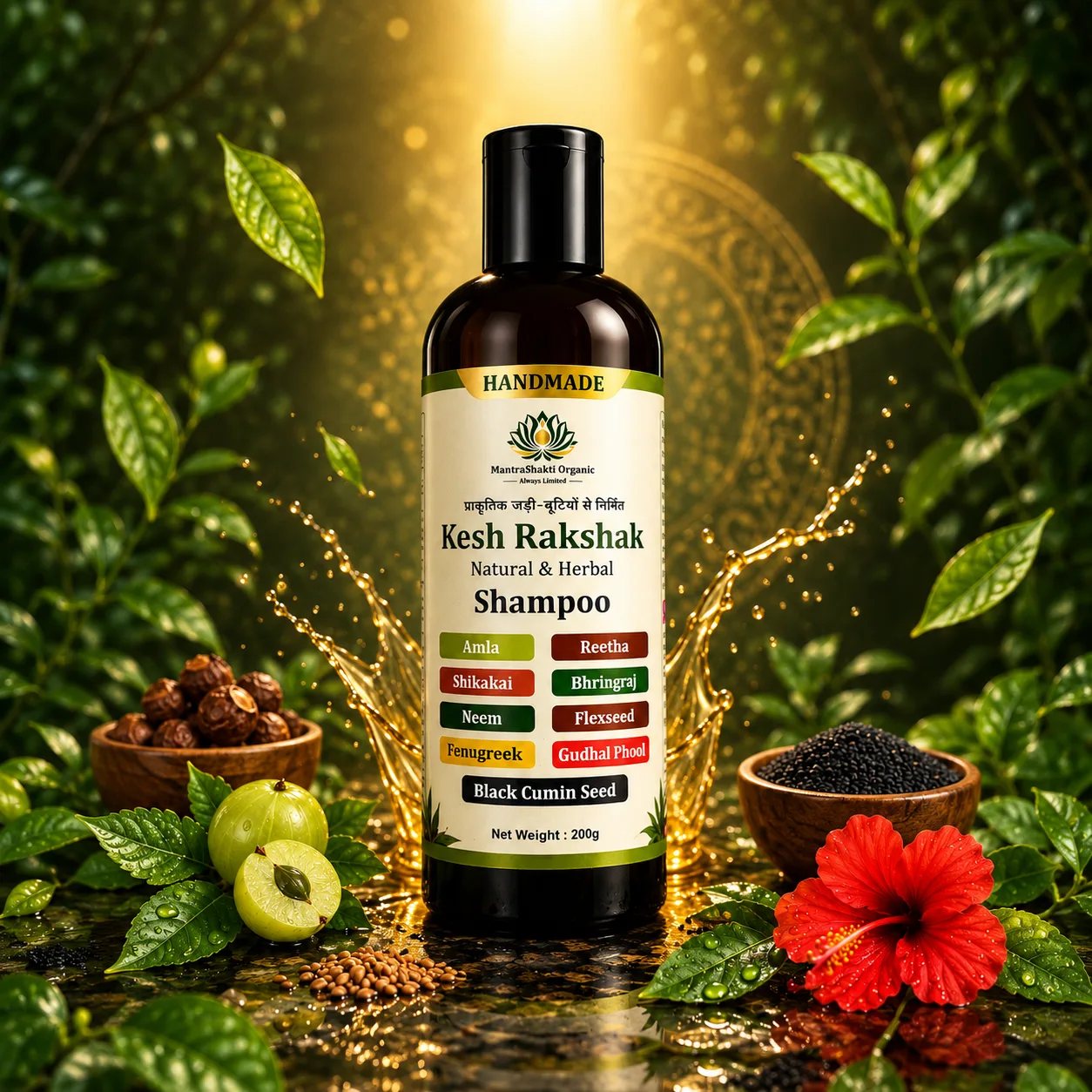
Kesh Rakshak Hair Oil with Bhringraj & Brahmi (200 g, ₹480) is a hand-infused herbal hair oil made in small batches at our workshop in Chinhat, Lucknow, and it names Bhringraj, Brahmi, Amla and Jatamansi. It is made for the weekly routine above, and a Kesh Rakshak Herbal Shampoo is the matching wash. The whole range is in Hair Care.
Frequently asked questions
How often should you oil your hair?
For most people, once a week, before a wash. Dry, thick or curly hair can take two sessions a week in winter, while an oily scalp or the hot and humid months call for every 10 to 14 days. No study sets an ideal number, so oil no more often than you can wash it out.
Is oiling every day too much?
For a full-head oiling, yes. A daily oiling means a daily wash, and an oily scalp with straight hair may want a shampoo every day, according to the American Academy of Dermatology. The daily option is a few drops on damp lengths after washing, which needs no extra wash.
How many times a week should you oil in winter, summer and the monsoon?
As a starting point: in winter, once a week for most hair and twice for dry, thick or curly hair; in summer, once a week or every 10 to 14 days; in the monsoon, once a week with a light hand or every 10 to 14 days for an oily scalp. Always follow an oiling with a wash.
Is oiling hair in winter good or bad?
It is a common, comfortable habit, and many households oil a little more then because hair and scalp tend to feel drier and you wash less. We make no health claim for it. Warm the oil, since coconut oil sets solid in cold weather, and wash with lukewarm water.
Should you oil your hair in the monsoon humidity?
You can, with a lighter hand and fewer sessions. IMD records relative humidity in Lucknow reaching about 90 per cent in the monsoon, and damp air makes leftover oil feel sticky. Keep sessions short, use less oil, rinse thoroughly and skip a round if your hair already feels limp.
How often if your scalp gets oily quickly?
Every 10 to 14 days is plenty, and in summer you can skip a round. Put most of the oil on the lengths and ends, keep it off the roots, and wash with a coin-sized amount of shampoo on the scalp. If roots turn slick within a day of washing, cut the amount or the frequency.
Should oiling days match your wash days?
Yes, for pre-wash oiling. Every oiling should be followed by a wash the same day, or the next morning for an overnight session. Only the small after-wash drops on the ends can be used on days you do not wash.
How often do Indians traditionally oil their hair?
A 2022 review of Indian hair oils in the International Journal of Trichology describes it as often once a week before shampooing, by combing and oiling from roots to tips. It is a household routine, not a rule backed by trials, and the same review warns about exaggerated claims for hair oils.
Sources and further reading
- International Journal of Trichology (2022): Hair Oils: Indigenous Knowledge Revisited — the usual weekly oiling before shampooing, hair oils as emollients, and the warning about exaggerated claims
- American Academy of Dermatology: Tressed to impress, tips for keeping your mane magnificent — how often to shampoo for oily, dry, curly and thick hair
- American Academy of Dermatology: 6 curly hair care tips from dermatologists — washing curly hair less often and applying oil or leave-in conditioner after washing
- India Meteorological Department, Meteorological Centre Lucknow: Climate of Lucknow (Singh, Gupta and Warsi, 2012) — Lucknow's seasons, temperatures, humidity and monsoon rainfall
Written by the MantraShakti Organic workshop team, Chinhat, Lucknow. We make by hand and we are not medical professionals; this guide is general household information, not medical advice.
Shop this guide
Made by hand in small batches in Lucknow.
More from the Journal
19 Nov 2026 · 12 min