
How an Ayurvedic Hair Oil Is Actually Made (and What a Herb Count Tells You)
How is Ayurvedic hair oil actually made?
A herbal hair oil is made by infusing herbs into a base oil over slow, low heat for several hours, then straining and bottling the result. The heat and time draw the plants' colour, aroma and oil-soluble compounds into the base; that is the whole craft. Everything else on the label — the herb count, the classical-sounding name, the price — is downstream of two things that actually matter: which herbs went in, in what quantity, and how carefully the batch was cooked.
This is a plain, first-principles look at how our Kesh Rakshak Hair Oil is made in our Chinhat workshop in Lucknow, and — more usefully — how to read any Ayurvedic hair oil label so a big number on the front does not do your thinking for you.
What "Ayurvedic hair oil" actually means
Most oils sold as "Ayurvedic hair oil" in India are, in regulatory terms, cosmetics: a base oil carrying herbs, meant to condition hair and scalp. They are made and sold under a cosmetic manufacturing licence and, as long as the product makes no therapeutic claim, that is the correct category under the Drugs and Cosmetics Act, 1940 and the Cosmetics Rules, 2020.
A herb-infused hair oil like this is for people who want to oil their hair the way many Indian households have for generations — a weekly champi, a scalp massage before a wash. It conditions, it helps reduce the dry friction that leads to breakage, and it is a slow ritual more than a quick fix. It is not a medicine, and no honest oil should be sold as one.
How a herb-infused hair oil is made, step by step
The method is old and unglamorous. Here is how a batch runs in our workshop.
- Sourcing and cleaning the herbs. Dried herbs are checked, cleaned and weighed. Fresh herbs, where used, are washed and roughly cut. Quantities are recorded per batch, because the recipe is only meaningful if the same weights go in every time.
- Preparing the herbs. Some herbs are ground into a paste with a little water; harder material is coarsely broken so the oil can reach it. This is where surface area matters — a whole dried herb gives up very little.
- Slow heat infusion. The prepared herbs go into the base oil and are heated on a low flame, stirred so nothing catches on the bottom of the vessel. The water content of the herbs slowly steams off; as it does, it carries the plants' oil-soluble compounds into the base. Low heat over a long time extracts more gently than a fast, hot cook, which can scorch both herbs and oil.
- Judging the end point. The batch is done when the added water has cooked off and the oil has taken on the colour and smell of the herbs. This is judged by hand and eye, batch to batch — it is not a fixed clock time.
- Straining. The oil is strained through fine cloth to remove all solid matter, sometimes more than once, so the finished oil is clean and pours clear.
- Resting, filling and coding. The oil is allowed to settle, then filled into bottles, sealed, and marked with a batch code and date so every bottle is traceable to the batch it came from.
We record the details of every batch — the base oil that goes in, the time on the heat and the number of 200 g bottles that come out — rather than treating them as a fixed spec, because a handmade batch genuinely varies. Herb moisture, weather and flame all move the yield a little, so no two batches are exactly alike.
Does a hair oil with more herbs work better?
No — not on the strength of the number alone. A count of 21, 51 or 111 herbs tells you how many botanicals are named on the label. It tells you nothing about how much of each is present, whether each one survived the cook, or whether any of it does what you hope. A carefully made oil with a handful of herbs in real quantity can be a better product than a long list where most names are present in a trace.
We say this as the maker of a 111-herb oil: the number is not the reason to buy it. We are honest that "more herbs" is not a performance claim, and India's advertising rules (the ASCI code) would not let it be one without evidence, which for this kind of comparison does not exist. The reason a long formula can be worthwhile is the breadth of a traditional recipe and its aroma — not a promise that 111 beats 21.
| A high herb count tells you | A high herb count does NOT tell you |
|---|---|
| How many botanicals are named on the label | The quantity of each herb in the oil |
| The breadth of the recipe the maker chose | Whether each herb is in meaningful amount or a trace |
| That the maker is willing to list them | How well the batch was actually cooked |
| Whether the oil will "work" for your hair |
What a number like "21 herbs" on a label actually means
Here is the part makers rarely spell out. In an infused oil, not all listed herbs play the same role, and they are not present in anything like equal amounts. Broadly, the herbs on a label fall into three groups.
| Role | Typical quantity | What it contributes |
|---|---|---|
| Main herbs (in real quantity) | The bulk of the botanical weight | Most of the colour, smell and character of the oil |
| Supporting herbs | Moderate amounts | Round out the traditional recipe |
| Trace herbs | Very small amounts | Present for completeness of the classical formula; little material effect on their own |
So "21 herbs" or "111 herbs" is a count across all three groups. A responsible way to read it: ask which herbs sit in the first group. That is the only way a number becomes information instead of decoration.
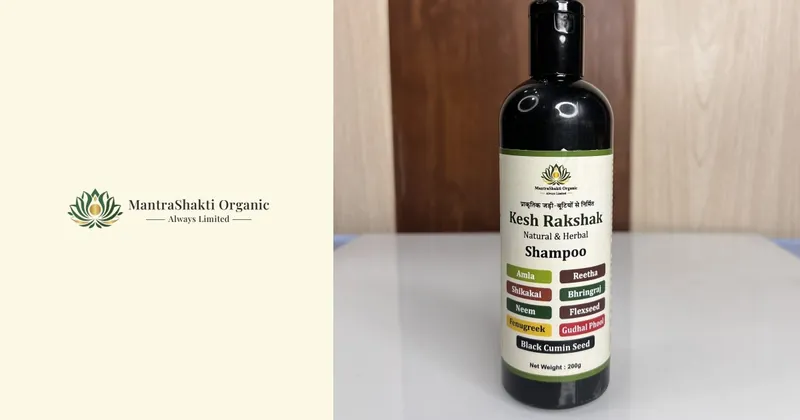
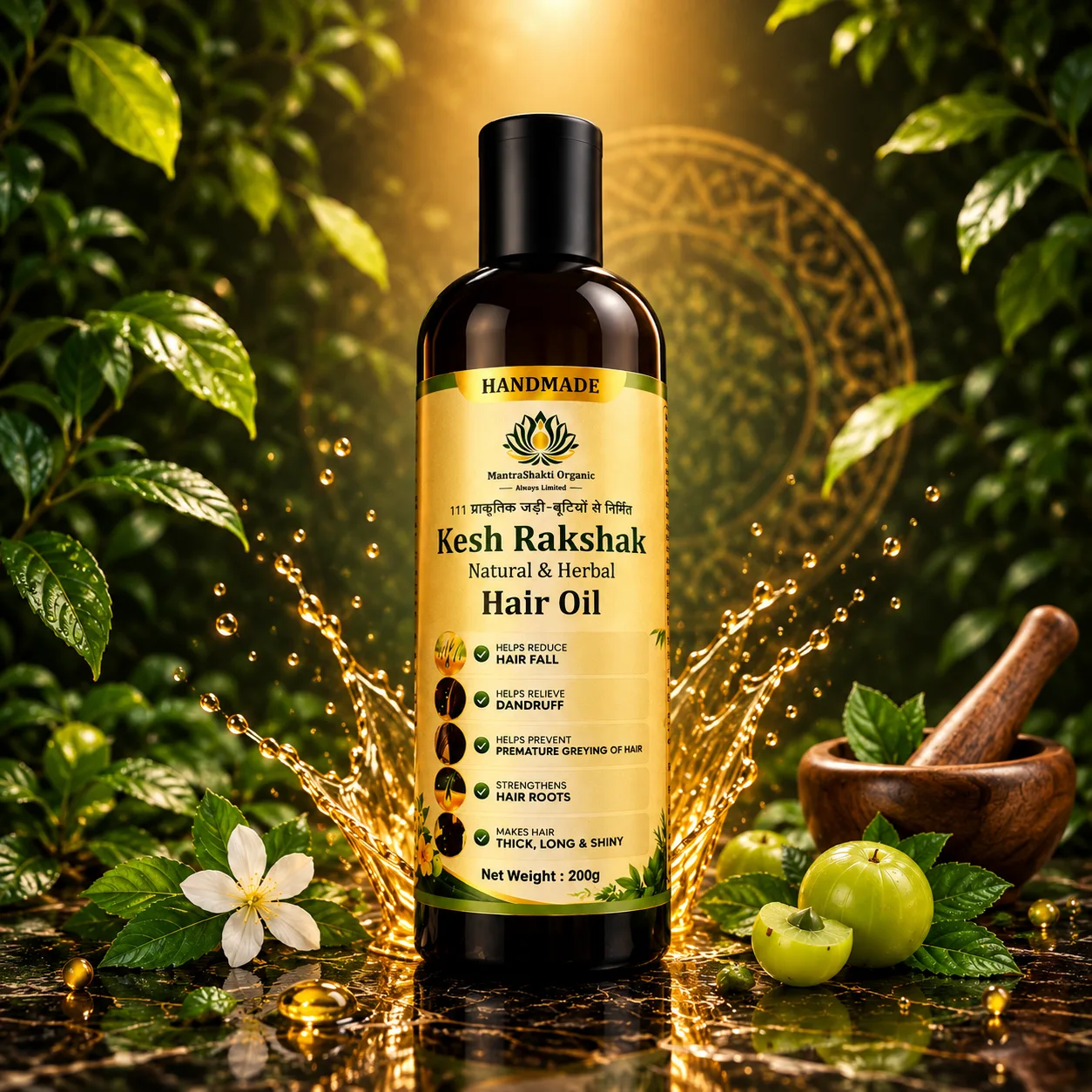
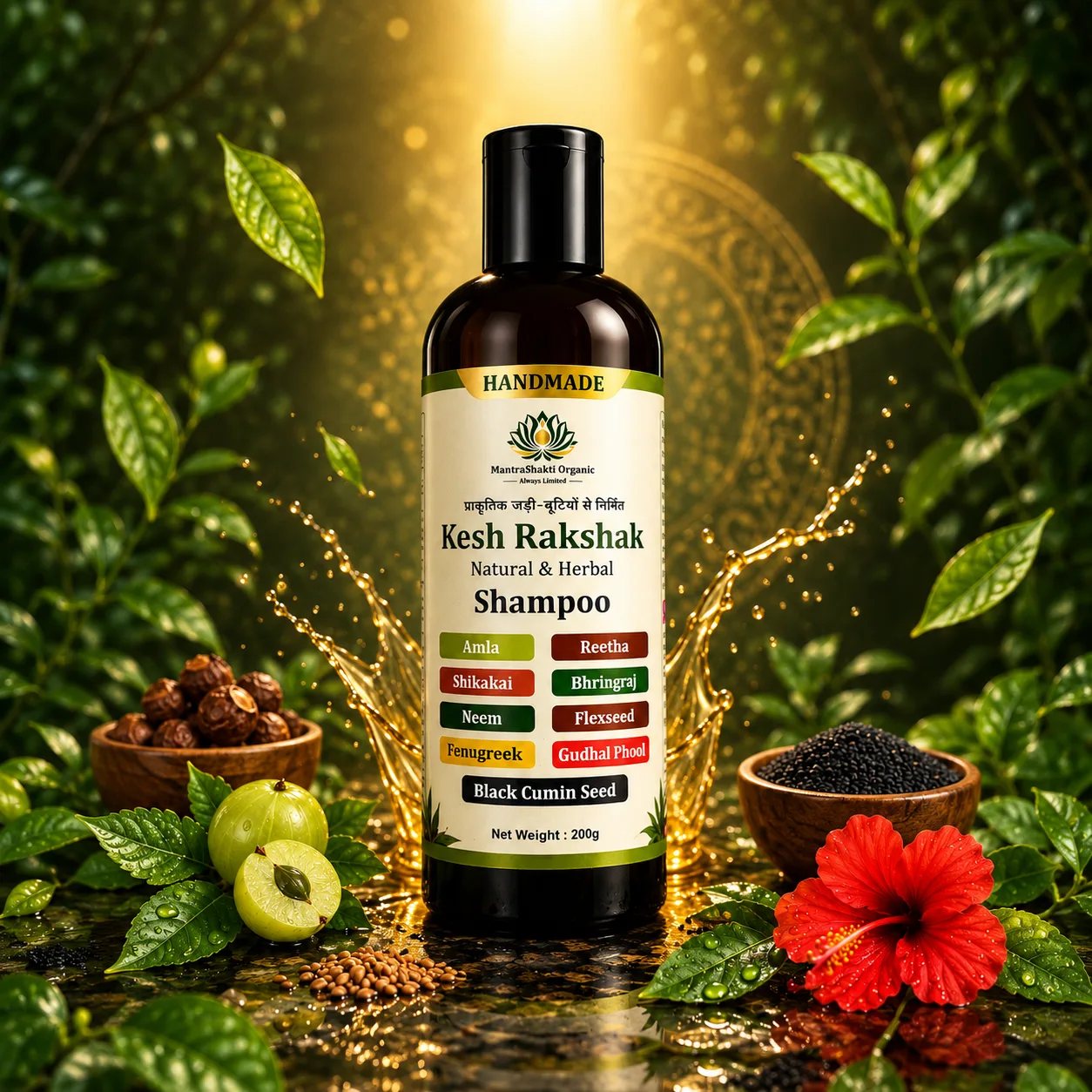
Because our own argument is that counts are meaningless without disclosure, we print the full ingredient statement on every pack rather than hide behind the headline number. Among the 111 herbs in Kesh Rakshak Hair Oil are traditional hair-care botanicals such as Brahmi, Bhringraj, Amla, Hibiscus and Jatamansi; the complete list is on the label, so you can read exactly what went in and decide for yourself. The remaining herbs are supporting or trace botanicals that round out the classical recipe. Our Kesh Rakshak Shampoo uses a shorter, differently balanced herb formula — built around cleansing herbs like Reetha, Shikakai, Amla and Neem — because a rinse-off wash and a leave-on oil are simply not asked to do the same job.
Herb-infused oil vs medicated oil: what is the difference?
These two terms are used loosely on the market, but in India they point to genuinely different categories.
- A herb-infused cosmetic oil is herbs slow-infused into a base oil, sold to condition hair and scalp, under a cosmetic licence, making no therapeutic claim.
- A classical "medicated" Ayurvedic oil is a formulation prepared to a recognised Ayurvedic standard and sold as an Ayurvedic drug. In India these require a manufacturing licence under the Ministry of AYUSH, not a cosmetic licence, and they carry an AYUSH licence number on the pack.
The dividing line is not the herbs — it is the claim and the licence. Under the Drugs and Cosmetics Act, 1940 and the Cosmetics Rules, 2020, a product that only conditions or fragrances hair is treated as a cosmetic, while one presented for a therapeutic effect is treated as a drug. If a cosmetic starts making treatment claims, it can be reclassified as a drug — which is exactly why honest cosmetic labelling avoids medical language.
If you ever want to know which category an oil sits in, the honest answer is on the pack, not in the marketing. Check whether it is labelled and licensed as a cosmetic or as a licensed Ayurvedic product, and whether the claims printed on it match that category.
How long does one batch take, and why does that make it cost more?
A single batch takes several hours of low-heat cooking, before you even count sourcing, weighing, grinding, straining, resting and filling. It cannot be rushed without hurting the oil, and one person can only watch and stir so many vessels at once.
That is most of why a genuinely handmade herbal oil costs more than a mass-produced one. You are paying for herb quantity, for slow batch time, and for small-batch labour — not for a bigger factory's economies of scale. Our Kesh Rakshak Hair Oil is ₹480 for 200 g. We make it in small batches on purpose; "Always Limited" for us means real freshness and honest quantity, not manufactured scarcity. If a long-ingredient "Ayurvedic" oil is priced like a commodity, it is worth asking where the saving came from — usually herb quantity, cook time, or both.
A note on the herbs people ask about
Three herbs come up in almost every question about Indian hair oil: Bhringraj (Eclipta alba), Amla (Phyllanthus emblica) and Brahmi (Bacopa monnieri). In Ayurvedic tradition these have long been used in hair-care preparations, and that traditional use is a real part of why they appear in recipes like ours.
It is important to keep tradition and clinical evidence separate. As of now, the human clinical evidence for these herbs improving hair is limited: most support comes from traditional use and early laboratory or animal studies rather than robust human trials. Healthline's review of bhringraj oil notes that while some lab and animal work is suggestive, human evidence is lacking (Healthline, "Bhringraj Oil"). In practice, an oil like this mainly improves the condition and feel of hair; it is not a treatment for an underlying hair-loss condition. So we describe these herbs as traditionally used in Indian hair care, and nothing more. We make no claim that this oil, or any herb in it, treats hair fall, dandruff, greying or any scalp condition.
If you are dealing with real hair loss, a flaking or itchy scalp, or sudden shedding, please see a dermatologist. Those can have medical causes that an oil will not address, and getting them looked at early matters more than any product.
Three questions to ask any maker before you buy
If you only remember one part of this article, make it this. Before buying any Ayurvedic hair oil, ask:
- Will you show me the full ingredient list — and which herbs are in meaningful quantity? A maker confident in the oil will not hide behind a headline number.
- How is it made, and how long does a batch take? "Slow-infused over hours in small batches" and "we don't really know" are very different answers.
- Is it a cosmetic or a licensed Ayurvedic product, and what does the label claim? If the pack promises to cure or prevent something, be more careful, not less — that is a claim the law takes seriously.
You can browse our full range in Hair Care, and if you want the ritual side of oiling rather than the manufacturing side, our guide to a weekly champi with Kesh Rakshak Hair Oil covers how to actually use it.
Frequently asked questions
How is a herbal hair oil actually made?
Herbs are cleaned, weighed and prepared, then infused into a base oil over low heat for several hours while the water in the herbs steams off and carries their oil-soluble compounds into the base. The oil is then strained through fine cloth, rested, and bottled with a batch code.
Does a hair oil with more herbs work better?
Not on the number alone. A herb count only says how many botanicals are named, not how much of each is present or how well the batch was made. A smaller formula with herbs in real quantity can outperform a long list where most are traces. Method, quantity and sourcing decide quality — the count on the front does not.
What does a number like "21 herbs" on a label actually mean?
It counts every botanical named on the label, across three very different roles: a few main herbs in real quantity, some supporting herbs in moderate amounts, and often many trace herbs present only to complete a traditional recipe. The useful question is not how many herbs, but which of them are present in meaningful quantity.
What is the difference between a herb-infused oil and a medicated oil?
A herb-infused oil is a cosmetic: herbs steeped in a base oil to condition hair, sold under a cosmetic licence with no therapeutic claim. A classical medicated Ayurvedic oil is sold as a drug under a Ministry of AYUSH licence and carries an AYUSH licence number. The dividing line is the claim and the licence, not the herbs.
How long does one batch take to make?
The heat-infusion stage alone runs for several hours on a low flame, and that is before sourcing, weighing, grinding, straining, resting and filling are counted. Because it is handmade in small batches, exact time and yield vary a little from batch to batch with herb moisture and weather.
Why are handmade herbal hair oils more expensive?
You are paying for herb quantity, long slow batch time and small-batch labour rather than factory economies of scale. A properly made oil cannot be rushed, and one person can only tend so many batches at once. If a long-ingredient oil is priced like a commodity, it is fair to ask whether the saving came out of herb quantity or cook time.
What should I ask a hair oil maker before buying?
Ask three things: will you show the full ingredient list and say which herbs are in meaningful quantity; how is it made and how long does a batch take; and is it a cosmetic or a licensed Ayurvedic product with a claim to match. Clear answers signal a maker with nothing to hide.
Written by the MantraShakti Organic workshop team, Chinhat, Lucknow. Last reviewed: 26 September 2026. This article is about how herbal hair oil is made and is not medical advice; for any hair or scalp problem, please consult a doctor or dermatologist.
Shop this guide
Made by hand in small batches in Lucknow.
More from the Journal