
Bhringraj in English and 11 More Hair-Care Herbs: Names and Botany
What is bhringraj in English?
Bhringraj in English is false daisy, botanical name Eclipta prostrata (older name Eclipta alba). This glossary gives the same answer for eleven more herbs named in Indian hair oils and washes: brahmi, jatamansi, amla, reetha, shikakai, gudhal, methi, neem, kalonji and alsi, with botanical names, the part used and where each name appears.
The names, parts and botanical details come from the Government of India's Ayurvedic Pharmacopoeia, a University of Melbourne plant-name database, the GBIF taxonomy and one encyclopaedia entry. This is a glossary of names and botany. It says what each herb is called, not what it does, and nothing in it is a claim about hair or health.
The Pharmacopoeia describes bhringraj as a herbaceous annual 30 to 50 cm high, a common weed of moist places found throughout India. In the Pharmacopoeia's entry the whole plant is the drug, and Bhangara and Bhangaraiya are listed as Hindi names alongside the Sanskrit Kesharaja.
Key takeaways
- Bhringraj is false daisy, Eclipta prostrata; the whole plant is the part used.
- Brahmi names two plants, Bacopa monnieri and Centella asiatica (gotu kola), depending on region, so the botanical name on a label matters.
- Jatamansi is spikenard, Nardostachys jatamansi; the dried rhizome is the part used.
- Reetha is soapnut (Sapindus mukorossi) and shikakai is a soap pod (Senegalia rugata, formerly Acacia concinna).
- Kalonji is Nigella sativa. "Black cumin" is used for it and for a different spice, kala jeera, so check the botanical name.
- Several botanical names have changed. Old books print Eclipta alba, Emblica officinalis and Acacia concinna; current names are in the table.
The glossary at a glance
| Name on the label | English name | Botanical name (accepted) | Part used | Where the name turns up |
|---|---|---|---|---|
| Bhringraj (bhangra, keshraj) | False daisy, eclipta | Eclipta prostrata (L.) L., Asteraceae; older name Eclipta alba | Whole plant | Oils (taila) named in the Pharmacopoeia: Bhringaraja Taila, Bhringamalakadi Taila, Nili Bhringadi Taila. Named on our Hair Oil and Shampoo. |
| Brahmi | Thyme-leaved gratiola, water hyssop | Bacopa monnieri (L.) Pennell, Plantaginaceae | Whole plant | Classical formulation names such as Brahmi Ghrita. Named on our Hair Oil. |
| Brahmi, mandukaparni, gotu kola (the other plant) | Indian pennywort, Asiatic pennywort | Centella asiatica (L.) Urb., Apiaceae | Whole plant | A different plant that shares the name brahmi in northern and western India |
| Jatamansi | Spikenard, nardus root | Nardostachys jatamansi (D.Don) DC., Caprifoliaceae (older books: Valerianaceae) | Dried rhizome | Named on our Hair Oil |
| Amla (aonla) | Indian gooseberry, emblic myrobalan | Phyllanthus emblica L., Phyllanthaceae; older name Emblica officinalis | Fruit: fresh pulp, or the dried pericarp | The oil Bhringamalakadi Taila has a name joining bhringa and amalaka (amla). Named on our Hair Oil and Shampoo. |
| Reetha (ritha) | Soapnut, Chinese soapberry | Sapindus mukorossi Gaertn., Sapindaceae | Dried fruit | A soap-like fruit; the name means soapnut. Named on our Shampoo. |
| Shikakai | Soap pod, soap pod wattle | Senegalia rugata (Lam.) Britton & Rose, Fabaceae; older name Acacia concinna | Pods; leaves and bark are also ground | Dried and ground to a paste for a traditional hair wash. Named on our Shampoo. |
| Gudhal | Hibiscus, China rose | Hibiscus rosa-sinensis L., Malvaceae | Flowers | Named on our Shampoo |
| Methi | Fenugreek | Trigonella foenum-graecum L., Fabaceae | Seeds | A common kitchen seed. Named on our Shampoo. |
| Neem (nim) | Margosa, Indian lilac | Azadirachta indica A.Juss., Meliaceae | Leaf; the Pharmacopoeia also lists the stem bark and other parts | Named on our Shampoo |
| Kalonji (kalaunji) | Black cumin, black seed, nigella | Nigella sativa L., Ranunculaceae | Seeds | Listed as black cumin seed on our Shampoo |
| Alsi | Flaxseed, linseed | Linum usitatissimum L., Linaceae | Ripe seeds | Listed as flaxseed on our Shampoo |
Parts used for bhringraj, brahmi, Centella, jatamansi, amla, methi, neem, kalonji and alsi follow Volumes I, II and IV of the Ayurvedic Pharmacopoeia of India, Part I. Reetha, shikakai and gudhal were not in the volumes we could read, so their parts are the ones in common use. Accepted names and families were checked against the GBIF taxonomy. The Pharmacopoeia uses older names and families in places, for example Eclipta alba and Scrophulariaceae for Bacopa.
What is jatamansi in English?
Jatamansi in English is spikenard, also called nardus root. The plant is Nardostachys jatamansi, an erect perennial herb of the high Himalayan tracts, and the Ayurvedic Pharmacopoeia describes the drug as the dried rhizome, the underground stem. It gives Balchara as a Hindi name and Nardus root as the English one.
The University of Melbourne's Multilingual Multiscript Plant Name Database lists dozens of Sanskrit names for it and warns that some local names are probably misapplied because of confusion with a related species. That is a reason to trust the botanical name over the common name when you read a label. Our Kesh Rakshak Hair Oil names Jatamansi among its herbs.
Is brahmi the same plant as gotu kola?
Not always: two different plants carry the name brahmi. One is Bacopa monnieri; the other is Centella asiatica, called gotu kola or Indian pennywort in English. The plant-name database notes that "brahmi" means Centella in northern and western India but Bacopa in Kerala, and that "mandukaparni" swaps the same way.
The Pharmacopoeia shows the overlap in its own entries (Volume II and Volume IV). Bacopa is listed as Brahmi, with Manduka Parni as a Hindi name. Centella is listed under Mandukaparni, with Brahma Manduki and Brahmi as Hindi names. Neither plant is "the real brahmi"; the name is shared.
| Bacopa | Centella (gotu kola) | |
|---|---|---|
| Botanical name | Bacopa monnieri (L.) Pennell | Centella asiatica (L.) Urb. |
| Family | Plantaginaceae (older books: Scrophulariaceae) | Apiaceae |
| English names | Thyme-leaved gratiola, water hyssop, herb of grace | Indian pennywort, Asiatic pennywort |
| Pharmacopoeia entry | Brahmi: dried whole plant | Mandukaparni: dried whole plant |
| Where the name "brahmi" points to it | Kerala, according to the plant-name database | Northern and western India |
What are reetha and shikakai called in English?
Reetha is soapnut, also called Chinese soapberry, from Sapindus mukorossi; the dried fruit is the part used. Shikakai is a soap pod, from Senegalia rugata, which older books call Acacia concinna; the pods are the part used.
The plant-name database lists "soap nut" among the English names of Sapindus mukorossi, which tells you what the fruit is traditionally for. The encyclopaedia entry on Senegalia rugata says the plant has been used traditionally for hair care in the Indian subcontinent, with the pods, leaves and bark dried, ground to a powder and made into a paste. Both are traditions, and we make no claim beyond them.
Two naming notes. Sapindus mukorossi is not the only soapnut: a second species, Sapindus trifoliatus, carries similar names in the plant-name database. And if a pack prints Acacia concinna, it is the old name for shikakai: GBIF lists Mimosa concinna Willd., the name that Acacia concinna was built on, as a synonym of Senegalia rugata.
What is gudhal in English?
Gudhal is hibiscus, also called China rose or Chinese hibiscus, botanical name Hibiscus rosa-sinensis. "Gudhal ke phool" simply means hibiscus flowers, which are the part we mean. It is named in the herb list of our Kesh Rakshak Shampoo.
What are methi, neem, kalonji and alsi called in English?
Methi is fenugreek (Trigonella foenum-graecum), neem is margosa (Azadirachta indica), kalonji is black cumin or nigella (Nigella sativa) and alsi is flaxseed or linseed (Linum usitatissimum). Methi, kalonji and alsi are seeds; neem's leaf is one of several parts the Pharmacopoeia lists.
The one to watch is kalonji. The plant-name database lists "black cumin" as an English name for Nigella sativa, and lists "kala jeera" as a Hindi name for it. But "kala jeera" is also a Hindi name for a different spice, Bunium persicum, which the same database calls black cumin, black caraway and Kashmiri cumin. So "black cumin seed" on a label is ambiguous until you see the botanical name. On our shampoo's herb list it appears as black cumin seed, and the Indian name for it that we use here is kalonji.
Which part of each plant is used?
The part used differs by herb, and the part matters because two preparations of one plant can differ in colour, smell and texture. Here is the grouping, following the Pharmacopoeia where it covers the plant.
- Whole plant: bhringraj, brahmi (Bacopa) and Centella.
- Rhizome: jatamansi.
- Fruit: amla (fresh pulp or dried pericarp) and reetha (dried fruit).
- Pods: shikakai, with leaves and bark also ground in the traditional hair wash.
- Flowers: gudhal.
- Seeds: methi, kalonji and alsi.
- Leaf: neem, which also has a separate Pharmacopoeia entry for the stem bark.
How can you tell which herb is really in a product?
Read the ingredient list for botanical names and compare them with the table above. A common name alone is not enough for brahmi, black cumin or jatamansi.
- Find the ingredient list. Look for the heading INGREDIENTS on the pack or the product page.
- Look for botanical names in italics or brackets, such as Eclipta prostrata or Bacopa monnieri.
- Match them to the glossary. Remember the older names: Eclipta alba, Emblica officinalis and Acacia concinna are the same plants as the current names above.
- Check the three ambiguous names. For brahmi, ask whether it is Bacopa or Centella. For black cumin, ask whether it is kalonji or kala jeera. For jatamansi, check for Nardostachys jatamansi.
- Check the part used. A pack that says "amla" could mean the fresh fruit, dried fruit or powder.
- Ask the maker if the list only gives common names. A good maker can name the plant. You can write to us at care@mantrashaktiorganic.com about our own products.
To check any botanical name yourself, the GBIF name-matching service returns the accepted name and family for any plant name you type into the web address.
What are the common mistakes with herb names?
- Assuming brahmi is one plant. It is two, and the answer depends on region.
- Assuming black cumin is one spice. Kalonji and kala jeera are different plants.
- Searching only the old botanical name. Eclipta alba and Emblica officinalis are still printed, but the accepted names have changed.
- Assuming "herbal" tells you the species. It does not; the botanical name does.
- Reading a name as a promise. Keshraj is a name, glossed as "king of hair", and a name is not evidence. We make no claim about any herb.
How we use these herbs in Kesh Rakshak
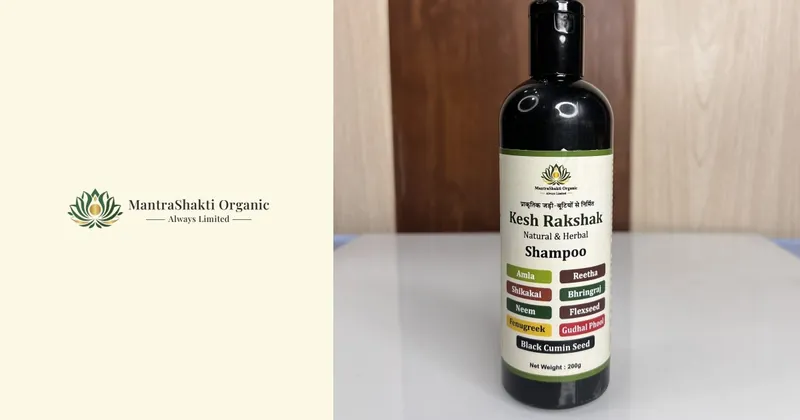
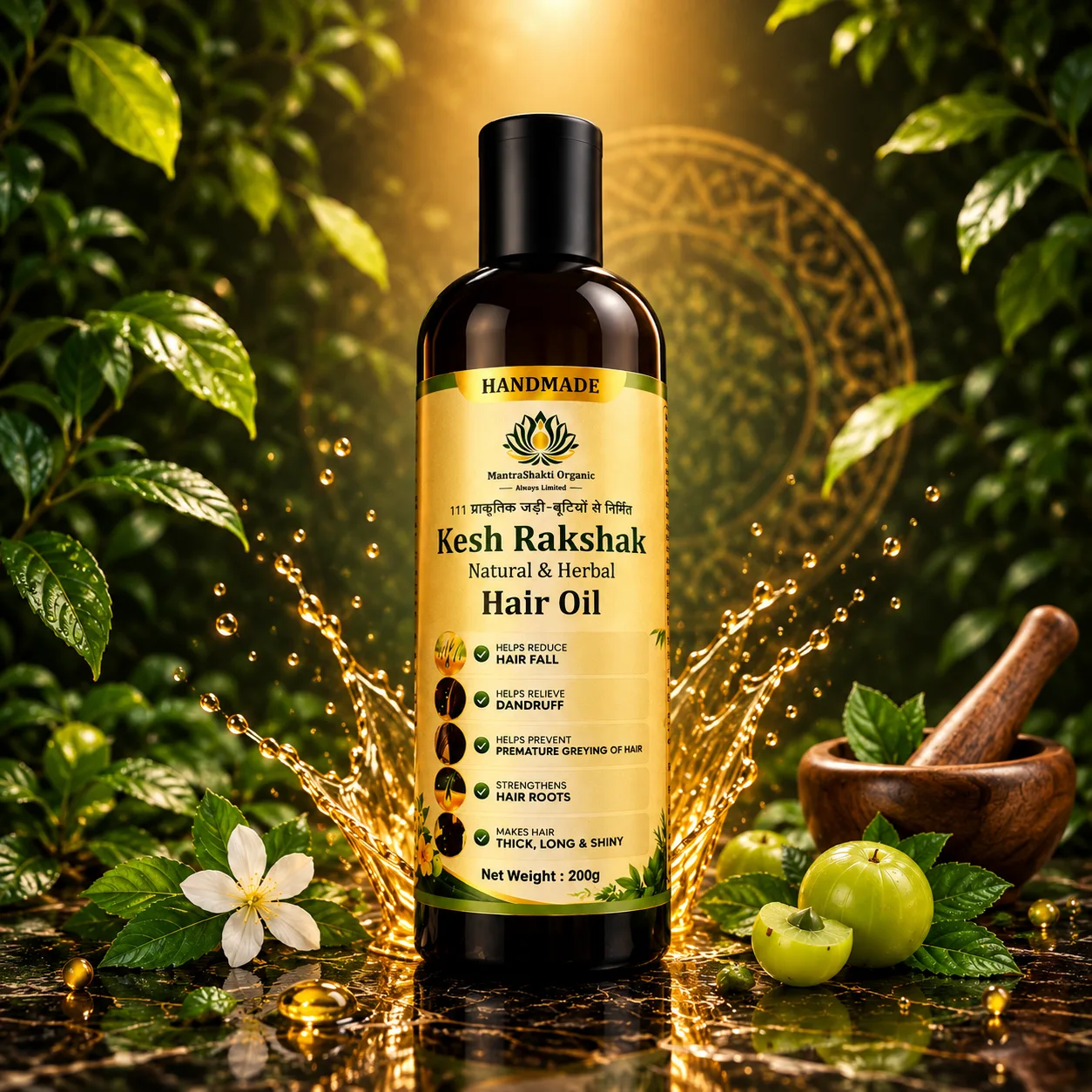
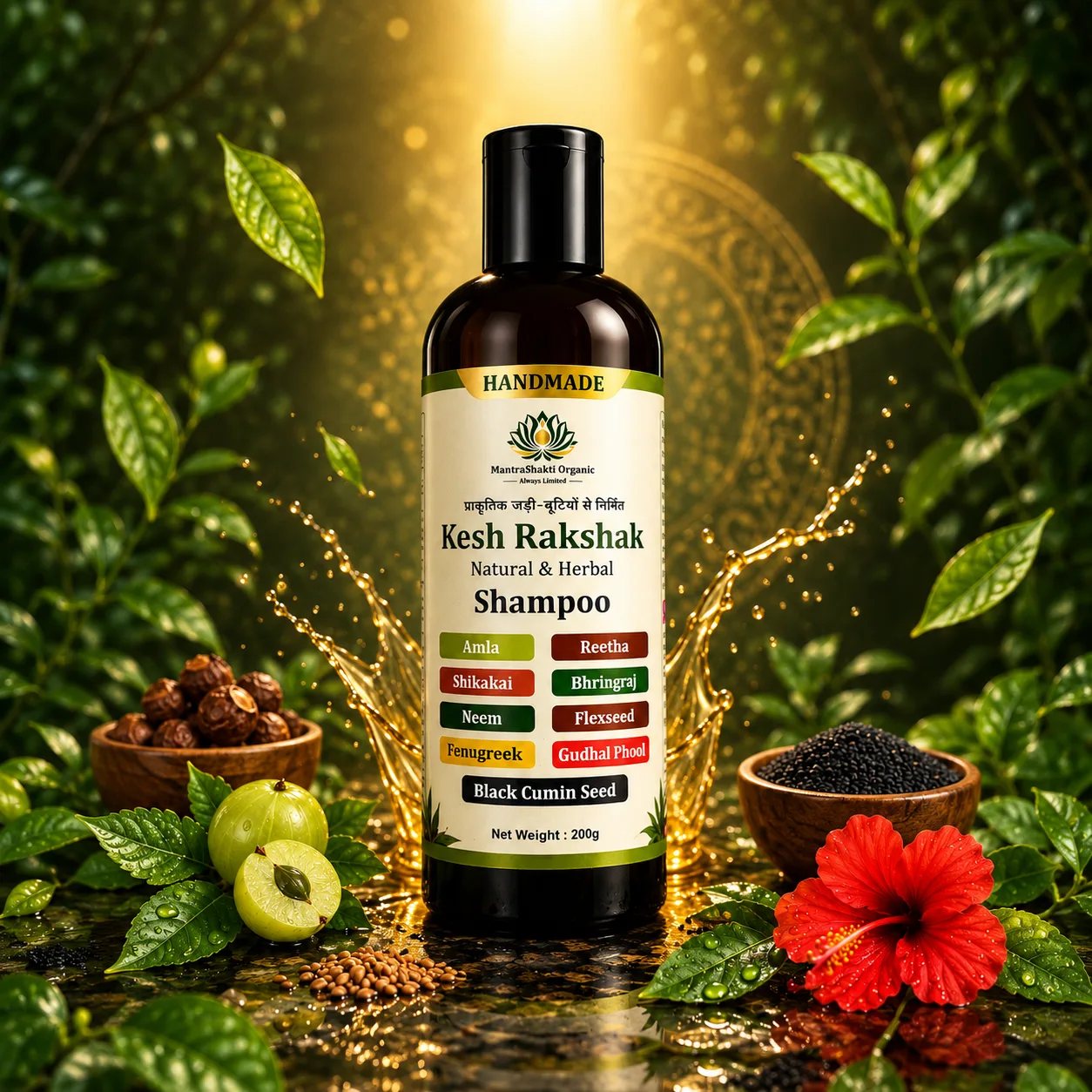
We make the Kesh Rakshak Hair Oil by hand-infusing herbs in oil, for a weekly champi, and it names Bhringraj, Brahmi, Amla and Jatamansi. The Kesh Rakshak Herbal Shampoo names nine herbs: Amla, Reetha, Shikakai, Bhringraj, Neem, Flaxseed, Fenugreek, Gudhal and Black cumin seed. Both are made at our family workshop in Chinhat, Lucknow, and the full range is in the Kesh Rakshak category. Our weekly champi guide explains the oiling routine, and the amla buying and storing guide covers the fruit. If you have a skin or scalp condition, an allergy, are pregnant or take medication, ask a doctor before using a new herbal product, and patch-test first.
Frequently asked questions
What is bhringraj called in English?
Bhringraj in English is false daisy, also called eclipta. Its accepted botanical name is Eclipta prostrata, and the older name Eclipta alba is still printed in many books and on many packs. The Ayurvedic Pharmacopoeia of India lists the whole plant as the part used. Kesharaja, one of its Sanskrit names, is glossed as king of hair; that is the meaning of a name, not evidence of anything.
What is jatamansi in English, and what part is used?
Jatamansi in English is spikenard, also called nardus root. The plant is Nardostachys jatamansi, a high-altitude Himalayan herb, and the Ayurvedic Pharmacopoeia lists the dried rhizome as the part used. A plant-name database warns that some local names for it are probably misapplied, so check the botanical name on the label.
Is brahmi the same plant as gotu kola?
Not always. Two plants carry the name brahmi: Bacopa monnieri and Centella asiatica, which is gotu kola or Indian pennywort. A university plant-name database notes that brahmi means Centella in northern and western India but Bacopa in Kerala, and that mandukaparni swaps the same way. The botanical name on a label is the only reliable check.
What are reetha and shikakai called in English?
Reetha is soapnut, also called Chinese soapberry, from Sapindus mukorossi; the dried fruit is the part used. Shikakai is a soap pod, from Senegalia rugata, formerly named Acacia concinna; the pods are the part used. An encyclopaedia entry describes shikakai as traditionally used for hair care in the Indian subcontinent, and reetha is called soapnut because it is a washing fruit. We make no claim beyond that.
What is gudhal in English?
Gudhal is hibiscus, also called China rose or Chinese hibiscus. Its botanical name is Hibiscus rosa-sinensis, and the flower is the part we mean when we say gudhal ke phool. It is named in the Kesh Rakshak Shampoo's herb list.
Which part of each plant is used?
Whole plant for bhringraj and brahmi; rhizome for jatamansi; fruit for amla and reetha; pods for shikakai; flowers for gudhal; seeds for methi, kalonji and alsi; leaf for neem, though the Pharmacopoeia also lists its stem bark and other parts. The part matters because two preparations of the same plant can differ.
How can you tell which brahmi is in a product?
Read the ingredient list for a botanical name: Bacopa monnieri or Centella asiatica. If the pack only says brahmi, ask the maker which plant it is. Neither answer tells you anything about what the plant does; it only tells you which plant it is.
Is kalonji the same as black cumin and kala jeera?
Kalonji is Nigella sativa, whose English names include black cumin, black seed and black caraway. Kala jeera is a Hindi name for both Nigella sativa and a different spice, Bunium persicum, also called black cumin or Kashmiri cumin. When a label says black cumin seed, the botanical name settles which plant it means.
Sources and further reading
- Government of India, Ministry of Health and Family Welfare, Department of AYUSH: The Ayurvedic Pharmacopoeia of India, Part I, Volume I (e-book)
- Government of India, Department of AYUSH: The Ayurvedic Pharmacopoeia of India, Part I, Volume II (e-book)
- Government of India, Department of AYUSH: The Ayurvedic Pharmacopoeia of India, Part I, Volume IV (e-book)
- University of Melbourne: Multilingual Multiscript Plant Name Database
- GBIF Backbone Taxonomy: species name-matching service
- Wikipedia: Senegalia rugata
Written by the MantraShakti Organic workshop team, Chinhat, Lucknow. This is a glossary of names and botany, not medical advice and not a claim about any herb.
Shop this guide
Made by hand in small batches in Lucknow.
More from the Journal
19 Nov 2026 · 12 min
How an Ayurvedic Hair Oil Is Actually Made (and What a Herb Count Tells You)
Read more →