
Soap for Hard Water in India: Why It Won't Lather and What Helps
Why doesn't soap lather in hard water?
The right soap for hard water in India matters less than your method. Calcium and magnesium in borewell water turn ordinary soap into an insoluble scum, so it lathers less and rinses slowly. Build the lather in your hands, use less bar, rinse longer, and read the label: a bathing bar is defined for soft and hard water.
This guide is about the body: the bucket, the shower and the bar. For hair, see our hard-water hair-washing routine, which we will not repeat here. Nothing below is medical advice.
Key takeaways
- The cause: hardness is dissolved calcium and magnesium. The World Health Organization calls it the traditional measure of water's capacity to react with soap, and says hard water needs considerably more soap to lather.
- The scum: soap plus hardness makes an insoluble film. It is the grey ring on your bucket and the drag you feel when you rinse.
- The numbers: WHO bands are under 60 mg/L soft, 60 to 120 moderately hard, 120 to 180 hard and over 180 very hard. India's drinking-water standard, IS 10500, allows 200 mg/L total hardness as acceptable and 600 as permissible.
- The fix: lather in your hands or on a cloth, use less bar, rinse longer. That changes how you bathe, not the water; only an ion-exchange softener changes all of it.
- The label: the Bureau of Indian Standards keeps toilet soap and bathing bars as separate products.
What is the scum, and why does soap feel hard to rinse off?
Soap scum is the insoluble calcium and magnesium salt of soap, and it feels hard to rinse because it is not dissolving; it is clinging. A Michigan State University chemistry text explains that calcium and magnesium make soap's micelles aggregate and deposit as a dirty scum, and WHO notes that hard water often leaves a deposit of insoluble soaps and salts, the familiar "bathtub ring".
That one reaction explains three things you notice in an Indian bathroom:
- Little lather at first. The first soap you use is spent on the hardness in the water. Only what is left over foams. This is why WHO calls hardness the traditional measure of water's capacity to react with soap.
- A film on skin and surfaces. The spent soap does not wash away. It settles on the bucket, the mug, the tiles and, in thin form, on you, which is the tacky drag after rinsing.
- A heavy hand "works" but makes more scum. Once the hardness is used up, extra soap lathers, so piling on the bar looks like a fix. It also leaves more scum to rinse, and finishes the bar faster.
What is hard water, and how hard is borewell water?
Hard water is water carrying a lot of dissolved calcium and magnesium, reported as milligrams per litre (mg/L) of calcium carbonate. WHO adds that small water supplies using groundwater often meet significant hardness, which is why borewell water is a common place to find it. A lab report, not the colour of the water, tells you where yours sits.
| Class | Hardness (mg/L as calcium carbonate) | Grains per gallon (approx.) | What you tend to see |
|---|---|---|---|
| Soft | Below 60 | Under 3.5 | Lather builds easily; little film |
| Moderately hard | 60 to 120 | 3.5 to 7 | Slower lather; a faint film on tiles |
| Hard | 120 to 180 | 7 to 10.5 | Thin lather; film on taps and buckets; scale in the geyser |
| Very hard | Over 180 | Over 10.5 | Scum on the bar, bucket and tiles; heavy scale |
The bands are WHO's. The last column is our plain description, not a measured scale. One grain per gallon is about 17 mg/L, according to Penn State Extension, which is useful if a softener's data sheet uses the older unit.
India's drinking-water standard gives you a yardstick. IS 10500:2012 sets total hardness (as CaCO3) at 200 mg/L acceptable and 600 mg/L permissible where no alternative source exists, and total dissolved solids at 500 and 2,000 mg/L. Those are limits for water you drink, not rules for bathing, but notice the overlap: 200 mg/L already sits in WHO's "very hard" band. Water can pass for drinking and still be very hard on soap.
How can you tell at home if your bathing water is hard?
Look for scale and scum first, then run a shake test against a bottle of RO or packaged water. Only a lab report gives a number.
The everyday signs are a white crust on tap mouths, shower heads and the bucket rim; scale inside the geyser or kettle; a grey film on tiles, mugs and soap dishes; and a fresh bar that barely lathers. WHO notes that hard water deposits scale in heated water applications and reduces their efficiency, so a geyser that takes longer to heat is a clue too.
- Set up two bottles. Use clear half-litre bottles, each two-thirds full: one with your bathing water, one with RO or packaged drinking water as the soft comparison.
- Make soap water. Grate a teaspoon of the bar you actually bathe with into a cup of warm water and stir until it dissolves.
- Add the same amount to each bottle. One tablespoon is enough.
- Cap and shake hard for ten seconds.
- Wait one minute and compare. Soft water holds a tall, lasting foam over clear water. Hard water gives thin, quickly collapsing bubbles over a cloudy or curdy layer.
The test compares; it does not measure. A TDS pen is a rough hint too, because TDS counts every dissolved solid, not only calcium and magnesium. IS 10500 lists TDS and total hardness as two separate parameters. For a figure, send a sample to a water-testing laboratory and ask for "total hardness as CaCO3", the wording the standard uses, then compare it with the bands above.
What is the right soap for hard water in India: toilet soap or a bathing bar?
No bar changes your water, but the two bar categories behave differently in it. Ordinary soap reacts with calcium and magnesium. The Bureau of Indian Standards (BIS) keeps the bathing bar as its own product: soap of fatty acids plus synthetic surface-active agents, which BIS says can be used for bathing in soft and hard water.
You may see "toilet soap" and "bathing bar" as product names on Indian wrappers; they are also the names of two separate BIS specifications, IS 2888 and IS 13498. The definition above comes from the 1997 edition of IS 13498, which is the edition we read in full; BIS now lists a second revision, IS 13498:2017, so check the current text before quoting it. The 1997 text names the synthetic agents a bathing bar may use, including isethionates, sulphonates, sulphates, sarcosinates, betaines and alkyl polyglycosides, which is a useful list to carry when you read an ingredient panel.
Why that matters in hard water: the Michigan State chemistry text notes that the sulfonate groups used in virtually all anionic detergents make their micelles more soluble with the calcium and magnesium found in hard water. Soap micelles clump and deposit; sulfonate-type ones stay more soluble.
| Category | What it is | In hard water | What to check |
|---|---|---|---|
| Toilet soap (IS 2888) | Soap: fatty acids made into salts; graded by total fatty matter | The soap reacts with calcium and magnesium, so lather is lower and some scum forms | The grade and ingredient list; use the lather method below |
| Bathing bar (IS 13498) | Soap of fatty acids plus synthetic surface-active agents; defined for soft and hard water | The synthetic part stays more soluble with hardness ions, so lather can be less affected; the soap part can still leave some scum | The ingredient list for the agents named above; some people prefer a shorter, soap-only list |
Neither is "good" or "bad". They are built for different jobs, and your water decides how much the difference shows. If your lather is poor, test the water before you blame the bar.
How do you get a better lather from a bar in borewell water?
Make the lather in your hands or on a wet cloth, not on your skin; use one or two passes of the bar instead of a scrub; and rinse for longer than feels necessary. The idea is simple: soap that meets only a little water first has fewer hardness ions to use itself up on.
- Wet your skin, the bar and your hands with warm water. Warm water softens the bar and spreads it faster than cold.
- Lather between your palms or on a wet cotton cloth or mesh pouf for 15 to 20 seconds. The cloth traps air and builds foam from very little soap.
- Spread the lather in sections: arms, then chest and back, then legs. Do not rub the bar directly over dry patches.
- Rinse generously. Use more water than you think you need, and keep going until your hand slides over the skin without a tacky drag and the run-off no longer looks cloudy.
- Finish with a mug of softer water for the face and hands if you have RO or packaged water to spare. WHO says reverse osmosis removes virtually all minerals. A mug is realistic; a bucket is not.
- Pat dry and wipe the bar-dish dry too.
If you have a skin condition or an allergy, or your skin feels itchy, sore or flaky after bathing, ask a doctor. This guide is about washing and cleaning, not skin.
What changes the water, and what only changes how you bathe
| Option | Changes the water? | What it does | Practical note |
|---|---|---|---|
| Lather in hands or on a cloth | No | Makes a concentrated lather before the soap meets much water | Free. A cloth traps more air than bare palms. |
| Less bar, longer rinse | No | Leaves less scum on skin and surfaces | Uses more water; needs patience |
| A mug of RO or packaged water at the end | Only that mug | Rinses the face and hands with water that leaves little film | WHO: RO removes virtually all minerals. Fine for a mug, not for a bucket. |
| Ion-exchange softener on the tank or borewell line | Yes, all of it | Replaces calcium and magnesium with sodium (WHO) | Needs a plumber, salt for recharging, and a bypass so drinking water stays unsoftened; WHO notes softening raises sodium |
| Carbon or sediment filter | No | Aimed at chlorine, odour and grit | Ask for the hardness-removal figure; if there is none, assume none |
| Bathing bar | No | Uses agents less affected by hardness | Read the ingredient list |
WHO also describes a middle path some homes use: softening only the hot-water line into the geyser, so the water you drink and cook with is left alone. Whether that suits your plumbing is a question for a plumber, not a bar of soap.
How should you look after a bar of soap in hard water?
Keep it dry between uses. A bar that sits in a puddle keeps dissolving and turns soft and slimy, and in hard water the pooled water also leaves a white crust on the dish.
- Use a slatted or draining soap dish, and keep it out of the direct shower spray.
- Shake off the water and set the bar on its side or end so that it can dry.
- Rotate two bars if you can, so each gets a full day to dry out.
- Rinse and wipe the dish once a week; mineral crust builds up where water dries.
- Keep spare bars in a cool, dry, ventilated place, not in the bathroom.
How do you clean soap scum and limescale from the bathroom?
Use two different cleaners for two different deposits: dish-washing liquid for the grey soapy film, and a mild acid for the white mineral crust. Never mix either with bleach.
| Deposit | Where you see it | What works | Notes |
|---|---|---|---|
| Soap scum (grey, filmy) | Tiles, tub, bucket, mug | Dish-washing liquid in warm water, a soft brush, a good rinse | Synthetic detergents do not clump with calcium and magnesium the way soap does, which is why this works. |
| Limescale (white, hard crust) | Tap mouths, shower head, bucket rim, glass | A cloth soaked in half white vinegar and half water, or a tablespoon of citric acid powder in a cup of warm water; leave 15 to 30 minutes, scrub softly, rinse | Acid can dull marble, limestone and some polished tiles. Test a hidden corner first. |
| Scale inside the geyser | The tank and heating element | Ask the maker's technician or a plumber | WHO notes scale reduces a heater's efficiency. Do not pour acid into a geyser yourself. |
A safety rule matters more than any recipe. The National Capital Poison Center says that mixing bleach with an acid makes chlorine gas, and that many household cleaners contain acids, including vinegar and some toilet bowl cleaners. Do not mix bleach with vinegar, citric acid or an acidic toilet cleaner. Rinse one cleaner away completely before using another, keep the door open, wear gloves, and if you breathe fumes, step into fresh air and seek medical help if you struggle to breathe (Poison Control guidance).
To slow the build-up, wipe the walls and taps dry after bathing and rinse the bucket and mug upside down so water does not dry on them.
What are the common mistakes with soap in hard water?
- Using more bar to force a lather. It works, because the hardness gets used up first, but it leaves more scum and finishes the bar faster.
- Rubbing the bar over dry skin or under the shower. The soap meets a lot of water at once. Lather in your hands or on a cloth.
- Rinsing briefly. The film is what you feel afterwards.
- Reading a TDS pen as hardness. It counts all dissolved solids.
- Buying a shower filter or softener head on its label alone. Ask what it removes, and for the hardness figure.
- Leaving the bar in a puddle.
- Mixing cleaners when you tackle the scum.
How we make our Divya Snan bars, and what we can honestly say
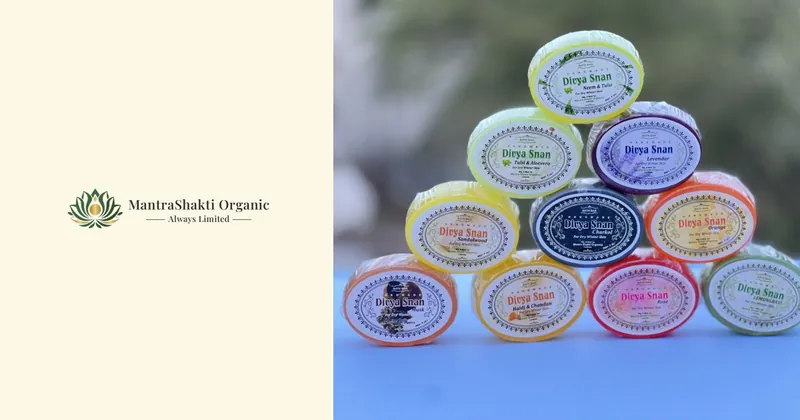
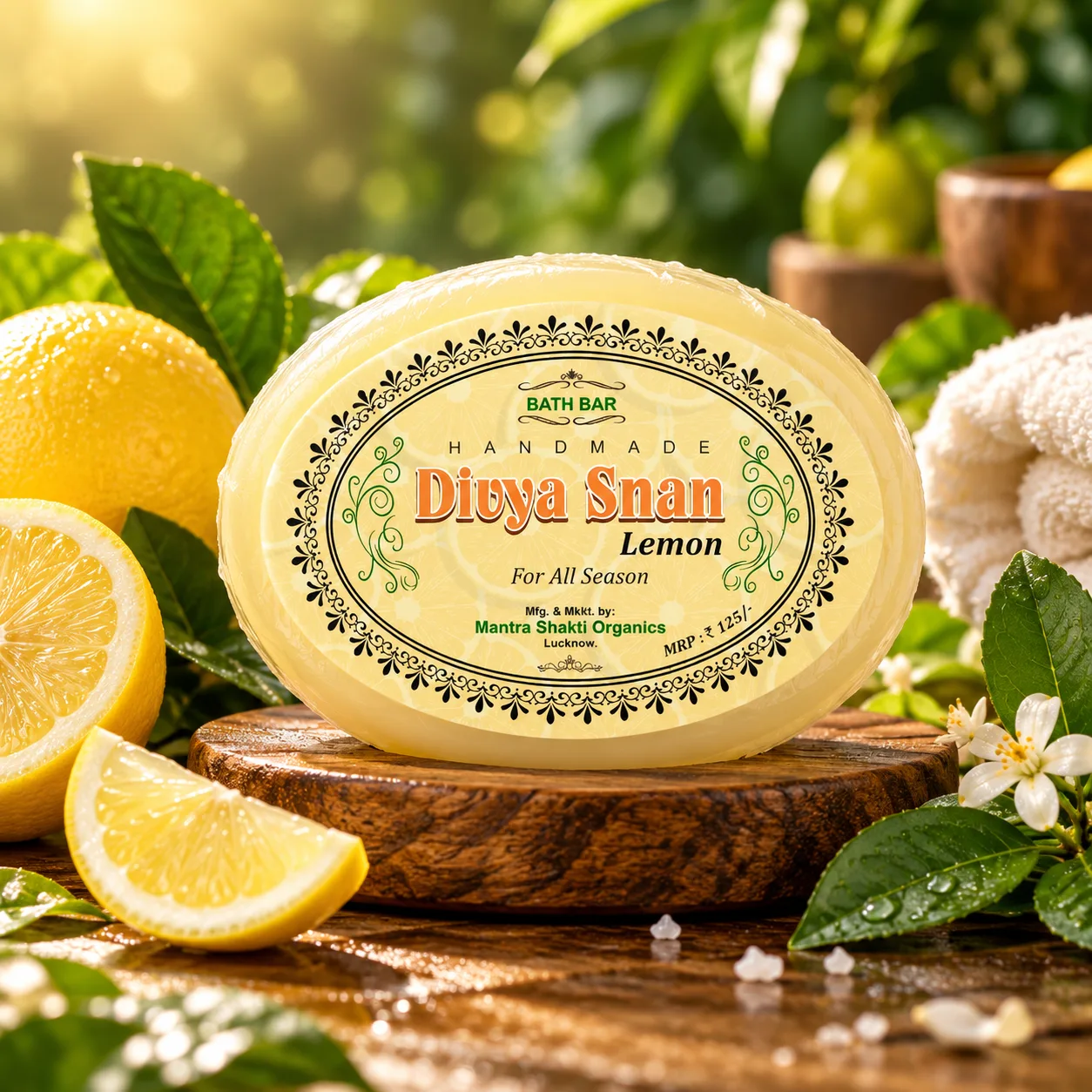
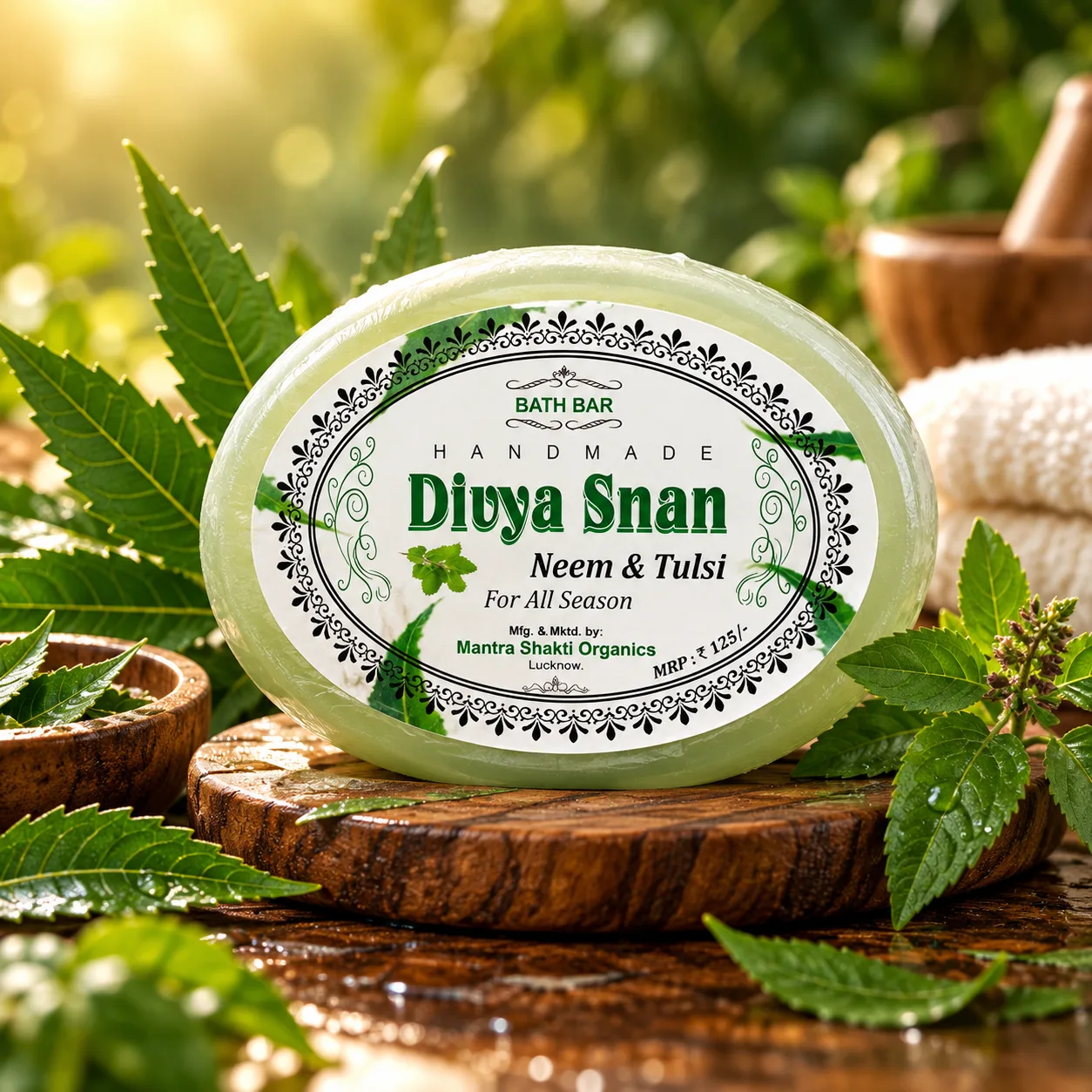
We make the Divya Snan bath bars by hand, in small batches, at our family workshop in Chinhat, Lucknow. We have not run hard-water comparisons, so we do not claim our bars lather better than any other; everything above applies to any bar you use. If you would like to try one anyway, the Lemon and Neem & Tulsi bars are ₹125 each, the guide to choosing a Divya Snan bar compares the scents, and the whole range is in the Divya Snan category.
Frequently asked questions
Why doesn't soap lather in hard water?
Because the calcium and magnesium in hard water react with soap and form an insoluble scum before it can foam. The World Health Organization calls hardness the traditional measure of water's capacity to react with soap, and says hard water needs considerably more soap to lather. The bar is working; it is being used up.
Which soap is right for hard water in India?
No bar softens water, so method matters as much as the bar. The Bureau of Indian Standards defines a bathing bar as soap plus synthetic surface-active agents, usable in soft and hard water, while toilet soap is a separate specification. Read the ingredient list, build the lather in your hands, and rinse for longer.
Why does soap feel hard to rinse off in some water?
The scum is an insoluble calcium and magnesium salt of soap, so it clings instead of dissolving. It is the same material as the grey ring on a bucket. Use less bar, lather in your hands or on a cloth, and rinse until your hand slides over the skin without a tacky drag.
How can I tell at home if my bathing water is hard?
Look for white crust on taps and the bucket rim, scale in the geyser or kettle, and a grey film on tiles. Then run a shake test against RO or packaged water using the bar you bathe with: thin, short-lived bubbles and a cloudy layer point to hard water. For a number, ask a lab for total hardness as CaCO3.
Is a bathing bar different from soap in hard water?
Yes, by definition. The BIS bathing-bar standard describes soap of fatty acids plus synthetic surface-active agents, usable in soft and hard water, while toilet soap is soap alone. Chemistry texts note that sulfonate-type agents stay more soluble with hardness ions. How much difference you see depends on the formula and your water.
How do you get a better lather from a bar in borewell water?
Wet the bar and your hands, make the lather between your palms or on a wet cloth, then spread it over the skin. Use one or two passes of the bar, not a scrub, lather in sections, and rinse for longer than feels necessary. It will not soften the water, but it spends less soap on hardness and leaves less film.
Is TDS the same as hardness?
No. TDS counts every dissolved solid, while hardness counts mainly calcium and magnesium. IS 10500 lists them as separate drinking-water limits: TDS 500 mg/L acceptable and 2,000 permissible, total hardness 200 and 600 mg/L. A TDS pen is a rough hint; a lab report on total hardness is the real figure.
How do I clean soap scum and limescale from bathroom tiles and buckets?
Use dish-washing liquid and a soft brush for the grey soapy film, and a mild acid such as diluted white vinegar or citric acid for the white mineral crust, then rinse well. Test acids on a hidden corner of natural stone. Never mix bleach with vinegar or acidic toilet cleaners, because that makes chlorine gas.
Sources and further reading
- World Health Organization: Hardness in drinking-water, background document (2011)
- Bureau of Indian Standards: IS 10500:2012, Drinking water specification (Tables 1 and 2)
- Chemistry LibreTexts, Michigan State University: Soaps and Detergents
- Bureau of Indian Standards: IS 13498 (1997), Bathing bar specification
- Penn State Extension: Water Softening
- National Capital Poison Center: Chlorine gas, what happens if you mix bleach and other cleaners
Written by the MantraShakti Organic workshop team, Chinhat, Lucknow. This is general information about washing and cleaning, not medical advice.
Shop this guide
Made by hand in small batches in Lucknow.
More from the Journal