
What Is TFM in Soap? Grade 1, 2, 3 and Bathing Bar vs Toilet Soap
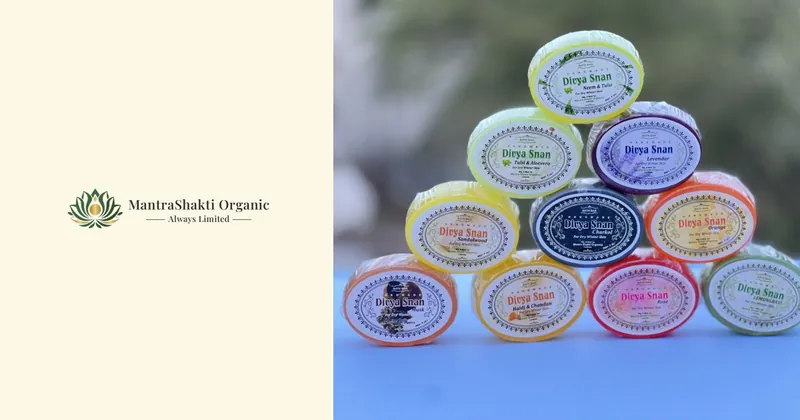
What is TFM in soap?
TFM in soap stands for total fatty matter: the share of a bar's weight that is fatty matter, found by splitting the soap with acid and weighing what separates. Indian standard IS 2888 sets minimums of 76% (Grade 1), 70% (Grade 2) and 60% (Grade 3) for toilet soap. TFM describes composition, not mildness.
It is the number printed on many Indian soap wrappers beside "Grade 1" or "Grade 2", and the one people type into search boxes as "TFM soap kya hota hai". This guide explains what it means, what the three grades are, how a bathing bar differs from a toilet soap, how to read a wrapper, and what TFM cannot tell you. It names no brands, because a TFM figure belongs to a specific product and batch.
Key takeaways
- TFM is a percentage by mass. "TFM 76%" means about 76 g of fatty matter in every 100 g of bar; the rest is water, salt, glycerin, fragrance and the sodium that turned the fatty acids into soap.
- IS 2888:2004 sets minimum TFM of 76.0 (Grade 1), 70.0 (Grade 2) and 60.0 (Grade 3). A grade is a floor, not a quality score.
- A bathing bar is a separate category under IS 13498: soap plus synthetic surface-active agents, with a TFM minimum of 40%, or an alternative test on dissolved actives.
- "Konsa sabun me TFM 76 hota hai?" The answer is on the wrapper, not on a brand list: look for "Grade 1" and a TFM figure of 76% or more.
- The BIS committee itself noted that TFM does not necessarily correspond to how a soap performs. It says nothing about mildness or what a bar will do for any skin.
- We have not published a TFM figure, a grade or a BIS category for any Divya Snan bar.
How is TFM measured, and what is in the rest of the bar?
A laboratory measures TFM by splitting the soap with a mineral acid and weighing the fatty matter that separates. In the BIS method for bathing bars, the soap is extracted in alcohol and boiled with dilute sulphuric acid, and the released fatty matter is taken up in petroleum ether, evaporated and weighed. You cannot do this at home, which is why the figure on the pack matters.
The rest of the bar is water, the sodium that joined the fatty acids to make soap, a little salt (IS 2888 caps chlorides at 1.5%), perfume, colour, and glycerin, which the Consumer Voice soap report published by the Department of Consumer Affairs describes as a by-product of making soap that is present in the soap itself. Even perfectly dry sodium oleate, a typical soap, is only about 92.8% fatty acid by weight, because the sodium adds weight, so no bar can reach 100%.
Water matters more than most people expect. IS 2888 sets no moisture limit and notes that toilet soap loses moisture on keeping. As a bar dries, its weight falls and its TFM percentage rises, although the fatty matter itself has not changed. That is why a printed TFM describes the bar as it was when tested.
What are Grade 1, Grade 2 and Grade 3 soap?
Grade 1, Grade 2 and Grade 3 are the three grades of toilet soap in IS 2888:2004, the Bureau of Indian Standards' toilet soap specification. They are separated mainly by minimum TFM: 76%, 70% and 60%. The standard also describes how each grade is made and sets other limits, shown below.
| Grade | Minimum TFM | How the standard describes it | Matter insoluble in alcohol, maximum | Lather, minimum |
|---|---|---|---|---|
| Grade 1 | 76.0% | A high-grade, thoroughly saponified, milled or homogenised soap, in firm, smooth cakes | 2.5% | 280 ml |
| Grade 2 | 70.0% | A thoroughly saponified, plodded soap of firm, smooth texture | 10% | 240 ml |
| Grade 3 | 60.0% | A saponified soap of firm, smooth texture | 10% | 200 ml |
Three details make the table easier to use:
- The numbers are minimums. A soap with 78% TFM is still Grade 1. The grade gives you the floor, and the TFM printed on the pack tells you where the bar actually sits.
- The grades have a history. The standard's foreword explains that in the second revision the inexpensive "Janata" soap, which had lower TFM, became Grade 2, and another lower grade already sold in the country, at sixty per cent TFM, was added as Grade 3.
- Other websites sometimes quote different cut-offs. The figures here come from the standard's text, including its three amendments, none of which changed the TFM limits.
What is a bathing bar, and how does it differ from a toilet soap?
A bathing bar, in the BIS definition, is a product containing soap of fatty acids and synthetic surface-active agents as active ingredients, usable for bathing in soft and hard water. A toilet soap is a saponified soap in one of the three grades above. They sit under two different standards, IS 13498 and IS 2888, so their TFM numbers are not directly comparable.
| Point | Toilet soap (IS 2888:2004) | Bathing bar (IS 13498:2017) |
|---|---|---|
| What it is | Saponified soap, in three grades | Soap of fatty acids plus synthetic surface-active agents |
| Minimum TFM | 76, 70 or 60% by grade | 40%, with at least 4.0% synthetic surface-active agent; or, as an alternative, at least 8.0% fatty matter from dissolved actives |
| Lather, minimum | 280, 240 or 200 ml by grade | 200 ml |
| Surfactants | Not part of the description | From a listed set, such as fatty isethionates, sulphosuccinates, betaines, alcohol sulphates, LAS and alkyl polyglycosides; they must pass a biodegradability test |
| Name on the pack | Grade and TFM are among the markings | The words "bathing bar" under the brand name; TFM and surface-active agent are among the declared ingredients |
Why does a second category exist? The foreword to IS 13498 says the BIS committee felt that a standard built mainly on composition, meaning TFM, does not necessarily correspond to how a toilet soap performs, because performance depends more on the type of fatty matter than on the total. It also noted that acceptable synthetic surface-active agents can replace some oils and fats, which it called a scarce resource.
The 2017 revision goes a step further. It offers a second route, fatty matter from dissolved actives, on the reasoning that the amount of soap and surfactant that dissolves in water matters for cleansing and lathering more than the total fatty matter in the bar. There is one more reason the numbers do not line up: in a bathing bar, the BIS test method counts the fatty chains attached to synthetic surfactants as well as the fatty matter from soap, so its TFM is not a soap-only figure.
Which is better: toilet soap or bathing bar?
On this evidence, neither. They are different categories built to different standards, and a bathing bar's 40% is not "low" next to a Grade 1's 76%, because the two numbers describe different recipes. Choose between them by scent, feel, price, the water where you live and how your own skin responds. If you have a skin condition or a known allergy, ask a doctor before changing soaps.
TFM soap kya hota hai? Konsa sabun me TFM 76 hota hai?
In short: TFM 76 is the Grade 1 minimum in IS 2888, so a toilet soap sold as Grade 1 should show 76% or more on its wrapper. The answer is a wrapper, not a brand name, and we do not rank brands.
Hinglish mein: TFM ka matlab hai Total Fatty Matter, yaani sabun ke wazan ka kitna hissa fatty matter hai. Agar wrapper par "TFM 76%" likha hai, to 100 gram ke bar mein lagbhag 76 gram fatty matter hai; baaki hissa paani, namak, glycerin, perfume aur doosri cheezein hain. "Konsa sabun me TFM 76 hota hai" ka jawab kisi brand ka naam nahin hai. Jis toilet soap ke wrapper par "Grade 1" aur TFM 76% ya usse zyada likha ho, wahi is level par aata hai. Wrapper padhna sabse bharosemand tareeka hai.
How do you read TFM and grade on a soap wrapper?
Read the product name first, then the grade, then the TFM line, then the ingredients. Both standards list these among the markings they expect on a pack, so a maker following them has a place to put each one.
- Find the product name. "Toilet soap" points to IS 2888. "Bathing bar" is the name IS 13498 asks for, shown under the brand name. A pack that says only "soap" leaves you to work it out from the other lines.
- Look for a grade. IS 2888 lists the grade among its markings. In the Consumer Voice test of twelve toilet soaps, two packs did not print theirs, so a missing grade is worth noticing.
- Find the TFM line. Both standards list TFM among the markings. A figure of 76% means about 76 g of fatty matter in every 100 g, and "min" means "at least".
- Read the ingredients for surfactants. Soap appears as sodium salts of fatty acids, such as sodium palmate or sodium cocoate. Names such as sodium cocoyl isethionate, a sulphosuccinate, cocamidopropyl betaine or sodium lauryl sulphate belong to the synthetic surfactant types the bathing bar standard lists.
- Check the month, year and batch. Both standards list them. They matter because a bar loses water as it sits.
- See whether a BIS Standard Mark is printed. Both standards say a pack may also carry it, and BIS licenses its use. We are not giving legal advice on which soaps need a licence.
You cannot verify a TFM figure at home. In the Consumer Voice test, the TFM found in the laboratory was at or above the declared figure for all twelve toilet soaps. That was a small sample from 2014, so it is a reason for reasonable trust, not proof about any soap today.
Is a higher TFM always better?
No. A higher TFM means a larger share of each 100 g is fatty matter and a smaller share is water and other material, and that is all it means. As the BIS committee noted, TFM does not necessarily correspond to how a soap performs, and it cannot tell you how a given person's skin will respond.
If you want to compare value, TFM gives you one fair piece of arithmetic: the cost of each gram of fatty matter. Multiply the bar's weight by its TFM, then divide the price by the result. The two bars below are invented to show the method and are not real products.
| Bar | Weight | Price | TFM | Fatty matter in the bar | Price per gram of fatty matter |
|---|---|---|---|---|---|
| Bar A | 100 g | ₹40 | 60% | 60 g | ₹0.67 |
| Bar B | 100 g | ₹50 | 76% | 76 g | ₹0.66 |
Bar B costs more, yet each gram of its fatty matter costs about the same as Bar A's. That is value on paper, not a quality score, and it works only between bars of the same kind: a bathing bar's other actives are not counted in its TFM.
What does TFM not tell you?
TFM tells you one thing about composition and nothing about how a bar behaves on a particular person. These are the things it leaves out:
- How your skin will respond. That depends on you, the fragrance and the rest of the recipe.
- Which oils and fats were used. The BIS committee thought this matters more than the total, because chain length and saturation change how a soap dissolves.
- Whether synthetic surfactants are present. Only the product name and the ingredient list tell you.
- How long the bar lasts. IS 13498 tests "mush", the loss of mass when a bar sits in water, as a separate measure, and how you store a bar matters too.
- Scent, colour and feel. Those are separate choices.
Common mistakes when comparing soaps by TFM
- Reading TFM as a quality or safety score. It is a composition figure.
- Comparing across categories. A bathing bar's 40% and a toilet soap's 76% are measured against different standards.
- Trusting a claim with no number. "High TFM" or "premium soap" on a pack means little without a figure.
- Assuming a label tells you the TFM. "Handmade", "herbal" or "Ayurvedic" says nothing about it. Look for the figure, or ask the maker.
- Looking for a brand ranking. A TFM figure belongs to one product and batch, so any list goes out of date.
- Relying on any website's grade table. Check the BIS text, as above.
How we make our bars, and what we publish about TFM
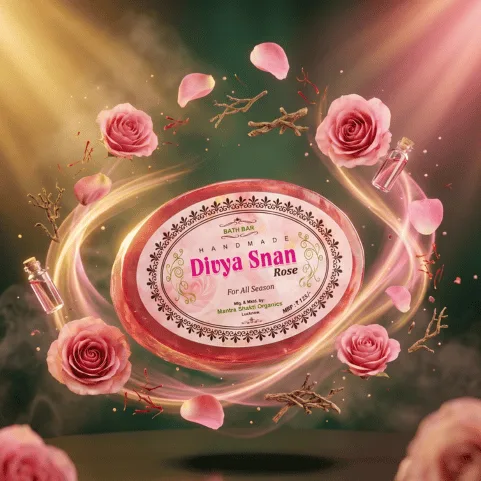
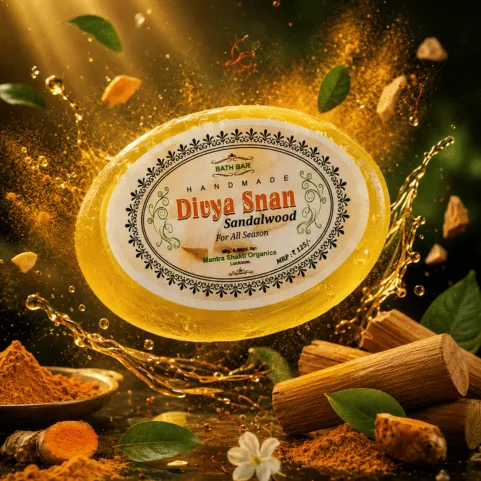
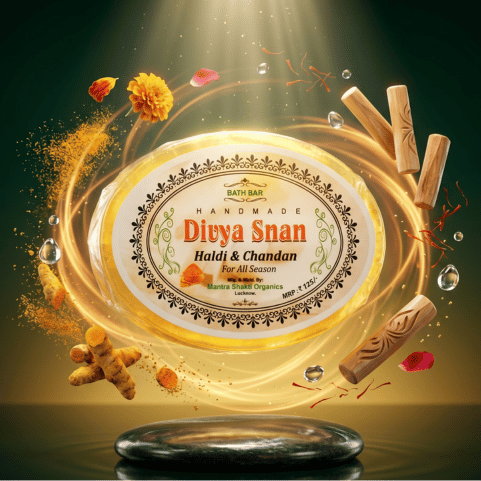
We make the Divya Snan bars by hand in small batches at our family workshop in Chinhat, Lucknow. We have not published a TFM figure, a BIS grade or a BIS category for any of them, and "bath bar" is the name of our product, not a BIS category. That applies to every bar, including the Rose, Sandalwood and Haldi & Chandan bars. If TFM matters to you, write to [email protected] and ask about the bar you have in mind; we would rather say plainly that a figure is not published than let a number appear that we have not measured.
People often search for the TFM of a particular scent, such as a haldi chandan soap. TFM belongs to a recipe and a batch, not to a scent name, so two bars with the same name from different makers can differ widely. If you are choosing between our scents, our guide to choosing a Divya Snan bar compares them, and the whole range is in the Divya Snan collection.
Frequently asked questions
What is TFM in soap?
TFM, or total fatty matter, is the percentage of a soap bar's weight that is fatty matter. A lab measures it by splitting the soap with a mineral acid and weighing the fatty matter that separates. The rest of the bar is water, salt, glycerin, fragrance and the sodium that turned the fatty acids into soap.
What does "TFM 76%" on a soap wrapper mean?
It means about 76 grams of every 100 grams of the bar is fatty matter. In the BIS toilet soap standard, IS 2888, 76% is the minimum TFM for Grade 1, so a Grade 1 pack should show 76% or more. The figure describes composition only, not mildness or any effect on skin.
What is a Grade 1 soap?
Grade 1 is the top of three toilet soap grades in IS 2888. The standard describes it as a thoroughly saponified, milled or homogenised soap with at least 76% TFM and no more than 2.5% matter insoluble in alcohol. A grade is a minimum standard of composition, not a score for quality.
What is the difference between a bathing bar and a toilet soap?
A toilet soap (IS 2888) is a saponified soap with minimum TFM of 76, 70 or 60% by grade. A bathing bar (IS 13498) contains soap plus synthetic surface-active agents and needs at least 40% TFM with at least 4.0% surfactant, or at least 8.0% fatty matter from dissolved actives. They are different categories, not better and worse versions.
Which is better: toilet soap or bathing bar?
Neither wins on paper. They are built to different standards, so their TFM numbers cannot be compared directly. Choose by scent, feel, price, your water and how your skin responds. If you have a skin condition or a known allergy, ask a doctor before changing soaps.
Is a higher TFM always better?
No. A higher TFM means more of the bar is fatty matter and less is water and other material. The BIS committee behind IS 13498 noted that TFM does not necessarily correspond to how a soap performs, because the type of fatty matter matters more than the total. TFM cannot tell you how your skin will respond.
Konsa sabun me TFM 76 hota hai, and how do I check it?
IS 2888 sets 76% as the minimum TFM for Grade 1 toilet soap, so look at the wrapper for "Grade 1" and a TFM figure of 76% or more. You cannot measure TFM at home. We do not rank brands, because a TFM figure belongs to a specific product and batch.
Do MantraShakti bars have a TFM figure or grade?
We have not published a TFM figure, a BIS grade or a BIS category for any Divya Snan bar, and "bath bar" is a product name, not a BIS category. If you want to ask about a particular bar, write to [email protected].
Sources and further reading
- Bureau of Indian Standards: IS 2888:2004 Toilet Soap, Specification (Third Revision), with Amendments 1 to 3 (open copy)
- Bureau of Indian Standards: IS 13498:2017 Bathing Bar, Specification (Second Revision) (open copy, Internet Archive)
- BIS Standards portal: record for IS 2888:2004 Toilet soap, Specification (Third Revision)
- BIS Standards portal: record for IS 13498:2017 Bathing bar, Specification (Second Revision)
- Department of Consumer Affairs, Government of India: Toilet Soaps, comparative test report (Consumer Voice, January 2014)
Written by the MantraShakti Organic workshop team, Chinhat, Lucknow. This guide is general information about soap standards, not legal or medical advice. Figures are taken from the BIS texts listed above, as read on 17 October 2026; check the current BIS editions before relying on them for a regulatory or commercial purpose. Explore the Divya Snan range.
Shop this guide
Made by hand in small batches in Lucknow.
More from the Journal
20 Oct 2026 · 18 min
Abhyanga Snan 2026: How to Do the Diwali Oil-and-Ubtan Bath at Home
Read more →