
Multani Mitti With Rose Water, Milk or Curd: Mixes and Winter Use
What should you mix with multani mitti?
Multani mitti with rose water or plain water is the simplest mix and the usual place to start. Fresh milk or plain curd makes a creamier paste that people who find a water-only pack tight tend to choose, and a little honey makes it sticky. Patch-test whatever you choose, mix it fresh, and leave out lemon.
Key takeaways
- Start plain. Plain water is the lowest-risk liquid and rose water is the usual first upgrade. Change one thing at a time so you know what your skin is reacting to.
- Milk and curd are not neutral liquids. A Cleveland Clinic dermatologist points out that milk and yogurt contain lactic acid, so patch-test them and use them fresh, plain and cold. Never keep a mixed batch.
- Time on skin is set by touch, not by the liquid. Whatever you mix it with, rinse when the layer is dry to the touch, usually after 10–15 minutes, and after 5–10 minutes in winter.
- Leave out lemon. Acidic juices can irritate, and citrus on skin plus sunlight can cause a blistering reaction a day or two later.
- The winter rule: a thinner layer, 5–10 minutes, once every one to two weeks, a lukewarm rinse and a cream straight after.
- "Thandi" is tradition, not a thermometer. The cool feeling of a wet pack is water evaporating, and it is not a reason to use it more or less often.
Multani mitti with rose water, milk, curd or honey: how do the mixes compare?
The liquid changes how the paste feels and spreads. It does not change what the clay is, and it does not change the rule for rinsing: go by touch, not by the clock. The times below are our cautious starting points, because no published study has timed these mixes. If you have not used multani mitti before, learn the basic pack first (a thin layer, rinsed when dry to the touch) and come back to this table afterwards.
| Mix | What the paste is like | Our suggested time | Who tends to choose it | Watch out for |
|---|---|---|---|---|
| Plain water | Smooth and easy to spread; dries quickly | 10–15 minutes, rinsed when dry to the touch | First-timers; oily, combination or reactive skin | Can feel tight on dry skin, so moisturise straight after |
| Rose water (gulab jal) | The same texture as water, with a rose scent | 10–15 minutes | People who like fragrance and know their skin tolerates it | Scent counts as fragrance, which the AAD lists among the ingredients to avoid in facial masks. Pick a bottle that lists only rose water, with no added perfume or alcohol |
| Fresh milk, cold | Creamier; looks thin at first and thickens as the clay absorbs it | About 10 minutes, thin layer | People who find a water-only pack tight | Contains lactic acid, so it is not inert. Use fresh milk only, never from a glass that has been standing, and patch-test it |
| Plain curd (dahi) | Thicker and tangier; clings to skin. Loosen with a teaspoon of water or milk | About 10 minutes, thin layer | Much the same people as milk, who prefer a thicker paste | Same lactic acid caution. Use fresh, mild, plain curd; sour curd is more acidic and flavoured curd is sweetened |
| Milk or curd plus honey (half a teaspoon at most) | Sticky and slow to set; may stay tacky | About 10 minutes, judged by touch, because it may never feel fully dry | Someone who has already tolerated milk or curd on its own | Honey sticks to hair and towels and is one more ingredient that could cause a reaction. Patch-test it separately |
| Lemon, lime, vinegar or other sharp juices | Thin and sharp | Not recommended | Not recommended | Can irritate, and citrus plus sunlight can cause a blistering reaction |
Rose water or milk: which one should you choose?
Neither wins for everyone. Choose by how your skin feels and what it tolerates: plain water or rose water for oily, combination or reactive skin, and milk or curd if a water-only pack leaves you feeling tight and you are sure dairy does not bother your skin. When in doubt, go in this order: plain water, then rose water, then milk.
- Oily or combination skin: plain water or rose water is enough. A richer liquid does not change what the clay does.
- Dry or tight-feeling skin: try milk or curd with a thinner layer and a shorter time, and still moisturise afterwards. No liquid turns a clay pack into a moisturiser.
- Sensitive or reactive skin: plain water only, after a patch test, because every extra ingredient is one more thing to react to.
- Fragrance does not suit you: skip rose water. The AAD advises caution with botanical products, which can still contain fragrance-related ingredients.
How do you mix each version?
Use one tablespoon of powder as the base for every version and add the liquid slowly, because milk and curd behave differently from water. The paste should spread without dripping. Mix in a clean, dry bowl, and make only what you will use now.
- Rose water: one tablespoon of powder with one to two tablespoons of rose water, added a teaspoon at a time.
- Milk: one tablespoon of powder with one to two tablespoons of cold, fresh milk. Pour slowly; the paste looks runny at first and firms up within a minute as the clay absorbs the milk.
- Curd: one tablespoon of powder with one tablespoon of thick, plain, fresh curd. Hung curd (strained curd) gives a thicker paste. If it is too stiff to spread, loosen it with a teaspoon of water.
- Honey: no more than half a teaspoon stirred into a milk or curd mix, kept away from the hairline.
Milk and curd are food, and food spoils. A mixed batch left on the counter or in the fridge is not something to put on your face tomorrow. Throw away what is left.
How do you try a new mix safely?
Change one thing at a time, and patch-test each new liquid before it goes on your face. That way, if your skin reacts, you know exactly what caused it.
- Start with a plain pack. Use plain water for your first pack, so you know how your skin handles the clay itself.
- Patch-test the new mix. Mix a small amount with the new liquid and dab it on your inner forearm or inside of your elbow, which is the AAD's suggested spot. A Cleveland Clinic dermatologist suggests the jawline or behind the ear for homemade masks. Leave it for the time you would leave a pack, rinse, and look at the spot a day later.
- Change only the liquid. If the patch is clear, change nothing but the liquid for your next pack. Keep the thickness, time and frequency the same.
- Judge it the next morning. Comfortable skin means carry on. Tight, flaky, itchy or red skin means go back to the previous mix and wait longer.
- Add honey last, if at all. Only after milk or curd has gone well on its own, and no more than half a teaspoon.
- Rinse and stop at the first itching, burning or stinging. If a reaction does not settle, see a doctor.
Can you add lemon, tomato, haldi or essential oils?
We would leave them out, at least until you know how your skin handles a plain pack. A Cleveland Clinic dermatologist advises avoiding acidic products such as lemon or lime juice and apple cider vinegar, because they have a low pH and can cause skin irritation. Citrus has a second problem: lemon and lime contain compounds that make skin more sensitive to sunlight, and the reaction can start 24 to 48 hours after exposure with tingling, tenderness and redness, followed by blisters, sometimes in streaks across the face. The AAD also lists fragrance and essential oils among the ingredients to avoid in facial masks.
The same logic applies to tomato, haldi and any other kitchen add-in: each one is a new thing your skin has not met, and none is needed for the clay to do its job. If you want to try one, patch-test it on its own, one ingredient at a time.
Is multani mitti thandi or garam?
In everyday Hindi and in many Indian homes, multani mitti is called thandi, meaning cooling. That is a traditional description rather than a measured property, and we have found no measurement behind it. What you can feel is simple physics: a wet paste feels cool on the skin because water evaporating from it carries heat away. Neither the tradition nor the cool feeling is a reason to use the pack more in summer or avoid it in winter. In any season the practical question is how dry your skin is.
Can you use multani mitti in winter?
Yes, with a gentler routine: a thinner layer for 5–10 minutes, once every one to two weeks, a lukewarm rinse and a cream straight after. If your skin is already flaking, chapped or tight before you start, skip the pack until it settles. A clay pack takes oil off the surface by design, and in dry winter air your skin has less to spare.
- Thinner and shorter. Dry air dries the layer quickly, so start checking by touch at the five-minute mark. Rinse as soon as it is dry to the touch.
- Lukewarm water, not hot. The AAD advises warm rather than hot water for baths and showers in cold weather, and the same goes for the rinse after a pack.
- Moisturise at once. The AAD advises applying moisturiser immediately after washing, which traps the moisture already in your skin. It also suggests switching to a heavier cream, or an ointment, when it is cold, because they are more effective and less irritating than lotions.
- Do not stack acids. The AAD suggests cutting back on alpha hydroxy and beta hydroxy acid products in winter, and milk and curd already contain lactic acid. Keep scrubs and exfoliating products away from pack days.
- Choose a gentle cleanser. The AAD notes that antibacterial, deodorant and scented soaps can be too harsh for dry or sensitive skin. If you use a bar on your face, our guide to choosing a Divya Snan bar explains the range, and a patch test comes first.
- Add humidity and stay in. The AAD suggests a cool-mist humidifier in the bedroom and keeping your face protected from the cold, so an evening pack at home suits winter better than one before you go out.
| Season | Leave-on time | How often | Liquid | Straight after |
|---|---|---|---|---|
| Summer (hot, humid or sweaty) | 10–15 minutes | Once a week | Plain water or rose water | A light, oil-free moisturiser, plus sunscreen in the daytime |
| Monsoon (humid air slows drying) | 10–15 minutes; go by touch | Once a week | Plain water | A light moisturiser. Mix fresh, since damp weather spoils leftovers faster |
| Winter (dry, cold air) | 5–10 minutes, thin layer | Once every one to two weeks | Plain water, rose water, or milk or curd if you tolerate dairy | A cream or ointment straight away, with lukewarm water for the rinse |
Is multani mitti suitable for dry skin?
It is an oil-absorbing clay, so it is not made for dry skin, and many people with dry skin simply skip it. If you want to try it, keep it an occasional extra: a thin layer for 5–10 minutes, no more than once every one to two weeks, a patch test first and a cream straight after. If your skin feels tight, flaky or itchy the next day, stop and ask a dermatologist if the dryness does not settle.
Who should skip these mixes?
- Anyone allergic to milk or honey, or who reacts to fragrance, should leave those out. If you do not know, patch-test first.
- Reactive or sensitive skin: plain water only, after a patch test.
- A skin condition, an allergy, pregnancy or regular medication: ask a doctor before using a clay pack, with or without add-ins.
- Children: ask a doctor before using a clay pack on a child's skin.
- Broken, sunburnt or irritated skin: leave the pack for another day.
What are the most common mistakes with these mixes?
- Keeping leftover milk or curd paste. It is food and it spoils. Mix fresh, every time.
- Using sour, flavoured or sweetened curd. Sour curd is more acidic, and sweetened curd is sticky for no benefit. Use fresh, plain curd.
- Using warm or hot milk. Hot liquid on the face is a bad idea. Use cold or room-temperature milk.
- Changing three things at once. A new liquid, honey and a squeeze of lemon in one pack leaves you unable to tell what caused a reaction.
- Adding lemon. It can irritate, and citrus plus sunlight can cause a blistering reaction a day or two later.
- Waiting for a honey mix to dry. It may never feel dry. Stop at about 10 minutes and rinse.
- Taking "thandi" as permission to use it more. Tradition is not a dose. Frequency depends on your skin, not on the season's reputation.
- Skipping the cream in winter, or rinsing with hot water. Both undo the point of a gentler routine.
How do we sell our multani mitti?
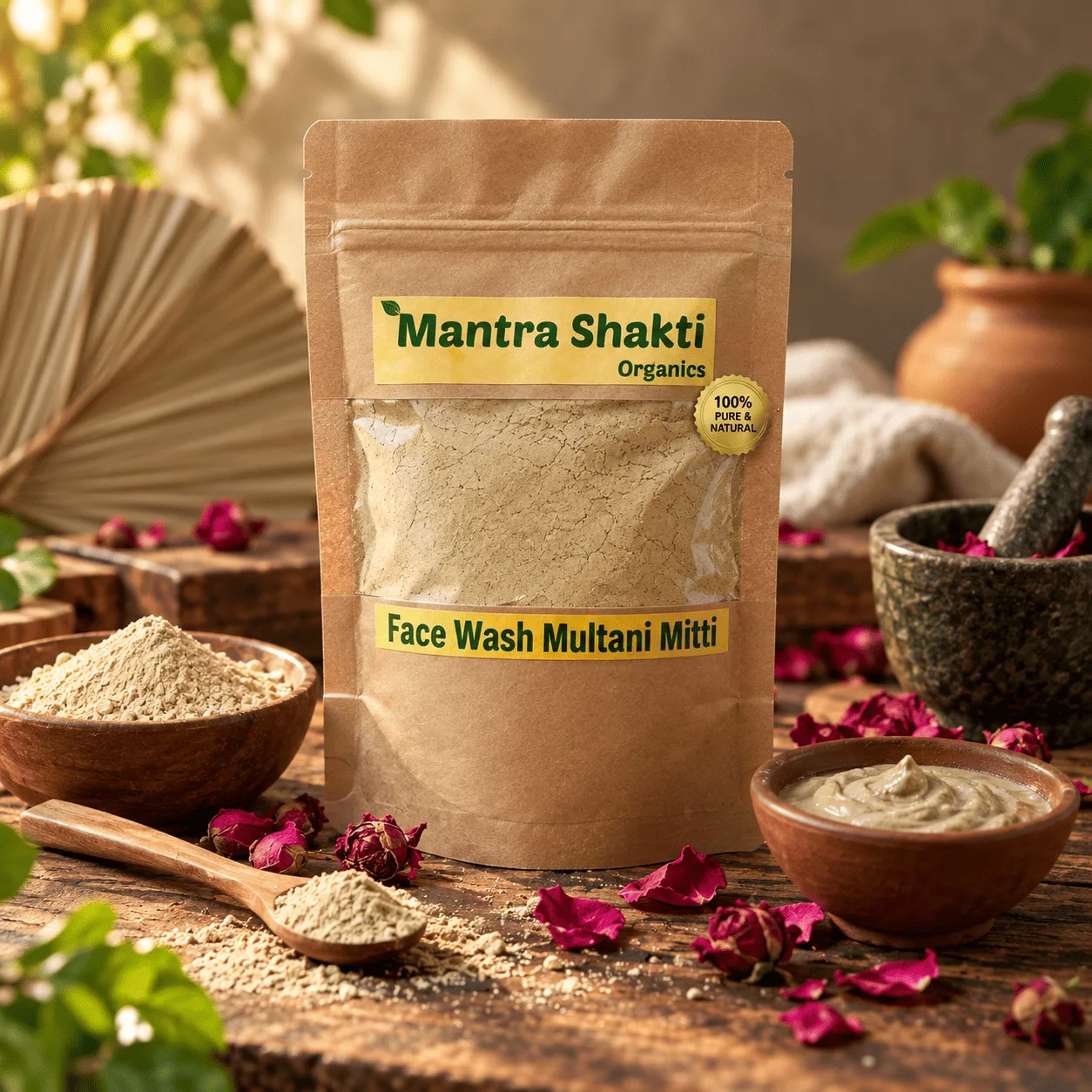
We sell plain multani mitti, not a kit or a ready mix. Our Multani Mitti Face Cleanser (100 g, ₹199) is a single-ingredient multani mitti (fuller's earth) powder, so the choice of liquid is yours. We do not sell rose water, and any bottle whose label lists only rose water will do. Like everything we make, it comes from our family workshop in Chinhat, Lucknow, in small batches. If you would rather have a bar for the face, see the Divya Snan range.
Frequently asked questions
What should I mix with multani mitti?
Plain water or rose water is the simplest place to start. Fresh, cold milk or plain curd makes a creamier paste for those who find a water-only pack tight, and a little honey makes it sticky. Patch-test each new liquid, change one thing at a time, and leave out lemon and other sharp juices.
Multani mitti with rose water or milk: which is better?
Neither is better for everyone. Rose water or plain water suits oily, combination and reactive skin, while milk suits people who find water-only packs tight and are sure they tolerate dairy. Rose water adds fragrance, which can irritate sensitive skin, and milk contains lactic acid, so patch-test either one and start with plain water.
Can I mix multani mitti with curd (dahi)?
Yes, if your skin tolerates dairy. Use fresh, mild, plain curd, because sour curd is more acidic and flavoured curd is sweetened. Mix one tablespoon of powder with one tablespoon of thick curd, loosen it with a teaspoon of water if needed, and apply a thin layer for about 10 minutes. Patch-test first and never keep the leftover paste.
How long should multani mitti and gulab jal stay on the face?
Rose water does not change the timing. Rinse when the layer is dry to the touch and feels slightly tight, usually after 10–15 minutes and before it cracks. In winter, aim for 5–10 minutes. If it itches, burns or stings at any point, wash it off straight away.
Can I use multani mitti in winter?
Yes, with a gentler routine: a thin layer for 5–10 minutes, once every one to two weeks, a lukewarm rinse and a cream straight after. Skip it if your skin is already flaky, chapped or tight, and ask a dermatologist if dryness does not settle.
Is multani mitti thandi or garam?
In many Indian homes it is called thandi, meaning cooling, which is a traditional description rather than a measured property. A wet pack feels cool because water evaporating from it carries heat away. Neither idea changes how often or how long you should use it; how dry your skin is does.
Is multani mitti suitable for dry skin?
It is an oil-absorbing clay, so it is not made for dry skin, and many people with dry skin skip it. If you want to try it, use a thin layer for 5–10 minutes, no more than once every one to two weeks, apply a cream straight after, and stop if skin feels tight, flaky or itchy.
Can I add lemon (nimbu) to multani mitti?
We would not. A Cleveland Clinic dermatologist advises avoiding acidic juices such as lemon and lime, which can irritate skin, and citrus on skin plus sunlight can cause a blistering reaction a day or two later. Leave lemon out and keep add-ins to a minimum.
Sources and further reading
The guidance above draws on these pages, which we opened and read. The suggested times and frequencies are our own cautious starting points, and we say where no published study backs a number.
- Cleveland Clinic: Do Face Masks Actually Work or Are They Just a Fad? (2019) – a dermatologist on homemade masks: avoid acidic juices, milk and yogurt contain lactic acid, where to patch-test
- Cleveland Clinic: Margarita Burn: Why Lime Juice and Sun Don't Mix (2023) – how citrus on skin plus sunlight causes a delayed, blistering reaction, including on the face
- American Academy of Dermatology: Do facial masks work, and should I add one to my skin care routine? – fragrance and essential oils among the ingredients to avoid, irritation from overuse, moisturising after a mask
- American Academy of Dermatology: How to test skin care products – where and how to patch-test, and why botanical or unscented products can still contain fragrance-related ingredients
- American Academy of Dermatology: Cold weather and your skin (2023) – winter routine: heavier creams, warm not hot water, moisturising straight after washing, humidifier, cutting back on acids
- American Academy of Dermatology: Dermatologists' top tips for relieving dry skin – short warm baths, gentle cleanser, patting dry, cream or ointment rather than lotion
Written by the MantraShakti Organic workshop team, Chinhat, Lucknow. This is general information, not medical advice. If you have a skin condition, an allergy, are pregnant or take medication, ask a doctor before using a clay pack.
Shop this guide
Made by hand in small batches in Lucknow.
More from the Journal