
Haldi Chandan Soap: How to Use It and Avoid Yellow Stains
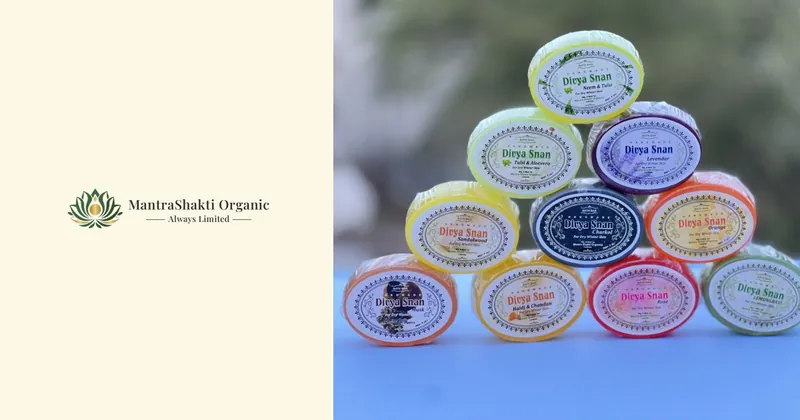
Does haldi chandan soap stain skin, towels or grout yellow?
A haldi chandan soap can leave a faint yellow tint on white towels, nails, plastic and grout, depending on how much colour the bar carries and how long its lather or runoff sits. Turmeric's pigment dissolves in oil far better than in water, so rinse well, keep the bar on a dry dish and clean marks early.
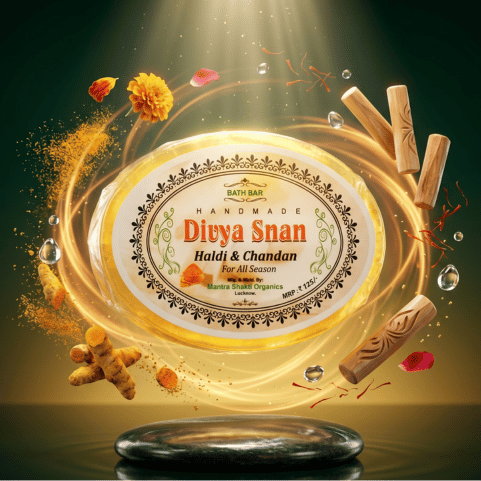
The Divya Snan Haldi & Chandan Bath Bar is named for turmeric (haldi) and sandalwood (chandan), and turmeric is a strong plant pigment. We have not published staining tests for it, so this guide covers any turmeric-containing bar: why the colour sticks, how to avoid it, how to clear it from skin, nails, cloth and surfaces, how often to use a bar like this, and how to store it.
Key takeaways
- Turmeric's yellow comes from curcumin. A chemistry review in the journal Molecules describes it as almost insoluble in water and readily soluble in solvents such as ethanol. In practice, oil lifts a mark that water alone does not.
- In alkaline solutions curcumin shifts from yellow towards red, and soap is alkaline, so a mark can look more orange while it is wet. Sunlight breaks curcumin down, which is why sun-dried cloth often looks paler.
- To avoid marks, rinse until no foam is left, use a coloured towel at first, keep the bar on a draining dish, and wipe the dish and tub after bathing.
- To remove marks, use oil first, then a mild wash, and leave nails for last. Do not scrub, and do not use bleach or citrus juice on skin.
- A bath bar is a cleanser. Use it when you bathe, patch test a new bar, and stop if your skin feels tight or itchy or looks red.
- Haldi and chandan are used together in the traditional ubtan ritual. That is tradition, not evidence, and we make no claims about skin tone or any other effect.
What is haldi chandan soap, and what is it made of?
Haldi chandan soap is a bath bar named for turmeric (haldi) and sandalwood (chandan), the pairing used in the traditional ubtan ritual. Ours costs ₹125 and is handmade in small batches in Chinhat, Lucknow.
The name tells you the two botanicals. It does not tell you amounts, and we do not publish percentages. For the ingredient statement of the bar you are buying, read its product page. How much colour a bar carries depends on what is in it and how much, which is why two turmeric-named bars from different makers can behave differently.
Why does turmeric stain things yellow?
Turmeric stains because its pigment, curcumin, is hydrophobic: it is almost insoluble in water, so it clings to oils, fabric and plastic instead of rinsing away. A review in the journal Molecules by Bhabha Atomic Research Centre chemist K. I. Priyadarsini sets out the properties that matter at home. Curcumin is the main curcuminoid in turmeric, and the review gives the group as 2 to 9 per cent of turmeric.
| Property of curcumin | What the chemistry review reports | What it means at home |
|---|---|---|
| Water-hating | Almost insoluble in water; a hydrophobic molecule | Plain water rinses it poorly, so a mark can survive a splash |
| Dissolves in oils and solvents | Readily soluble in polar solvents such as ethanol; food-grade oils work as an extraction solvent | A little oil lifts a mark that water does not |
| Colour changes with alkalinity | Yellow in neutral solution, deep red in basic solution, with the change around pH 7.5 to 8.5 | Soapy water can make a mark look more orange or red while it is wet |
| Breaks down in sunlight | Degrades much faster in sunlight; turmeric stains are commonly seen to fade quickly in the sun | Washed cloth dried in sunlight often looks paler |
Soap matters here because it is alkaline. DermNet NZ describes normal skin as slightly acidic, at a pH of about 4.5 to 5.75, and soap as alkaline, which follows from how soap is made. A lather is therefore the kind of solution in which curcumin shifts towards red. That is the pigment changing colour, not a new kind of stain, but it explains why a mark can look orange in soapy water. The same chemistry is why haldi from a wedding ceremony clings so persistently to skin, cuffs and bedsheets.
How do you avoid yellow stains when using a haldi chandan bar?
Rinse until no foam is left, use a coloured towel until you know how your bar behaves, keep the bar on a draining dish, and wipe the dish, tub and grout after bathing. These habits cost nothing and do most of the work.
- Try a white-cloth test first. Work the bar into a lather with a little water, rub the lather onto a scrap of white cotton, let it dry, then rinse the scrap. If it keeps a tint, expect a white towel to do the same. This is a rough guide, not a laboratory result.
- Rinse for longer than feels necessary. Rinse until the foam is gone, including under the nails and in the folds of the elbows.
- Use a coloured or older towel at first. Pat dry instead of rubbing, so any trace stays on a towel you do not mind.
- Give the bar a draining dish. A bar sitting in water can leave colour on the dish. Plastic and unsealed wood tend to hold colour, so glazed ceramic or steel is easier to wipe clean.
- Wipe the dish and rinse the tub or tiles after bathing. A fresh film comes off with one swipe; an old film is the one that sets into grout.
- Wash your hands after handling the bar, especially before touching light-coloured fabric.
Haldi ke daag kaise hataye: how do you remove haldi stains?
Use oil first, then a mild wash, and leave nails for last. Curcumin dissolves in oil far better than in water, so oil lifts what water leaves behind. Do not scrub, and keep bleach, harsh solvents and citrus juice away from skin.
Hinglish mein: haldi ka daag paani se nahin, tel se zyada jaldi ghulta hai. Pehle thoda tel lagayein, phir halke cleanser aur lukewarm paani se dhoyein, aur ragdein nahin.
| Where the mark is | First step | Then | Avoid |
|---|---|---|---|
| Skin of hands, arms or face | Rub a little plain oil over it with clean fingers for about a minute | Wipe with soft cotton, wash with lukewarm water and a mild cleanser, rinse | Hard scrubbing, bleach, harsh solvents, scouring powder |
| Nails | Soak the fingertips in warm water, then rub in a little oil with a cotton bud | Brush gently with a soft nail brush; the tint fades as the nail grows | Scraping the nail; leave gel or acrylic nails to your technician |
| Towels and clothes | Work liquid detergent into the mark while it is fresh | Wash as the care label allows, then dry in sunlight | Machine-drying a mark that is still visible |
| Soap dish and plastic | Wash with dish detergent while the colour is fresh | Dry in sunlight | Leaving a damp bar sitting on it |
| Tub, tiles and grout | Rinse after bathing, then wipe with dish detergent and a soft brush while fresh | Use a grout cleaner for older marks, following its label | Mixing cleaning products |
How to remove a haldi mark from skin, step by step
- Stop rubbing. Hard rubbing spreads colour and irritates skin.
- Oil the mark. Put a few drops of a plain oil you already use on your skin, such as coconut, mustard or olive oil, on clean fingers and massage the mark for about a minute.
- Wipe it off. Lift the oil and colour with soft cotton or a cotton pad. Repeat once if the cotton still comes away yellow.
- Wash. Use lukewarm water and a mild cleanser, rinse well and pat dry.
- Leave a faint tint alone. It fades with time and ordinary washing. Escalating to harsher products costs you more than the stain does.
- On the face, use less oil near the eyes and hairline, keep it out of the eyes, work with a cotton pad, and patch test a new oil first.
For towels and clothes, act while the mark is fresh. For grease and oil stains, Mississippi State University Extension suggests working liquid laundry detergent in before washing, and it advises never drying a stained garment in the dryer until you are sure the stain has gone completely. After washing, dry the item in sunlight: the Molecules review notes that turmeric stains are commonly seen to fade quickly in the sun. Check the care label first, because some dyes fade in sun as well.
Home advice often reaches for lemon or lime juice. Skip it on skin. DermNet NZ describes how plant juices such as lime, once on skin and exposed to sunlight, can cause a toxic reaction called phytophotodermatitis: redness and often blistering about one to two days later, followed by dark marks that can last for years. A yellow stain is a minor nuisance by comparison.
How often should you use haldi chandan soap?
Use it when you bathe; there is no schedule, course or maximum for a bath bar. A bar is a cleanser you lather and rinse off, which for many people means once or twice a day, and the useful signal is how your skin feels afterwards. If it feels tight or itchy, or looks red, use the bar less or stop. DermNet NZ also notes that washing too often can leave skin dry, a reason not to lather the same patch again and again.
Patch test a new bar first. Lather a little on the inner forearm, rinse, and watch the skin for at least 48 hours. The US Food and Drug Administration notes that some fragrance components can cause allergic reactions or sensitivities in some people, and a scented bar is no exception. If you have a skin condition, an allergy, are pregnant, or take medication, ask a doctor before changing your bathing products.
Can you use haldi chandan soap on your face?
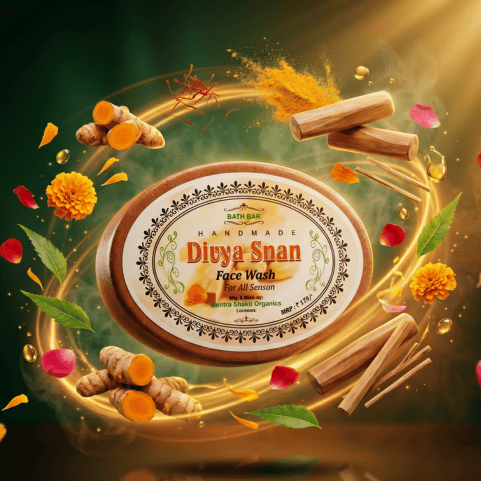
It is sold as a bath bar, and the bar made for the face is our Face Wash Bar (₹175). If you use a bath bar on your face anyway, patch test first, keep lather out of your eyes, rinse thoroughly and check the hairline and eyebrows for a yellow tint. If a mark does appear on your face, follow the oil-first steps above and do not scrub.
How should you store a haldi chandan bar?
Keep it on a dry, draining soap dish between uses, away from the shower spray, and wipe the dish now and then. We tell customers the same for every handmade bar: it lasts longer when it stays dry, and a dish that drains also stops coloured runoff pooling under the bar.
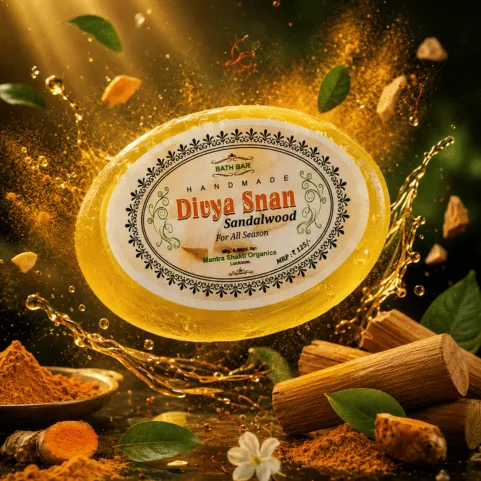
Keep the bar away from white laundry and light-coloured cloth, and do not wrap a damp bar in a white handkerchief or tissue. For travel, let the bar dry first and use a container you do not mind colouring. If you would like chandan's woody scent without turmeric in the name, the Sandalwood bar is the other option.
Why are haldi and chandan used together in ubtan?
In Indian tradition, haldi (turmeric) and chandan (sandalwood) are ground together into ubtan, the paste applied before bathing, most visibly in the haldi ceremony before weddings. That pairing is what the name on the bar borrows. Tradition is not evidence, and the table keeps the two apart.
| The tradition | What a rinse-off bar does |
|---|---|
| Haldi and chandan are used together in ubtan, a paste made fresh and applied before bathing | A bar named for them borrows the pairing for its name, scent and colour story. It is a cleanser that lathers and rinses off within minutes, not an ubtan |
| Ayurvedic texts and family practice describe many uses of turmeric and sandalwood | We do not repeat those uses as claims. Nothing here says the bar will change how your skin looks or feels beyond cleansing it |
People often search for the "benefits" of haldi chandan soap. The honest answer is that a bath bar's job is to cleanse and to smell pleasant. We make no claims about complexion, skin tone or any other effect on the skin, and you should be wary of any bar that does.
Common mistakes with a turmeric-named bar
- Scrubbing a stain. It spreads colour and irritates skin; oil does the job gently.
- Using bleach or lemon on skin. Neither belongs on skin, and lime juice plus sun is a documented cause of blistering.
- Machine-drying a stained towel. Check the mark first, and dry in sunlight where the care label allows.
- Leaving the bar in a pool of water on a white dish. The bar softens and the dish picks up colour.
- Mistaking pigment for a skin problem. A yellow tint is colour; redness, itching or swelling is a reaction, so stop the bar and see a doctor if it persists.
- Reading an effect into the name. The name tells you the scent and the tradition, not an outcome.
How we make and pack our Haldi & Chandan bar
We make the Haldi & Chandan Bath Bar by hand in small batches at our family workshop in Chinhat, Lucknow, and it sits with the other bars in the Divya Snan collection. We do not publish ingredient amounts; the ingredient statement is on the product page. If you are choosing between scents, our guide to choosing a Divya Snan bar compares them.
Frequently asked questions
What is haldi chandan soap?
Haldi chandan soap is a bath bar named for turmeric (haldi) and sandalwood (chandan), the pairing used in the traditional ubtan ritual. Ours is the Divya Snan Haldi & Chandan Bath Bar, ₹125, handmade in small batches in Chinhat, Lucknow.
What is haldi chandan soap made of?
The name tells you the two botanicals. We do not publish amounts or percentages; the ingredient statement is on the product page of the bar you are buying.
Does turmeric soap stain skin or towels yellow?
It can tint white towels, nails, plastic and grout, depending on how much colour the bar carries and how long its lather or runoff sits. Turmeric's pigment, curcumin, is almost insoluble in water, so rinse well, use a coloured towel at first and wipe your soap dish.
How do you remove haldi stains from the face, hands and nails?
Use oil first: massage a little plain oil over the mark for a minute, wipe it off with cotton, then wash with lukewarm water and a mild cleanser. Do not scrub, and keep bleach and citrus juice off your skin. For nails, soak, oil and brush gently; the tint fades as the nail grows.
How often should you use turmeric soap, and can you use it every day?
A bath bar has no schedule or course. Use it when you bathe, if your skin agrees with it, and watch how your skin feels. If it feels tight or itchy or looks red, use it less or stop. Patch test first, and ask a doctor before changing products if you have a skin condition, an allergy, are pregnant or take medication.
Can you use haldi chandan soap on your face?
It is sold as a bath bar, and our Face Wash Bar (₹175) is the bar made for the face. If you use a bath bar on your face anyway, patch test first, keep lather out of your eyes, rinse thoroughly and check the hairline for a yellow tint.
Why are haldi and chandan used together in ubtan?
It is a long-standing tradition: haldi and chandan are ground into the ubtan paste applied before bathing, most visibly in the haldi ceremony before weddings. That is tradition, not evidence, and we make no claims about skin tone or any other effect.
How should I store haldi chandan soap?
Keep it on a dry, draining soap dish between uses, away from the shower spray, and wipe the dish now and then. Keep it away from white laundry, and let the bar dry before packing it for travel.
Sources and further reading
- Priyadarsini KI. The Chemistry of Curcumin: From Extraction to Therapeutic Agent. Molecules, 2014 (Bhabha Atomic Research Centre; open access via PubMed Central)
- DermNet NZ: Soaps and cleansers (soap is alkaline, normal skin is slightly acidic)
- DermNet NZ: Phytophotodermatitis (plant juices such as lime, then sunlight, on skin)
- Mississippi State University Extension: How to Remove Pesky Stains
- US Food and Drug Administration: Fragrances in Cosmetics
Written by the MantraShakti Organic workshop team, Chinhat, Lucknow. This guide is general information about a cosmetic soap bar and household stain removal, not medical advice. If your skin reacts to a product, stop using it and ask a doctor.
Shop this guide
Made by hand in small batches in Lucknow.
More from the Journal