
Face Wash Bar vs Liquid Face Wash: Which Suits You?

Is a face wash bar better than a liquid face wash?
Neither format is automatically better. A face wash bar is a solid cleanser you lather in wet hands and spread over the face. A gel or foam face wash is the same job in liquid form. The formula, your skin and how gently you wash matter more than the shape. Bars are travel-friendly and long-lasting; liquids are quicker and easier to keep hygienic.
Key takeaways
- A face wash bar and a gel face wash do the same job: lift oil, dirt and sweat off the surface of the skin. The difference is the format, not a magic ingredient.
- Dermatologists, as summarised by the American Academy of Dermatology, advise a gentle, non-abrasive, alcohol-free cleanser, lukewarm water, no scrubbing and washing twice a day and after heavy sweating.
- Lather a bar in your wet hands first and put the lather on your face. Do not rub the bar itself over your skin.
- A bar needs a draining dish to stay hygienic. A pump bottle needs no care but costs more per month for most people.
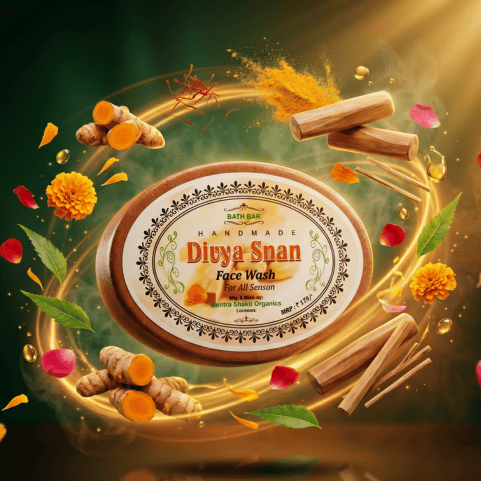
- Our Divya Snan Face Wash Bar costs ₹175 and is a handmade melt-and-pour bar made with ground dals, rice and multani mitti among other botanicals.
What is a face wash bar, and how is it different from ordinary soap?
A face wash bar is a solid cleanser made or sold specifically for the face. In India the word "soap" covers everything from a laundry-style bathing bar to a gentle beauty bar, so the label "face wash bar" mainly tells you what the maker intended: a smaller, softer, milder bar for the face rather than the whole body.
Two things can differ from an ordinary bathing bar. The first is the formula: some face bars use extra moisturising oils, fine powders such as clays or ground pulses, and milder fragrance. The second is the size: face bars are often smaller, because you use them on a small area.
The question people actually type into Google is "can I use soap on my face?" The honest answer is that it depends on the soap. Many traditional bathing bars are more alkaline than skin. Skin's surface is mildly acidic, at around pH 5.5, which is a figure quoted by dermatologists in an Indian news feature we read for this guide. Strongly alkaline washing can leave some people feeling tight and dry. That does not mean every bar does this, and it does not mean every liquid is gentle. If you want the science of pH explained plainly, read our guide to soap pH level in India.
We will say plainly what we cannot tell you: the pH of our own bars has not been published, so we do not claim a number. What we can tell you is how the bar is made and how to use it so that it is comfortable on most faces.
Face wash bar vs gel or foam face wash: how do they compare?
The table below compares the two formats on everyday points. It describes typical products, not every product; always read the label on the one you buy.
| Point | Face wash bar | Gel or foam face wash |
|---|---|---|
| Format | Solid; you make lather in wet hands | Liquid or gel; a pump or tube gives you a ready amount |
| Lather | Soft, low to medium lather in a handmade bar | Often foams more, because many contain stronger foaming agents |
| Speed in the morning | One extra step: rub the bar in wet hands | Fastest: one pump, rub, rinse |
| Hygiene | Needs a dry, draining dish; do not leave it sitting in water | Closed bottle or tube, so little contact with water or hands |
| Travel | No liquid, no leaks; carry it in a small box that has air holes | Leak risk; small bottles are needed for cabin bags on flights |
| Packaging waste | Usually paper or a thin wrap | Plastic tube or bottle |
| Cost over a month | Depends on how fast the bar wears; see the cost section below | Depends on how much you pump; most people use more than they need |
| Ingredient variety | Natural powders, clays and oils are easy to include | Wide choice of textures, including very light gels |
| Gentleness | Depends on the bar's formula | Depends on the liquid's formula |
The last row is the one that matters. A dermatologist quoted by an Indian news feature said that skin type should decide the product: she mentioned a salicylic or glycolic acid wash for oily skin and a moisturising or low-foam wash for sensitive skin. That advice is about the formula, not about bar versus bottle. Another dermatologist in the same feature said many bars are now better formulated and gentler than face washes. Dermatologists do not all agree, and that is the right thing to know: there is no format that wins for everyone.
If you have a skin condition, a known allergy, or you are using prescribed skin products, ask a doctor or dermatologist which cleanser suits you. A guide like this one cannot examine your skin.
Who should pick a bar, and who should pick a gel?
Think about your habits first, then your skin.
A bar suits you if
- You travel often, or share a bathroom where bottles pile up.
- You like a soft, low-foam wash and a short ingredient story you can read on the pack.
- You are happy to keep a soap dish dry and to lather in your hands first.
- You want less plastic in your bathroom.
A gel or foam suits you if
- You want the fastest possible wash on a rushed morning.
- You dislike a soap dish that stays damp in a humid city or monsoon season.
- You wear sunscreen or make-up every day and prefer a product made to be used with a double-cleanse routine.
- Your skin is very dry or sensitive and your doctor has recommended a specific liquid cleanser.
Either is fine if
- You wash twice a day, rinse well and moisturise afterwards. The routine counts for more than the container.
How do you use a face wash bar the right way?
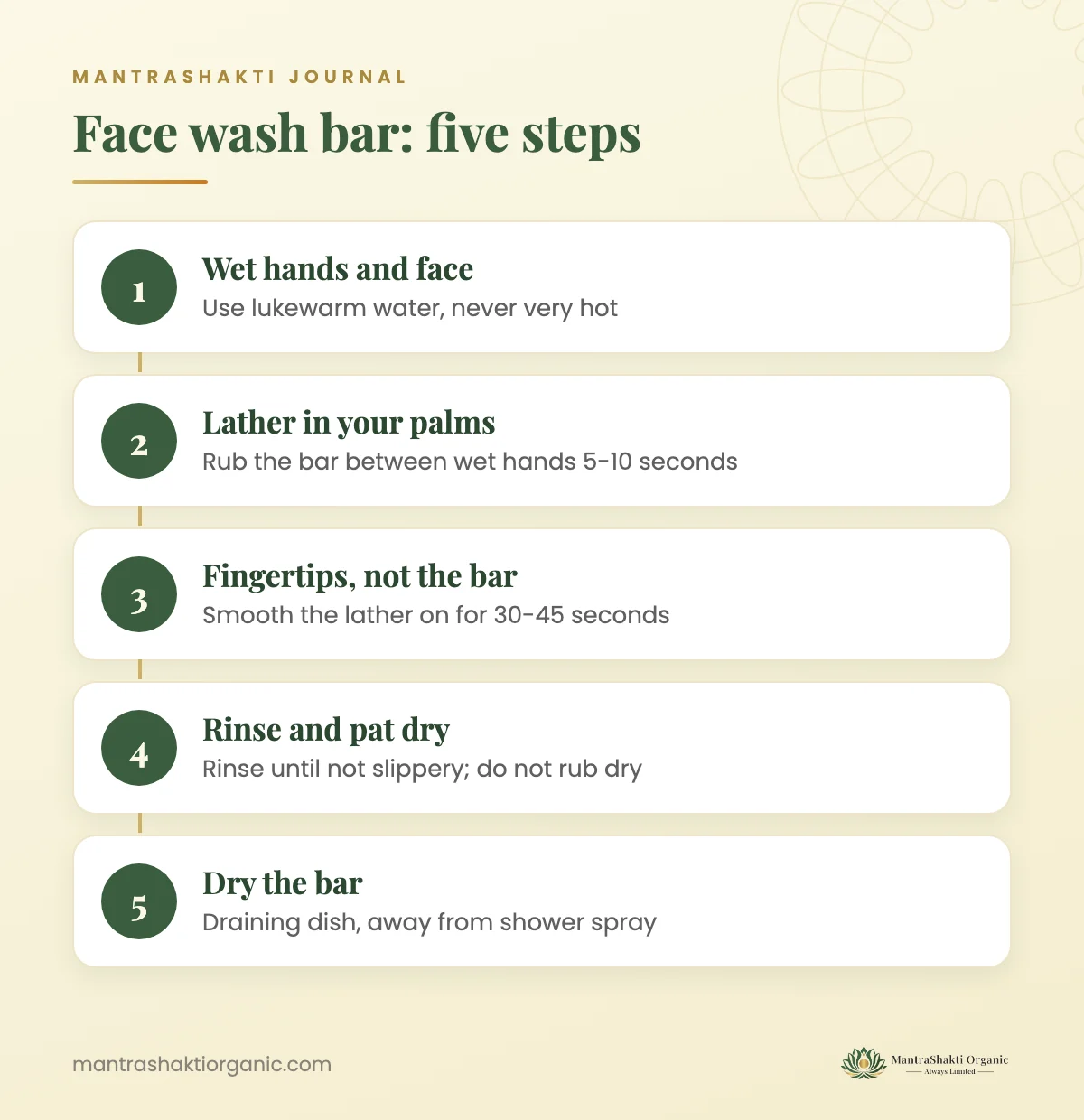
The most common mistake is rubbing the bar directly over the face. That puts friction and concentrated soap on the skin, and it also carries dirt back onto the bar. Instead, make the lather in your hands first. The steps below follow the American Academy of Dermatology's face-washing guidance: lukewarm water, fingertips, no scrubbing, and patting dry.
- Wash your hands with plain water so you do not bring dirt to your face.
- Wet your face with lukewarm water. Very hot water dries the skin; very cold water does not rinse oil well.
- Wet the face wash bar and rub it between your wet palms for 5 to 10 seconds until you have a soft lather.
- Smooth the lather over your face with your fingertips in gentle circles for about 30 to 45 seconds. Keep it away from your eyes.
- Rinse thoroughly with lukewarm water until your skin no longer feels slippery.
- Pat your face dry with a clean, soft towel. Do not rub.
- Moisturise if your skin feels dry or tight, and use sunscreen in the daytime.
- Put the bar on a draining dish, not in a puddle, so it can dry between uses.
Wash your face in the morning and at night, and again after heavy sweating, such as after a hot-weather commute or a workout. More washing than that is rarely needed.
What does a morning and evening routine look like with each format?
The planner below lets you compare a bar routine and a gel routine, morning and evening. The text that follows gives the same steps in words.
Use the planner below to see a simple morning and evening face-wash routine for a bar or for a gel.
Interactive · tap to switch
Your face-wash routine
Pick a cleanser and a time of day to see the steps.
Bar care: Keep the bar on a draining dish away from the shower spray, rinse it before putting it down, and let it dry fully between uses.
Travel: A bar has no liquid to leak, so it is usually fine in cabin baggage; carry it in a box with air holes so it can dry. Check your airline's rules.
Morning with a bar
Rinse hands, lather the bar in wet palms, wash for about 30 seconds, rinse, pat dry, moisturise, then sunscreen. The whole thing takes about two minutes.
Evening with a bar
If you wear sunscreen or make-up, remove it first with a gentle make-up remover or oil and wipe it off. Then lather and wash as in the morning. Moisturise last.
Morning with a gel
One small pump (about the size of a pea or one-rupee coin), rub in wet hands, wash for 30 seconds, rinse, pat dry, moisturise and apply sunscreen.
Evening with a gel
Remove sunscreen or make-up first, then wash with a small amount of the gel, rinse well and moisturise.
How do you keep a face wash bar dry and hygienic?
People worry that a shared or damp bar collects germs. The sensible position is this: a bar that is kept dry between uses and used by one person is not a hygiene problem in normal home use. A soggy bar sitting in a puddle for days is unpleasant, wears away fast and goes slimy, so it deserves better care.
- Use a draining dish. A dish with slots or a wooden rack lets water run off and air reach the bar.
- Keep it out of the shower spray. The shower stream turns the bar to mush. Keep it on a shelf away from direct water.
- Rinse it before you put it down. A quick rinse removes any lather and loose dirt.
- Do not share it if you can avoid it. Keep one bar for your face and another for your body.
- Dry it in the open air in monsoon. In the humid months, a handmade bar softens faster. Our guide on handmade soap in the monsoon explains how to store one.
- Travel with air. Use a small box with holes or a cloth pouch. A sealed plastic box keeps the bar wet and soft.
How much does a face wash bar cost compared with a liquid face wash?
The fair way to compare is cost per month, not the price on the shelf. A bar looks pricey at ₹175, a tube looks cheap at a smaller price, and then the bar lasts longer or does not. The figures below are a method with example numbers, not a promise. How long a bar lasts depends on how often you use it, how long it sits in water, and how big your hands are.
- Write down the price of the product.
- Note how many weeks it lasts when you use it twice a day.
- Divide the price by the number of weeks and multiply by 4.3 to get the cost per month.
| If the bar lasts | Cost per week | Cost per month (4.3 weeks) |
|---|---|---|
| 4 weeks | about ₹44 | about ₹188 |
| 6 weeks | about ₹29 | about ₹125 |
| 8 weeks | about ₹22 | about ₹94 |
Do the same sum for the liquid you use now. If a bottle runs out in five weeks and costs you a certain amount, the same method gives you a fair comparison. We are not claiming that a bar is cheaper; we are showing you how to check for yourself. A handmade melt-and-pour bar is softer than a pressed commercial bar, so it wears faster when left wet. Keeping it on a draining dish is the biggest single saving.
What is in our Divya Snan Face Wash Bar?
Here is how we make it, in plain words. We start with a soap base that contains goat milk and is enriched with butters and oils. We melt it gently over a water bath, never directly on the flame, then stir in ground masoor, moong and urad dal, rice, multani mitti, besan, rose powder, amla powder, haldi, sandalwood powder, aloe vera gel and honey. We pour it into moulds and let it set for several hours. This is a handmade melt-and-pour method, made in small batches at our workshop in Chinhat, Lucknow.
The ground pulses and clay are traditional kitchen and ubtan ingredients in many Indian homes. We use them as part of the bar's texture and character, and we make no claims about what they do for your skin. The bar is ₹175 and you can read the full details on the Divya Snan Face Wash Bar page. If you like multani mitti as a separate step, our guide on how to use multani mitti on the face explains time and frequency.
A short, honest note: the bar contains a mix of botanicals and, like any such product, can suit some people more than others. Please do a patch test first. Dab a little lather on the inside of your forearm, leave it for a minute, rinse and wait a day. If you see redness, itching or stinging, do not use it on your face.
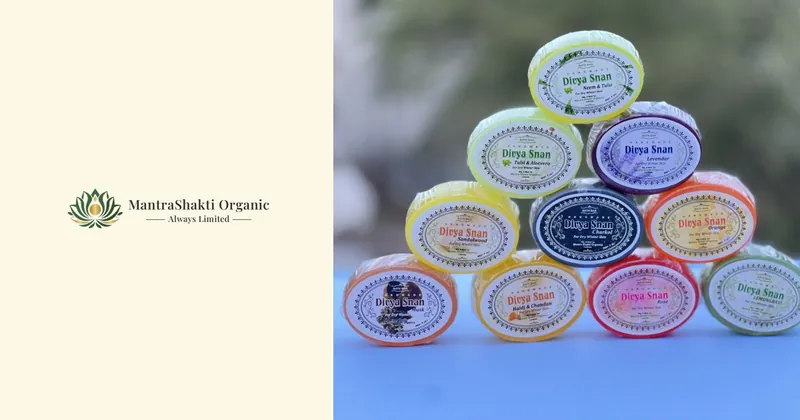
Want to try more than one scent? Any four Divya Snan bars are ₹500 with free delivery, with a free Herbal Dant Manjan in the box. See the Soap Box page or browse all Divya Snan soaps. If you do not love a bar's fragrance, WhatsApp us on +91 94516 65552 within 7 days and we will send a different scent free, one swap per bar.
What are the common mistakes with face wash bars?
- Rubbing the bar on the face. Lather in your hands first.
- Using the body bar on the face. Body bars are usually larger and may carry stronger scent. Use a bar made for the face if you can.
- Using hot water. It can leave skin feeling dry and tight. Use lukewarm.
- Scrubbing. Dals and clays in a bar are there for texture in the lather, not for hard scrubbing. Use fingertips and light pressure.
- Leaving the bar in a wet dish. It turns soft and wastes money.
- Skipping moisturiser. Cleansing is half the routine. A light moisturiser afterwards helps skin feel comfortable.
- Washing too often. Twice a day and after sweat is usually enough. The AAD advises against scrubbing because it irritates skin.
- Skipping the patch test with a new product, especially one with fragrance or botanicals.
Frequently asked questions about face wash bars
Can I use ordinary soap on my face?
You can, but many bathing bars are made for the body and may leave facial skin feeling tight. If you are unsure, choose a bar made for the face, lather it in your hands and see how your skin feels an hour later. If it feels tight, change the product.
Is a face wash bar the same as face wash?
They do the same job in different formats. A face wash bar is solid; a face wash is a gel, foam or cream. The label, ingredients and how gently they are made matter more than the shape.
How do I use a face wash bar?
Wet your hands, lather the bar between your palms, spread the lather on a wet face with fingertips for 30 to 45 seconds, rinse with lukewarm water, pat dry and moisturise.
How long does a face wash bar last?
It varies. Used twice a day and kept on a draining dish, a bar often lasts several weeks. A bar left sitting in water can melt away in half that time.
Can I take a face wash bar on a flight?
A solid bar is not a liquid, so it is usually allowed in cabin baggage. Rules differ by airline and airport, so check with yours before you fly.
Is a bar or a gel better for oily skin?
Format alone does not decide it. Dermatologists quoted in the Indian press talk about choosing by formula and skin type. If your skin is oily, a light lather and thorough rinse matter. Ask a dermatologist if you have a skin concern.
How many times a day should I wash my face?
The American Academy of Dermatology advises twice a day, morning and night, and after heavy sweating.
Do I need a patch test for a handmade face bar?
Yes, with any new skin product. Try a little lather on your inner forearm first and wait a day. Stop if you notice irritation. Our guide on bathing with bar soap has more on daily use.
Sources and further reading
Shop this guide
Made by hand in small batches in Lucknow.
More from the Journal
18 Sep 2026 · 6 min
Cold-Process vs Melt-and-Pour Soap: How Our Divya Snan Bars Are Made
Read more →