Handmade Soap in an Indian Monsoon: Marks, Softening and Storage
The short answer: store it dry, and most marks are harmless
To keep a handmade soap bar through the monsoon, store it out of the shower stream on a draining dish or a wooden soap saver, let it dry fully between washes, and keep the spare bars in a cupboard away from the bathroom's damp air. Most of what you will see on a handmade glycerin-rich bar — beads of water, faster softening, a faint white film — is normal and safe to use. The one exception is orange or rust-coloured spots, which are oxidised oil; we do not recommend using a bar once those appear.
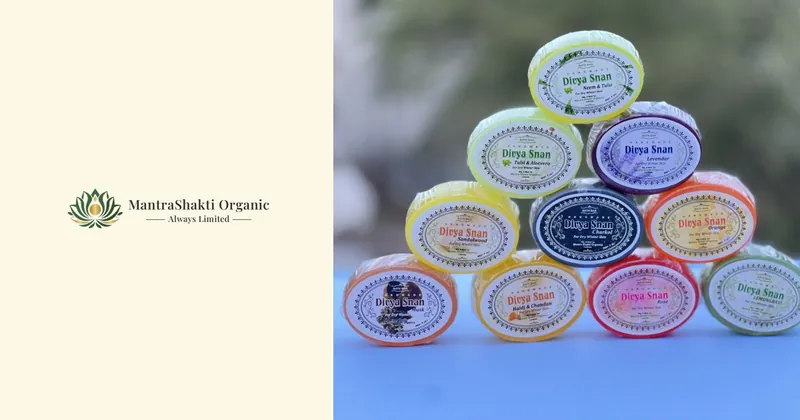
This page is about our own Divya Snan bath bars, which are melt-and-pour soap made in small batches in Chinhat, Lucknow: a soap base melted gently over a water bath, enriched with goat milk, cocoa and shea butter, plant oils and herbs, then poured into moulds and set. Handmade soap behaves differently from a mass-market bar, and it behaves differently again in a Lucknow July than in a dry April. Below is what each change means, in one table, followed by the detail.
What do the marks on my handmade soap mean?
Here is the quick diagnosis. Find what you are looking at in the first column.
| What you see | What it is | Safe to use? | What to do |
|---|---|---|---|
| A thin, dusty white film on the surface | Usually dried soap or hard-water minerals left on the bar after use | Yes | Rinse under water and wipe; carry on using |
| Small water droplets or a wet "sweat" on the bar | Glycerin drawing moisture from humid air (glycerin is a humectant) | Yes | Pat dry, move the bar somewhere less humid |
| The bar softens, swells or dissolves quickly | Retained glycerin and softer plant oils, which are water-soluble | Yes | Drain it between washes; see storage steps below |
| Orange, rust or brown spots | Oxidised oil (rancidity), sometimes called "dreaded orange spots" | No — retire the bar | Stop using it; the spots do not wash off |
| Colour fading or scent getting fainter over months | Natural colourants and essential oils oxidising slowly with light and air | Yes (if there is no rancid smell or DOS) | Use it sooner rather than storing it long |
| Dry, slightly cracked edges | The bar continuing to lose water in dry indoor or AC air | Yes | Nothing needed; it is only cosmetic |
What is the white powder on my handmade soap?
A faint white film is usually just dried soap, or minerals from hard tap water drying on the surface after a wash. It is not mould. Rinse the bar and rub the surface and it comes away. Cold-process soap makers also see a white film called soda ash, which forms while their bars cure; our bars are melt-and-pour and are not cured for weeks, so that is not the usual cause on a Divya Snan bar.
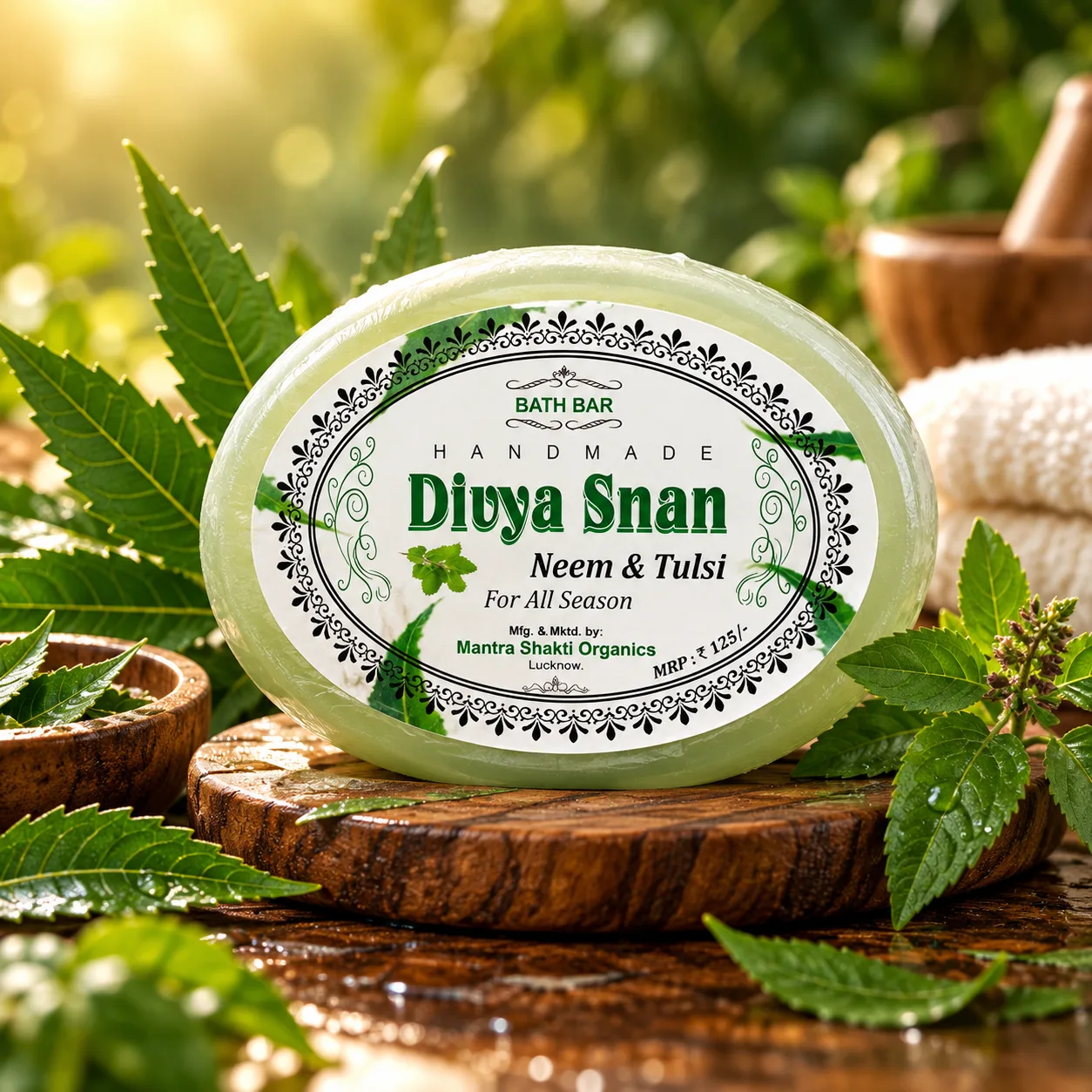
You can leave it or remove it. To remove it, hold the bar under running water and rub the surface with your thumb or a clean cloth; the film comes away and the colour underneath returns. On a lightly coloured bar like our Neem & Tulsi bar the ash is easy to spot; it looks alarming and is harmless.
What are the orange spots on a handmade soap bar?
Orange or rust-coloured spots are the one change to take seriously. They are oxidised oil — soap makers call them "dreaded orange spots" or DOS. According to the Handcrafted Soap & Cosmetic Guild and soap chemistry references such as classicbells.com, DOS is oxidative rancidity: unsaturated fatty acids in free oil react with oxygen, and warmth, light, humidity and trace metals all speed it up. Our bars carry free plant oils and butters stirred in after the base melts, so a humid Indian monsoon raises the odds.
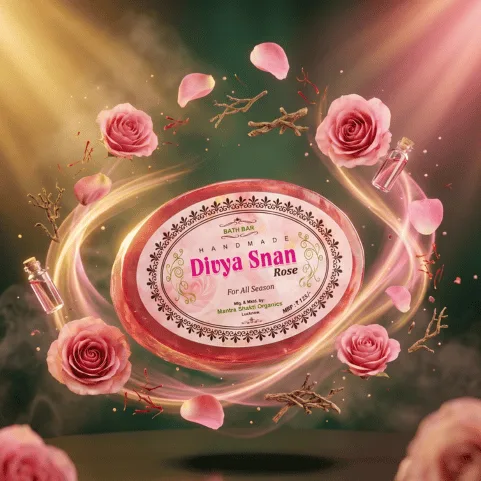
Bars with more soft, olive-rich oil are more prone to it, which is why we keep an eye on the oil-rich variants such as the Rose bar.
What we will not tell you is that a spotted bar is dangerous. We are not making a health claim in either direction. What we can say plainly: the spots are oxidised oil, the bar is past its best and often smells faintly of old oil, it does not wash off, and we do not recommend using a bar once it appears. Honest note — these are natural oils with nothing added to stop them ageing, so over many months a bar can change appearance. We do not send out a bar that shows it, but a bar stored damp for a long time at home can still get there.
Why does my handmade soap sweat water droplets?
Those beads of water are glycerin doing its job. Melt-and-pour soap bases are glycerin-rich, and we add more glycerin and honey on top, and glycerin is a humectant — it pulls moisture from the air. Soap Queen and Chagrin Valley Soap both describe this "glycerin dew": in humid conditions the bar shimmers with tiny droplets because the glycerin is drawing water out of the atmosphere onto the surface. Melt-and-pour bars are especially prone to it, so a Divya Snan bar will "sweat" in a Lucknow July.
In Lucknow the outdoor humidity climbs through the monsoon months, and in coastal cities like Mumbai it stays higher still. A bathroom after a hot shower is more humid again. So a sweating bar is not spoiling — it is behaving exactly as glycerin-rich soap should. Wipe it, and store the spare bars away from the bathroom.
Why does handmade soap soften faster than a mass-market bar?
The most common worry about handmade soap is that it softens and vanishes quickly. It is worth reframing, because fast softening is evidence of what is in the bar, not a defect.
Two things make our handmade soap softer and more water-soluble than a typical supermarket bar. First, the glycerin. Glycerin is a humectant, so it draws in water — the very property valued in skincare also makes the bar thirsty in a wet dish. Second, the butters and plant oils stirred in. Many mass-market bars are harder and longer-lasting because of their formulation and the way they are pressed; a small-batch bar enriched with soft oils will give up more of itself to a puddle of standing water. This is a difference between formulation categories, not a fault, and we are not saying one is safer than the other. It is simply why a wet, undrained handmade bar disappears.
The practical fix is entirely about water contact, which the next section covers. If you want the fuller picture of how our bars are made, we wrote it up in cold-process versus melt-and-pour soap.
How do I stop handmade soap going soggy in the monsoon?
Keeping a bar alive in humid weather is almost entirely about letting it dry between uses. Standing water is what kills a handmade bar.
- Get it off the flat ledge. Use a draining soap dish or a slatted wooden soap saver so water runs away and air reaches the underside.
- Keep it out of the shower stream. A bar left where the shower hits it, or in a closed plastic case, stays wet all day. Set it on the far side of the sink or shelf.
- Let it dry fully between washes. A bar that dries hard overnight lasts far longer than one used twice while still soft.
- Store the spares dry. Keep unopened bars in a cupboard or almirah, not in the bathroom. A paper wrap or a cotton cloth is better than sealed plastic, which traps sweat.
- Buy for the season. In peak monsoon, buy one or two bars at a time rather than stocking six that will sit and age in the damp.
None of this is unique to our soap — it applies to any glycerin-rich handmade bar.
How long should one bar last?
Bar life depends on how many people use it, how often, and — above all — whether it is allowed to dry. A bar that is drained and dried between uses lasts far longer than one left sitting in a wet dish, where a handmade bar will give itself up to standing water surprisingly fast.
Our Divya Snan bars are set in the mould for several hours and are not cured for weeks, so they stay softer than a pressed commercial bar. We would rather be honest than quote a generic industry figure: how long a bar lasts, and what each bath effectively costs you, varies with hard water, household size and drying habits, so the storage steps above do more for a bar's life than any single number could promise. At ₹125 a bar, the cheapest change you can make is simply to let it dry fully between uses — and, if you like, to cut it in half, which the next section explains.
Should I cut a handmade soap bar in half?
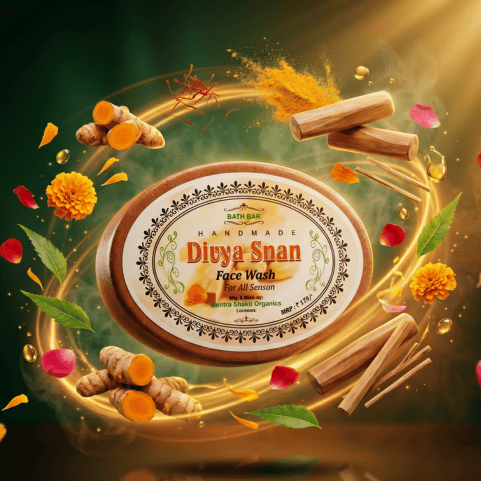
Often, yes. Cutting a bar in two and using one half while the other stays dry in the cupboard is one of the simplest ways to make it last, because only half the soap is exposed to bathroom humidity at a time. It also gives the second half more time to keep hardening. A clean, dry knife is all you need. This works well for the face wash bar too, where a smaller working piece is easier to handle at the basin.
A note on ingredients and labels
We avoid two phrases you will see elsewhere. We do not call our soap "chemical-free" — every soap, including the base our bars start from, is made by saponification, a chemical reaction. And we do not claim anything stops our bars ageing: they carry natural oils and butters with nothing added to slow oxidation, which is the honest reason they can change over many months.
When should I see a professional?
This article is about how soap ages and stores, not about skin. If you have a persistent skin problem — a rash, irritation that does not settle, or any condition you are worried about — please see a doctor or dermatologist rather than changing soaps in the hope of fixing it. As a sensible habit with any new soap, patch-test on your inner forearm first and stop if it irritates.
Frequently asked questions
What is the white powder on my handmade soap?
It is usually dried soap or hard-water minerals left on the surface after a wash. It is harmless and does not affect how the soap cleans or feels. Rinse the bar under water and rub the surface, and the film comes away. It is not mould.
What are the orange spots on a handmade soap bar?
Orange or rust spots are oxidised oil, known as dreaded orange spots (DOS). They form when unsaturated oils in the bar react with oxygen, sped up by heat, humidity and time. They do not wash off, the bar often smells of old oil, and we do not recommend using a bar once they appear.
Why does my handmade soap sweat water droplets?
The droplets are glycerin dew. Our melt-and-pour bars are glycerin-rich, and glycerin is a humectant that pulls moisture from humid air onto the bar. It is normal in the Indian monsoon and does not mean the soap is spoiling. Wipe it dry and store it away from the bathroom.
Why does handmade soap soften faster than a mass-market bar?
Glycerin and the soft oils and butters stirred into our bars make handmade soap more water-soluble than harder, differently formulated supermarket bars. It is a difference in formulation, not a fault. The single biggest factor in how fast it goes is whether the bar dries between uses or sits in standing water.
How do I stop handmade soap going soggy in the monsoon?
Keep it off flat, wet surfaces on a draining dish or wooden soap saver, out of the shower stream, and let it dry fully between washes. Store spare bars in a dry cupboard, not the bathroom, wrapped in paper or cloth rather than sealed plastic. Buy one or two bars at a time in peak humidity.
How long should one bar last?
It depends on household size, frequency and drying. A bar that is drained and dried between uses lasts far longer than one left in water. Rather than quote a generic figure, we would point you to the storage steps on this page — off a flat wet ledge, out of the shower stream, dried between uses and spares kept dry — since those make the biggest difference to how long a bar lasts.
Should I cut a handmade soap bar in half?
Cutting a bar in half and using one piece while the other stays dry in a cupboard is a simple way to make it last longer, since less soap is exposed to humidity at once and the spare keeps hardening. Use a clean, dry knife. It works especially well for the face wash bar.
Written by the MantraShakti Organic workshop team, Chinhat, Lucknow. Last reviewed: 26 September 2026.
Shop this guide
Made by hand in small batches in Lucknow.
More from the Journal