
Amla Candy Recipe with Jaggery: Step-by-Step, 1 kg Amla
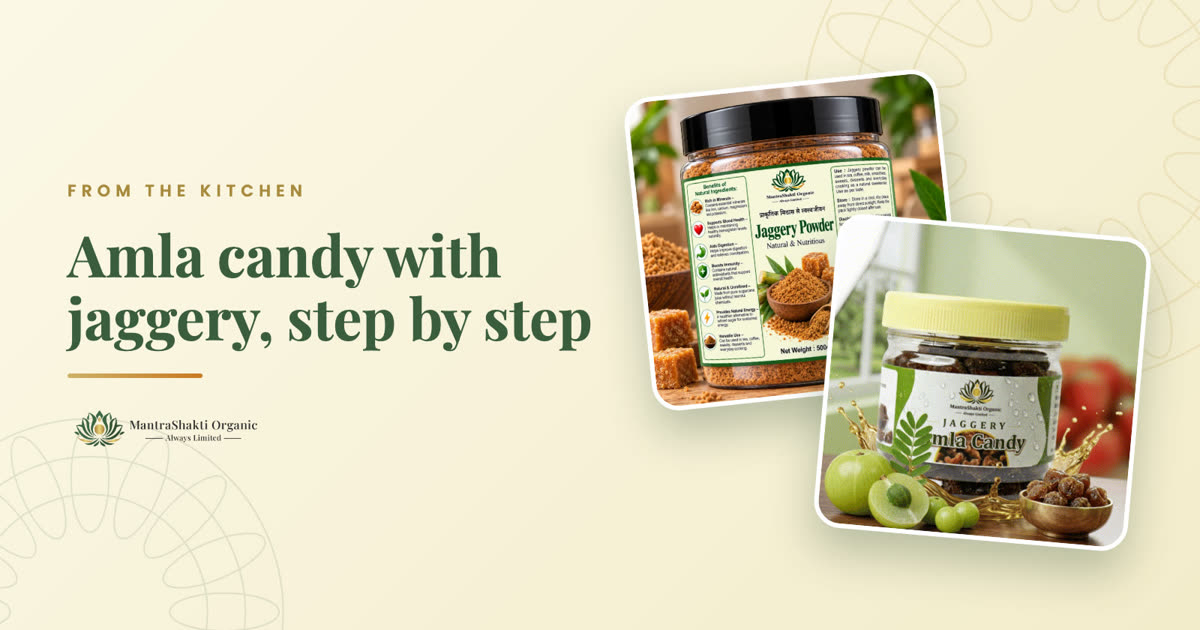
How do you make amla candy with jaggery at home?
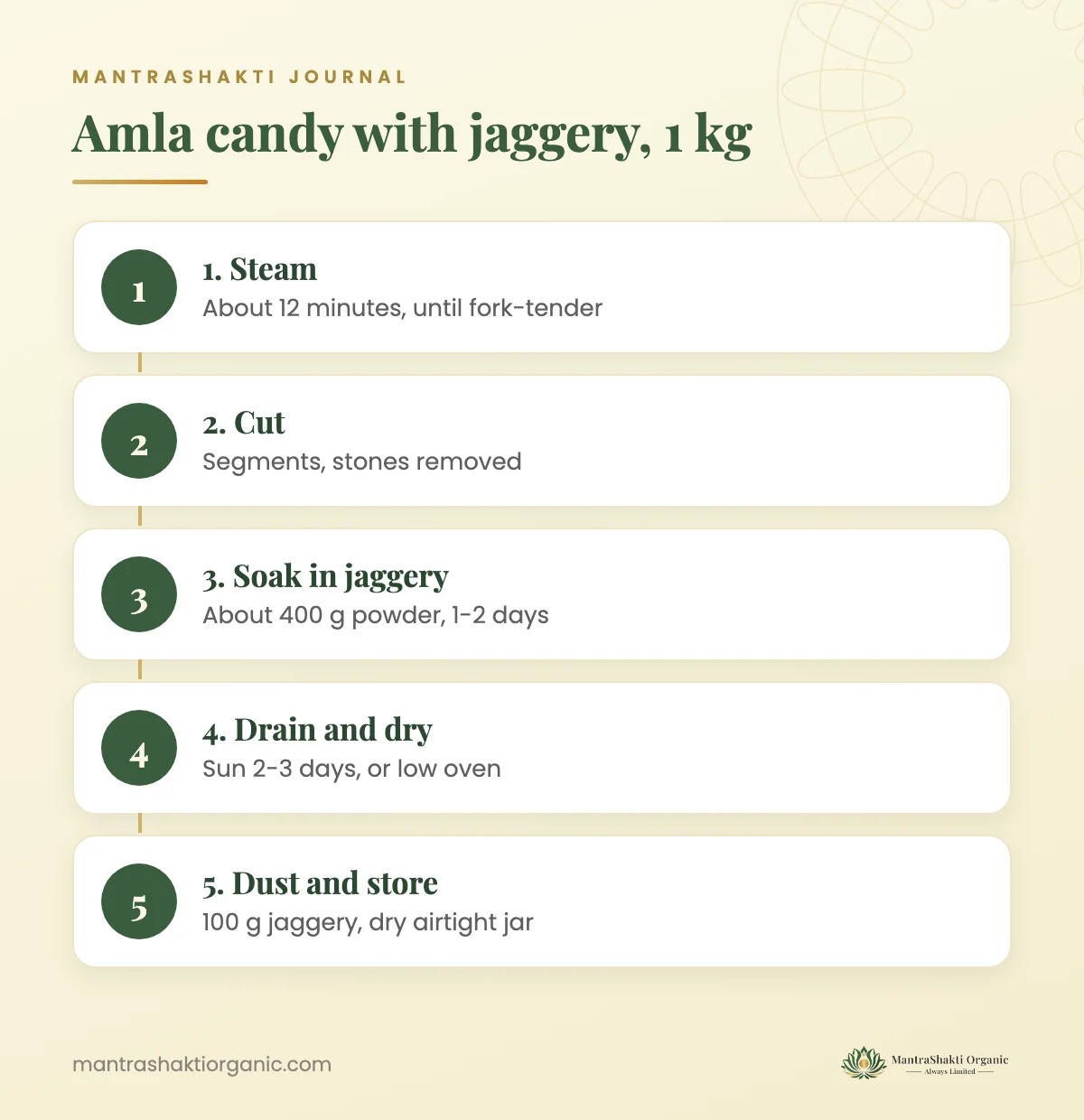
To make amla candy with jaggery, steam 1 kg of fresh amla for about 12 minutes, cut it into segments and discard the stones, toss with about 400 g of powdered jaggery and rest for 1–2 days, drain, then dry in the sun, oven or air fryer until chewy and no longer sticky. Finish with a dusting of jaggery.
Key takeaways
- Starting quantities: for 1 kg of amla, use about 500 g of jaggery powder in total: roughly 400 g for the soak and 100 g for the final dusting.
- Steam, do not boil: about 12 minutes until a fork goes in easily. Overcooked amla turns mushy and will not hold its segment shape.
- Resting time: 1–2 days with jaggery. Longer than about two days in a warm kitchen invites spoilage, according to one of the recipes we checked.
- Drying is the real work: 2–3 days in sun or shade, or several hours in a low oven, dehydrator or air fryer. Wet candy goes mouldy.
- These are starting points: recipes online differ a lot in sweetness and time. Adjust jaggery to taste in your next batch.
What is amla candy, and why use jaggery?
Amla candy is amla (Indian gooseberry, also called aonla) cooked until soft, sweetened, then dried until chewy. The tradition in many Indian homes is a sugar version, but gud (jaggery) gives a deeper, caramel-like sweetness and a darker colour, and it pairs well with amla's sharp, sour bite.
Jaggery candy behaves a little differently from sugar candy. Jaggery is less uniform, can be stickier and takes longer to dry. That is not a reason to avoid it; it just means you need to be a little more patient with the drying stage. This is a food recipe, so we talk only about taste, texture and method here.
A quick vocabulary check, since people search in different words:
- Amla candy is dried, chewy segments coated in sweetener.
- Amla murabba is whole amla kept soft in thick syrup. It is a different dish (see the table below).
- Gud means jaggery, in block, liquid or powder form.
Amla candy vs amla murabba: which should you make?
Make candy if you want a dry, snackable piece that stays in a jar on the counter. Make murabba if you want a soft, syrupy preserve to eat with a spoon. The early steps are the same, but candy is drained and dried while murabba stays in syrup.
| Point | Amla candy | Amla murabba |
|---|---|---|
| Final texture | Chewy, dry to the touch | Soft, sitting in thick syrup |
| Sweetener ratio | Lighter; about half the weight of the fruit in our recipe | Heavier; one jaggery murabba recipe we checked uses about 300 g jaggery for 250 g amla |
| Drying needed | Yes, 2–3 days or several hours with heat | No (or sun-cooking in syrup for 15–20 days in one recipe) |
| Storage | Airtight dry jar | Sterilised jar, fruit fully under syrup |
| Suited to | Carrying in a tiffin, snacking | Serving after a meal with a spoon |
What do you need for 1 kg of amla?
You need amla, jaggery powder and a few optional spices. Everything below is a starting point built from several published recipes, so taste your jaggery and your amla and adjust next time.
| Ingredient | Amount | Note |
|---|---|---|
| Fresh amla | 1 kg (roughly 25 berries) | Firm, smooth, green to light yellow, no dark spots |
| Jaggery powder | About 500 g in total | 400 g for the soak, 100 g kept aside for the final dusting |
| Water | About 100 ml | Only a splash, to help the jaggery melt into the segments |
| Black salt (kala namak) | 2 tsp | Optional |
| Roasted cumin powder | 2 tsp | Optional |
| Black pepper powder | 1 tsp | Optional |
| Water for steaming | Enough for the steamer | Idli steamer or a sieve over a pot works |
Where do these numbers come from? We compared published recipes. One home-cooking blog uses 1 kg of amla with 700 g of refined sugar. A well-known Hindi recipe site makes a jaggery murabba with about 300 g jaggery for 250 g amla. A short recipe card uses just 4 tablespoons of jaggery powder with 500 g amla plus black salt, cumin and pepper as a dry coating. Our figure sits between the light coating and the heavy syrup, to give a candy that is sweet but not sticky. Take it as a starting point. Expect roughly 600 to 700 g of finished candy from 1 kg of amla; that is our own estimate and it varies with how dry you go, so weigh your batch.
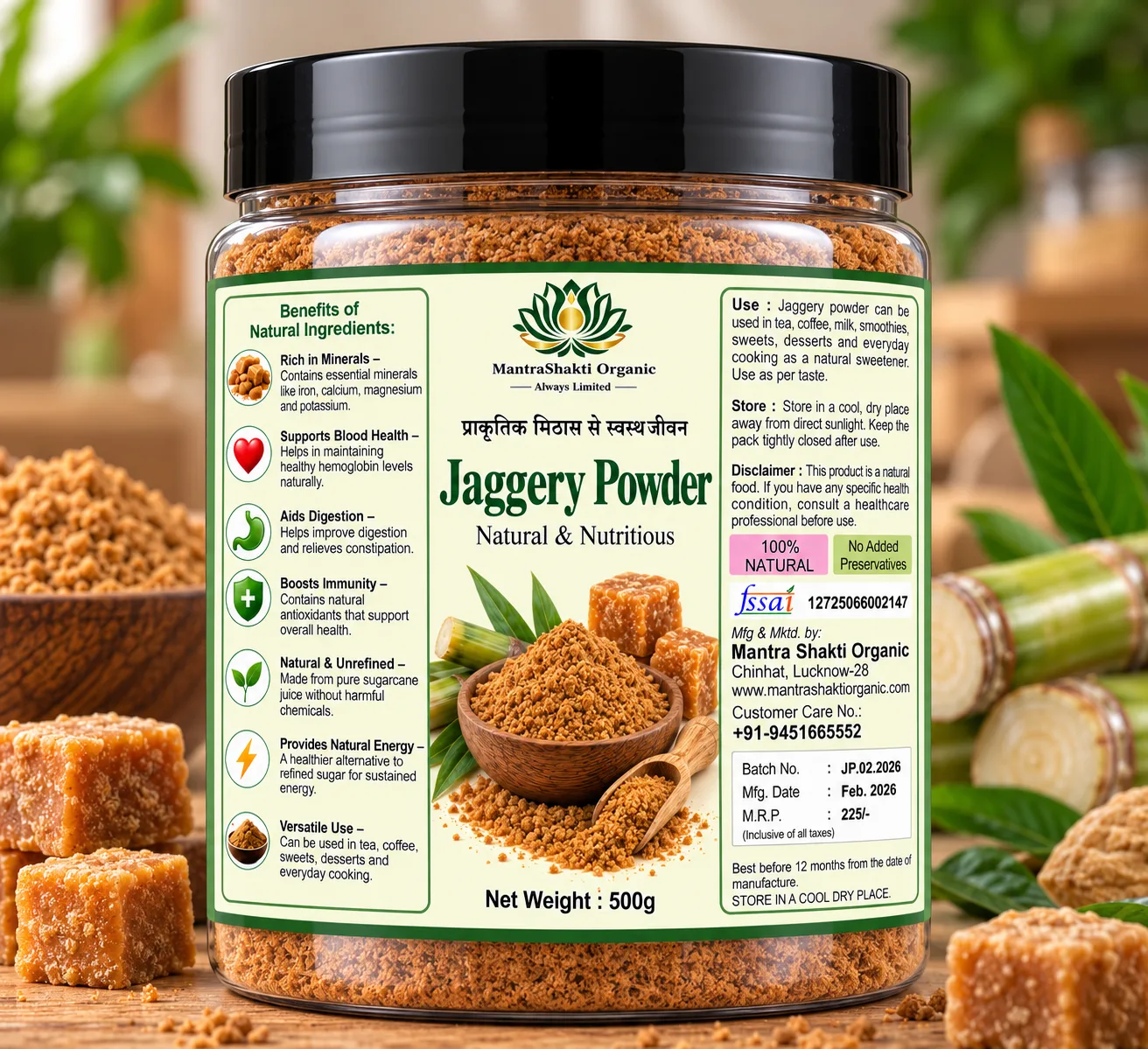
For the jaggery, fine powder is easiest because it coats the pieces evenly. Lumpy block gud needs grating or pounding first. Our Jaggery Powder (₹225 for 500 g) is meant for exactly this kind of kitchen use. If you are unsure how to tell good jaggery from poor, our guide on how to check jaggery powder purity will help, and jaggery powder vs block gud explains the forms.
How do you choose and prepare amla?
Pick firm, smooth, unblemished fruit. Winter, roughly November to February in North India, is when fresh amla is cheapest and tastiest. Our amla season buying and storing guide covers how to choose the fruit and keep it until you are ready.
Wash the amla well, then pat it fully dry with a clean cloth. Surface water adds to the drying time later.
Because amla is naturally sour and astringent, many cooks steam it first, which softens the flesh and makes it easier to separate into segments. Steaming times in the recipes we compared were 10–12 minutes in one, 15–20 minutes in another and 8 minutes for large berries in a third. Size matters, so test with a fork.
Step-by-step: amla candy with jaggery
- Wash and dry (15 minutes). Rinse the amla, discard any damaged ones and pat them dry.
- Steam (about 12 minutes). Steam in a covered steamer on medium heat until a fork goes in easily but the amla still holds its shape. Do not boil them in water for long, as they turn soft and watery.
- Cool and cut (about 30 minutes). Let them cool fully, then pull or cut each berry into segments and remove the hard stone. Keep the segments about even in thickness so they dry at the same pace.
- Mix with jaggery (10 minutes). In a clean, dry bowl, toss the segments with about 400 g of jaggery powder and the splash of water. Add the optional salt, cumin and pepper now if you like.
- Rest (1–2 days). Cover and leave at room temperature, stirring once or twice. The jaggery melts into a syrup and the segments soften. If your kitchen is very warm, keep the jar in the fridge. Do not go past about two days.
- Drain (20 minutes). Strain through a sieve and let the syrup drip off. Keep the syrup; you can use it in a cold drink or add it to tea.
- Dry. Spread the segments in a single layer on a clean plate, tray or steel sieve and dry by your preferred method below until chewy and no longer sticky.
- Dust and condition (10 minutes). Toss the dried candy in the reserved 100 g of jaggery powder. Pack loosely in a jar for a few days, shaking daily, to even out the dryness before closing it tightly.
Interactive · live
Amla candy batch calculator
Enter how much amla you have; everything else scales with it.
| Jaggery powder, to coat | |
| Jaggery powder, to dust at the end | |
| Water | |
| Black salt (optional) | |
| Roasted cumin powder (optional) | |
| Black pepper powder (optional) | |
| Expected candy (approx.) |
How will you dry it?
·
Tick off the steps (/7)
Yield and machine drying times are estimates; weigh your own batch. No time to make it? Our Jaggery Amla Candy is ready to eat.
Use the scaler above to adjust the quantities for the amount of amla you have today.
How long does amla candy take to dry?
In the sun it takes about 2–3 days; in an oven or dehydrator it takes several hours. Drying times vary with the weather, the thickness of your segments and how much syrup you drained. The only reliable test is to feel the candy.
| Method | Temperature | Time | Notes |
|---|---|---|---|
| Sun or shade | Natural | 2–3 days | Bring in at night. The recipes we checked say 2–3 days, with one favouring shade over harsh sun. Cover with a thin net against flies and dust. |
| Oven | 60–66 °C (140–150 °F) | About 6–10 hours | Prop the door open about 5 cm. A university extension guide for dried fruit gives the temperature and the open door; the hours for amla are our estimate. Many Indian ovens do not go this low, so use the lowest setting and check often. |
| Air fryer | Lowest setting, often 60–80 °C | About 20–40 minutes, in small batches | Our estimate, not from a published recipe. Shake the basket every 10 minutes and watch closely, because jaggery darkens and burns quickly. |
| Dehydrator | 57–60 °C (135–140 °F) | About 6–10 hours | Temperature range from the same extension guide; time is our estimate. |
Whichever method you use, press a few pieces after letting them cool for a few minutes. The same extension guide describes dried fruit as pliable with no beads of moisture when pressed between the fingers. That is the sign to stop.
How do you make amla candy in an air fryer?
Use the lowest temperature your air fryer allows, in small single-layer batches. Air fryers run fast and hot, so the sugars can scorch long before the middle dries.
- Drain the soaked segments well and pat them with a clean cloth.
- Place a single layer in the basket with space between pieces.
- Run at the lowest setting for 10 minutes, then shake and check.
- Repeat in 5–10 minute rounds until chewy and not sticky. Total time is usually well under an hour.
- Cool completely before dusting and packing.
This is the fastest method but also the easiest to overdo. If your air fryer cannot go below 100 °C, use it only for the last 10 minutes after sun-drying for a day.
What if you want amla candy without sugar?
That is exactly what the jaggery version is. It uses no refined sugar at all. Jaggery is still a sweetener and the candy is still sweet, so we make no claim about it being a better choice. It simply tastes different: earthier, a little smoky, and darker in colour.
Common mistakes and how to fix them
| Problem | Likely cause | What to do |
|---|---|---|
| Candy stays sticky | Too much syrup left on, or not dried enough | Drain longer, then dry another day or two; dust with jaggery powder |
| Mould spots | Not dry enough before packing, or damp jar | Discard the batch. A reader on one recipe blog reported mould when the pieces were under-dried. Dry longer next time and store in a dry jar |
| Too sour or sharp | Small, unripe amla or too little jaggery | Choose larger berries and raise the jaggery to taste next time |
| Bitter edge | Seeds left in, or fruit scorched | Remove every stone; lower the heat when drying |
| Hard as stone | Dried too long or too hot | Shorten the time; put a piece in an airtight jar for a day to soften slightly |
| Mushy segments | Over-steamed or boiled | Shorten steaming to a fork-tender 8–12 minutes |
Another common mistake is soaking for too long. One recipe warns not to leave amla soaking beyond two days, or it may spoil. The other mistake is skipping the drying check. A candy that looks dry on the surface may still be damp inside.
How should you store homemade amla candy?
Store it fully cooled in a clean, dry, airtight jar, away from damp and direct sun. Shelf life depends heavily on how dry you got the candy. One recipe blog says its moister sugar-coated version keeps about two weeks, while fully dried candy lasts longer. Since your kitchen and drying are different, keep the jar in the fridge if you are unsure and check it before every use.
- Use a dry spoon, never a wet one.
- Do not close the jar while the candy is still warm.
- If you see mould, smell fermentation or find the pieces damp, throw the batch away.
How we make our Jaggery Amla Candy
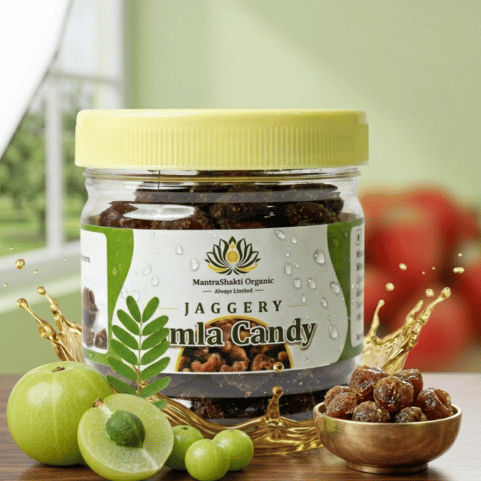
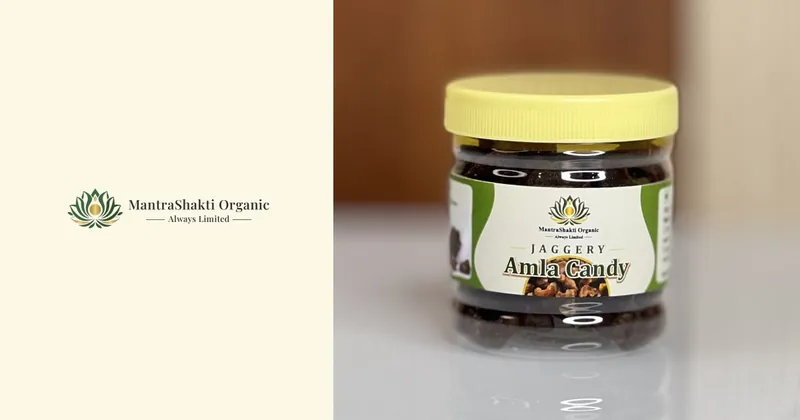
Our Jaggery Amla Candy (₹199 for 100 g, ₹390 for 200 g) is made in small lots at our workshop in Chinhat, Lucknow, using amla and jaggery. If you would rather skip the two days of drying, that is the ready version. Not sure how it compares with sugar-coated candy? See our note on jaggery amla candy vs sugar-coated.
FAQ
How much jaggery do I need for 1 kg of amla?
Start with about 500 g of jaggery powder in total, 400 g for the soak and 100 g for dusting. Published recipes range from a light coating to a heavy syrup, so adjust to taste on the next batch.
Do I have to steam the amla first?
Most recipes do. Steaming for roughly 10–15 minutes softens the fruit so the segments separate easily and the sourness mellows. Test with a fork rather than relying only on the clock.
Can I make amla candy without sunlight?
Yes. Use a low oven with the door propped open, a dehydrator at around 57–60 °C, or a short air-fryer session on the lowest setting. Check often because jaggery darkens fast.
How long does homemade amla candy last?
It depends on how well it is dried. A moister candy may last only about two weeks; fully dried candy stored airtight lasts longer. Keep it in the fridge if you are not sure, and discard anything that smells off or shows mould.
Why is my amla candy sticky?
Usually too much syrup remained or the drying stopped early. Drain better, dry another day, and finish with a dusting of jaggery powder.
Can I use jaggery block (gud) instead of powder?
Yes, grate or pound it finely, or melt it with a splash of water. Powder coats more evenly, which is why we use it here.
Amla candy kaise banaen (आंवला कैंडी कैसे बनाएं)?
Amla ko 12 minute bhaap mein pakaiye, tukde karke beej nikaaliye, gud ke saath 1–2 din rakhiye, chaan kar dhoop ya low oven mein sukhaiye, aur upar se gud powder lagaiye. Matra upar table mein di gayi hai.
What should I do with the leftover jaggery syrup?
Dilute a spoonful in cold water or add it to tea. One recipe suggests stirring a little into plain soda. Store the syrup in the fridge and use it within a few days.
Sources and further reading
- Yummy Tummy: amla candy recipe with 1 kg amla and sugar
- Nishamadhulika: amla murabba with jaggery
- Shreeji Foods: how to make amla candy at home
- Slurrp: short amla candy recipe card with jaggery powder
- Penn State Extension: drying fruit at home (temperatures, door ajar, dryness test)
Quantities and times are a starting point, drawn from the pages above and our own kitchen estimates where marked. Always taste and use your own judgement for food safety.
Shop this guide
Made by hand in small batches in Lucknow.
More from the Journal
28 Sep 2026 · 10 min
Amla Season in India: When to Buy It, How to Choose It, How to Keep It
Read more →