
Winter Laddu Recipe With Jaggery: Seed Laddoo, Chikki and Gud Paak
Winter laddu recipe with jaggery: the short answer
A winter laddu recipe with jaggery depends on the syrup stage. Boil jaggery with a little water to soft or firm ball (113 to 121°C), stir in roasted seeds off the heat and shape while warm. For chikki, cook on to the top of hard ball (about 129°C), then pour and score. Check each stage in cold water.
Seed laddoos and chikki are winter sweets in many north Indian homes, made around festivals such as Lohri and Makar Sankranti. Both are the same ingredients cooked to different points, which is why the syrup, called paak or chashni, decides whether you get a soft laddu, a crumbly one or a chikki that snaps. This guide uses pumpkin, sunflower and watermelon (magaz) seeds and gives the stage table, two base recipes, the edible gum (gond) variation and a fix-it table. All quantities are starting points built from published recipes, not a workshop-tested formula.
Key takeaways
- On the Exploratorium's sugar-stage chart, soft ball is about 113 to 116°C, firm ball 118 to 121°C, hard ball 121 to 129°C and hard crack 149 to 154°C (Celsius is our conversion from its °F).
- Laddoo wants soft to firm ball. Chikki wants the top of hard ball for a clean snap, or hard crack for a glassy crunch.
- Jaggery is not pure sucrose (the Indian standard asks for a minimum of 70 to 80 per cent sucrose), so regard the thermometer as a guide and the cold-water test as the judge.
- For laddoo, start with roughly equal weights of seeds and jaggery. For chikki, one widely used recipe uses about 100 g of jaggery powder to 140 to 165 g of nuts.
- Fry edible gum (gond) in medium-hot ghee, fully covered, until it puffs. Gond katira is a different gum that is soaked, not fried.
What is jaggery paak (gud ki chashni), and why does the stage matter?
Jaggery paak is jaggery boiled with water until enough water has evaporated for the syrup to set as it cools. The more water that boils off, the hotter the syrup gets and the harder it sets, so one temperature or one test tells you what the sweet will be.
The Exploratorium's candy chart shows the pattern for sugar syrup: about 80 per cent sugar at the thread stage, 85 per cent at soft ball, 92 per cent at hard ball and 99 per cent at hard crack. Jaggery makers rely on the same idea. NIFTEM's jaggery-processing deck, from a training institute under the Ministry of Food Processing Industries, says cane juice is boiled to a striking-point temperature of 115 to 118°C before it is poured to set, which sits at the soft-to-firm ball boundary of the candy scale.
One caution: the chart is for sugar, and jaggery is not pure sucrose. The Indian standard for cane jaggery (IS 12923:1990), as summarised in the NIFTEM deck, asks for at least 80 per cent sucrose in Grade I and 70 per cent in Grade II (dry basis) and allows reducing sugars of up to 10 or 20 per cent. A jaggery syrup will not match the chart exactly, so let the cold-water test decide, and pull the pan slightly early rather than late.
What are the jaggery syrup stages, and how do you do the cold-water test?
The stages run from thread to hard crack, and you read each one by dropping a little syrup into cold water and feeling what it does. For laddoo, aim at soft ball to firm ball; for chikki, aim at the top of hard ball or beyond.
| Stage | Temperature | What the drop does in cold water | Use in this guide |
|---|---|---|---|
| Thread | 110–113°C (230–235°F) | Forms a liquid thread and does not ball up | Too thin to bind seeds; keep cooking |
| Soft ball | 113–116°C (235–240°F) | A soft ball that flattens like a pancake in your palm | Soft, chewy laddoo |
| Firm ball | 118–121°C (245–250°F) | A firm ball that holds its shape but flattens when squeezed | Firmer laddoo that keeps its shape |
| Hard ball | 121–129°C (250–265°F) | A hard ball that keeps its shape, though you can still squash it | Chikki that snaps once cooled; aim for the top of this range |
| Soft crack | 132–143°C (270–290°F) | Threads that are flexible and bend before breaking | Toffee-like chew; neither laddoo nor chikki |
| Hard crack | 149–154°C (300–310°F) | Hard, brittle threads that break when bent | Extra-crisp, glassy chikki; the margin for error is small |
| Caramel and beyond | 170°C and above (338°F and above) | No test; the syrup browns, then burns near 177°C (350°F) | Too far; start again |
Stage descriptions and Fahrenheit ranges are from the Exploratorium's sugar-stage chart; Celsius values are our conversion. The Exploratorium also says to subtract 1°F for every 500 feet above sea level, which is under a degree at Lucknow's height and can be ignored.
- Set up a test bowl. Fill a small bowl with cold tap water and put it beside the stove, with a clean teaspoon.
- Wait for the signs. The syrup is close when it has thickened, darkened and turned frothy, with small slow bubbles.
- Drop a little in. Move the pan off the flame, spoon a few drops into the water and let them cool for a few seconds. The Exploratorium warns to let the syrup cool in the water before touching it, because hot sugar burns.
- Read the drop. Gather it with your fingers and compare it with the table: a soft ball that flattens, a firm ball that squashes, or a hard drop that snaps.
- Not there yet? Cook for 30 to 60 seconds more and test again in fresh water. If you use a thermometer, check it first in boiling water, which should read about 100°C near sea level.
Keep children away from the stove while the syrup is on. Syrup at these temperatures is far hotter than boiling water and sticks to skin, so use a deep, heavy pan, keep a bowl of water for your hands, and never taste syrup straight from the spoon.
Which seeds go into winter laddoo, and how do you prepare them?
Pumpkin seeds, sunflower seeds and watermelon seeds (magaz) make a good winter laddoo mix because each one adds a different bite, and none needs grinding. Use shelled kernels and dry-roast each kind separately, because they brown at different speeds.
| Seed | Hindi name | Texture in a laddoo | Dry-roast cue (low to medium heat) |
|---|---|---|---|
| Pumpkin seeds | kaddu ke beej | Flat and firm, with a clear bite | 2 to 4 minutes, until they smell nutty and swell slightly |
| Sunflower seeds | surajmukhi ke beej | Small and mild | 2 to 3 minutes, until pale gold |
| Watermelon seeds (magaz) | magaz, tarbooz ke beej | Soft and light; the gentlest bite of the three | 1 to 2 minutes; stop at the first hint of colour |
The times are typical, not exact: watch the seeds, not the clock, and tip them out onto a plate the moment they smell toasted, because they keep cooking in a hot pan. If your seeds are already roasted, skip this step. Smell the kernels before you start; a stale or paint-like smell means the oils in them have gone rancid, and no amount of jaggery will hide it.
How do you make seed laddoo with jaggery syrup?
Cook the jaggery to soft or firm ball, fold in the warm roasted seeds with cardamom, and shape the balls with wet hands while the mixture is still warm. The method follows Swasthi's Recipes sesame laddu, which uses equal weights of seeds and jaggery and judges the syrup by a drop that holds together in cold water instead of dissolving.
| Ingredient | Quantity | Note |
|---|---|---|
| Pumpkin seeds | 100 g | Roasted |
| Sunflower seeds | 100 g | Roasted |
| Watermelon seeds (magaz) | 50 g | Roasted |
| Jaggery powder | 225 g | Large flat seeds leave gaps, so stay close to equal weights |
| Water | 4 tablespoons | About 2 tablespoons per 100 g of jaggery |
| Ghee | ½ teaspoon in the syrup, plus a little for your palms | Optional; it settles the froth |
| Cardamom powder | ½ teaspoon | Dry ginger (saunth) powder is an optional addition |
- Roast the seeds as above, tip them into a wide bowl and keep them warm.
- Get ready. Grease a plate, set out the cold-water test bowl and a second bowl of water for your hands.
- Melt the jaggery. Put the jaggery powder, water and ghee in a deep, heavy pan over low to medium heat and stir until it dissolves. If the powder has grit in it, pour the syrup through a fine sieve into the pan.
- Cook to soft or firm ball. Boil on medium heat, stirring often, until the syrup is frothy and darker. Start testing after about 4 to 5 minutes. Recipes put the cooking at roughly 5 to 10 minutes after the jaggery melts, but the test decides.
- Combine. Switch off the flame, add the seeds and cardamom and mix quickly until every seed is coated.
- Shape. Let the mixture cool for a minute, then wet your palms, scoop out a tablespoon at a time and roll into balls. Work quickly and re-wet your hands, because the mixture sets as it cools.
- Rescue if it sets. If the balls crack because the mixture has cooled, spread it on the greased plate, press it flat and cut it into squares while it is still warm, as Swasthi's Recipes suggests for sesame laddu.
How do you make seed chikki with jaggery?
Cook the syrup past the laddoo stage, to the top of hard ball, stir the warm seeds in off the heat, then pour, roll thin and score the chikki while it is still soft. One widely used peanut chikki recipe pulls the syrup at 260 to 265°F (about 127 to 129°C) for a clean snap and goes to about 300°F (149°C) only for an extra-crisp piece.
| Ingredient | Quantity | Note |
|---|---|---|
| Mixed seeds (pumpkin, sunflower, magaz) | 200 g | Roasted and kept warm |
| Jaggery powder | 130 g | The cited recipe uses 100 g per 140 to 165 g of nuts |
| Water | 1 tablespoon | Just enough to start the melt |
| Ghee | ½ tablespoon, plus extra to grease | Grease the plate and rolling pin |
| Cardamom | 3 to 4 pods, seeds crushed | Optional |
- Grease first. Brush a steel plate or a sheet of parchment, and your rolling pin, with ghee before anything goes on the stove.
- Melt and cook. Put the jaggery powder, water and ghee in a heavy pan on low to medium heat. Once it melts and bubbles, cook it for a few minutes, stirring, while you start testing in cold water.
- Test. For a clean snap, pull the pan when a drop in cold water hardens and snaps when you bend it, the top of the hard-ball range. A drop that stays bendy or squashy needs more time. For a glassier crunch, go on to the stage where the drop forms brittle threads that break when bent (hard crack), and watch the pan closely, because that is only a few degrees from burnt.
- Combine fast. Switch off the flame, add the warm seeds and cardamom, and fold for 10 to 15 seconds. Chikki sets quickly.
- Pour, roll and score. Tip the mixture onto the greased surface, roll it to about ¼ inch (6 mm), and mark squares with a knife while it is soft; once set it will not cut cleanly.
- Cool fully, then break. Let it set completely before you snap it along the lines. It gets crisper as it cools.
How do you add edible gum (gond) to winter laddoo?
Fry the gond in medium-hot ghee until the crystals puff up, crush them coarsely, and fold them into the seed mixture before the syrup goes in. Edible gum (gond) is commonly the dried sap of the babul (kikar) tree, sold as small amber crystals, and Swasthi's Recipes advises keeping it fully immersed in ghee or it will not puff.
- Measure. Use about 2 to 3 tablespoons of gond crystals (roughly 25 to 40 g, scaled from Swasthi's Recipes) and about 3 tablespoons of ghee in a small, deep pan, so the crystals are fully covered.
- Test the ghee. Heat it to medium-hot, not smoking, and drop in one crystal. If it rises and puffs well, the ghee is ready. Ghee that is too hot can turn the gond bitter.
- Fry in small batches. Stir a few tablespoons of crystals at a time. Down To Earth describes them blooming like popcorn. Lift them out with a slotted spoon as soon as they stop growing and look light.
- Crush. Cool the puffed gond and press it coarsely with a rolling pin. Pieces that are still hard in the middle did not puff fully and are better fried again.
- Add to the base. Mix the crushed gond into the roasted seeds before the syrup goes in, and keep the frying ghee to grease your palms.
Gond katira (tragacanth gum) is a different product. It is soaked in water, where it swells into a jelly, and it goes into summer drinks, so do not fry it for laddoo. Swasthi's Recipes warns about the mix-up in so many words, and Down To Earth draws the same distinction. Gond laddoos are a classic winter sweet in north India. If you are stocking the winter pantry, our note on buying and storing amla covers the other big winter fruit.
Why did my chikki turn chewy, or my laddoo crumble?
Almost every failure traces back to the syrup stage, so read the symptom, then change the stage or the speed. A chewy chikki was undercooked; a lollipop-hard one was overcooked; a crumbling laddoo usually cooled before it was shaped.
| What you see | Likely cause | What to do next time |
|---|---|---|
| Chikki is soft, chewy or turns sticky after a few hours | Syrup was pulled too early. The cited recipe notes that undercooked chikki stays soft | Cook to at least hard ball and confirm with the water test; store sealed |
| Chikki is glassy, lollipop-hard or tastes bitter | Syrup went past hard crack or caught on the base of the pan | Pull earlier, lower the flame near the end, and use a heavy pan |
| Chikki sets before you can roll it | You worked too slowly, or the plate and pin were not ready | Grease and set everything out first; combine and pour in under 30 seconds |
| Laddoo crumbles when rolled | Syrup was undercooked or too little, or the mixture cooled | Cook to firm ball, keep the seeds warm, and shape in small portions |
| Laddoo is rock-hard | Syrup went to hard ball or beyond, or the winter cold has set the ghee | Aim for soft to firm ball; a cold-weather hardening is normal and eases when the laddoo warms or is steamed gently |
| Syrup smells burnt or tastes bitter | Overcooked or flame too high | It cannot be rescued; start again with a lower flame |
Can you use jaggery powder instead of a jaggery block?
Yes. For syrup-based laddoo and chikki, jaggery powder is the easier form: it dissolves in the pan water within a minute, measures by weight and needs no chopping. Even a pack that has clumped in humid weather works here, since every lump melts in the syrup. If a block is what you have, chop or grate it fine and use the same weight.
The one place powder can disappoint is the no-syrup, grind-and-roll laddoo: Swasthi's Recipes notes in its peanut laddu that store-bought jaggery powder has little moisture, so the balls may not hold, and suggests a little hot ghee. That is one more reason to use the syrup method for seeds.
How long do seed laddoos and chikki keep?
Cooled completely and kept in a sealed jar, seed laddoos last about two weeks to a month in the recipes we checked. Swasthi's Recipes gives about 2 weeks at room temperature for peanut laddu, 2 to 3 weeks for sesame laddu and up to a month for gond laddu.
- Cool before closing. A warm laddoo in a closed jar sweats and turns sticky.
- Keep the jar sealed and dry. Jaggery draws moisture from damp air, which is what turns chikki soft.
- Expect winter firmness. In cold weather the ghee sets and gond laddoos harden. Swasthi's Recipes calls this normal and suggests steaming them briefly in a covered container to soften them.
- Buy seeds in small packs. Seeds go stale with time and warmth, so recently roasted ones make better laddoos.
Common mistakes with jaggery paak
- Going by time instead of the test. Jaggery lots differ in moisture, so five minutes in one pan is not five minutes in another.
- Leaving the pan on the flame while you test. The syrup keeps cooking and can overshoot in seconds.
- Adding cold seeds to hot syrup. Keep them warm so the syrup does not set in clumps.
- Shaping too late. Have the plate greased and your hands wet before the syrup is ready, and use a deep, heavy kadhai rather than a thin pan that scorches jaggery.
How we pack the seeds and jaggery powder
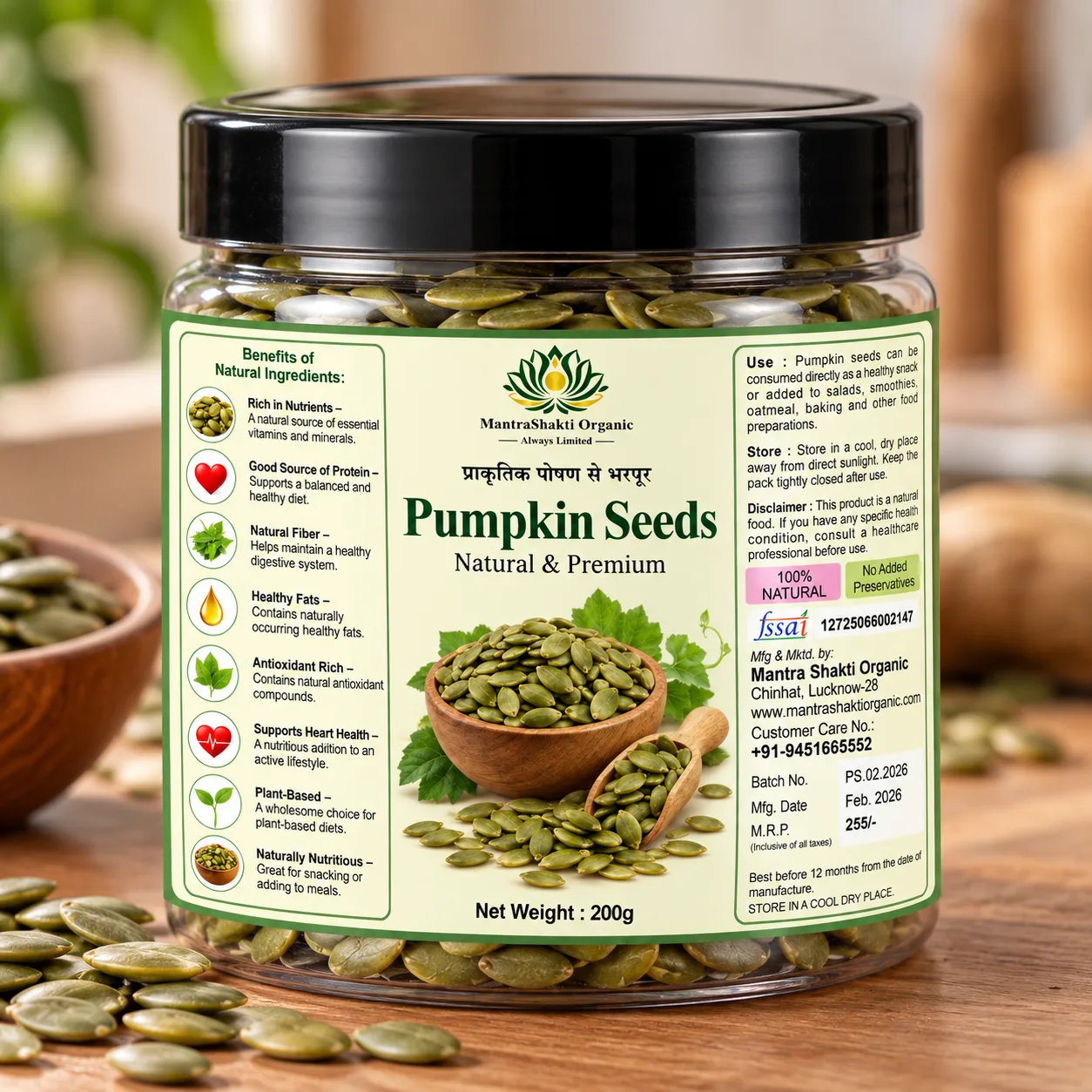
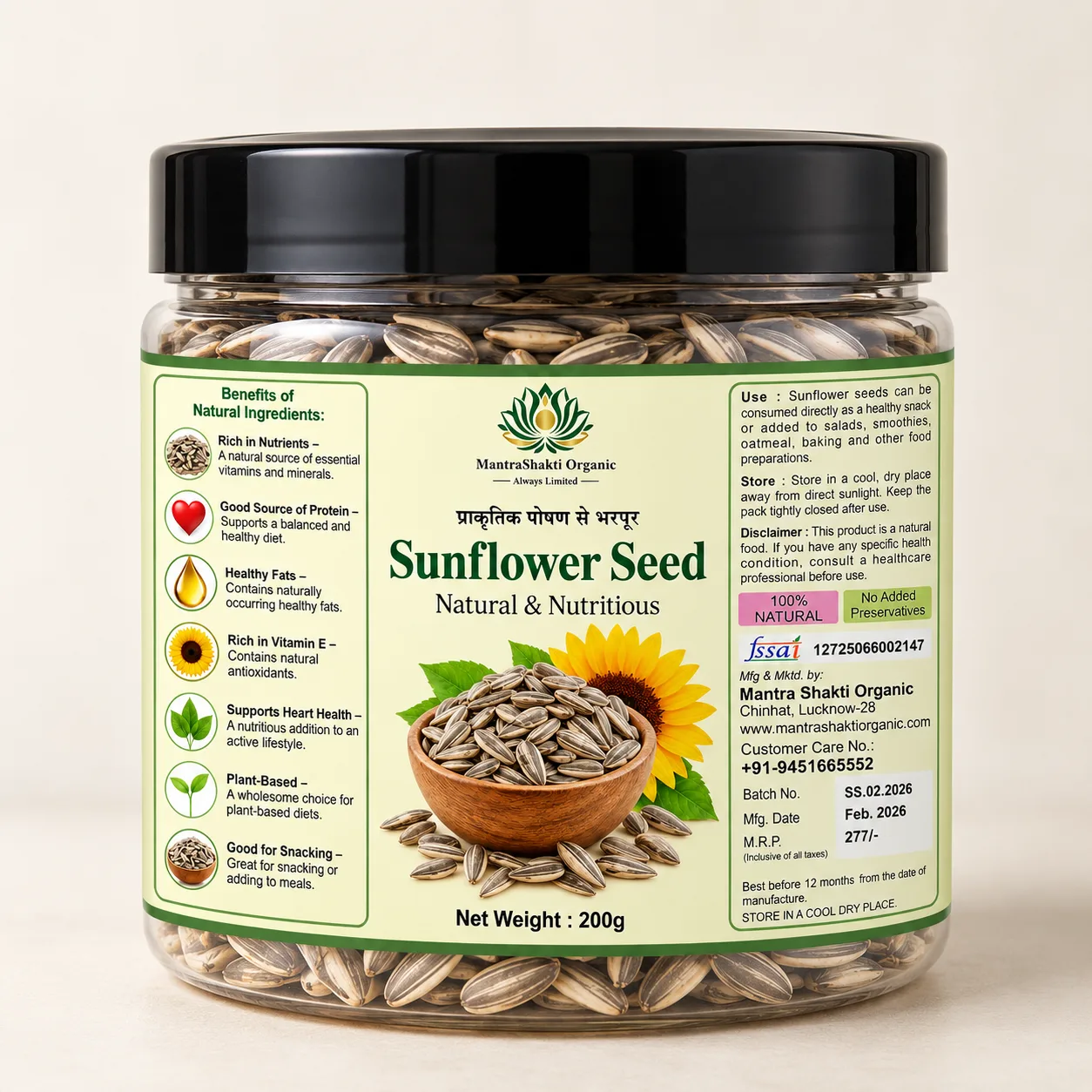
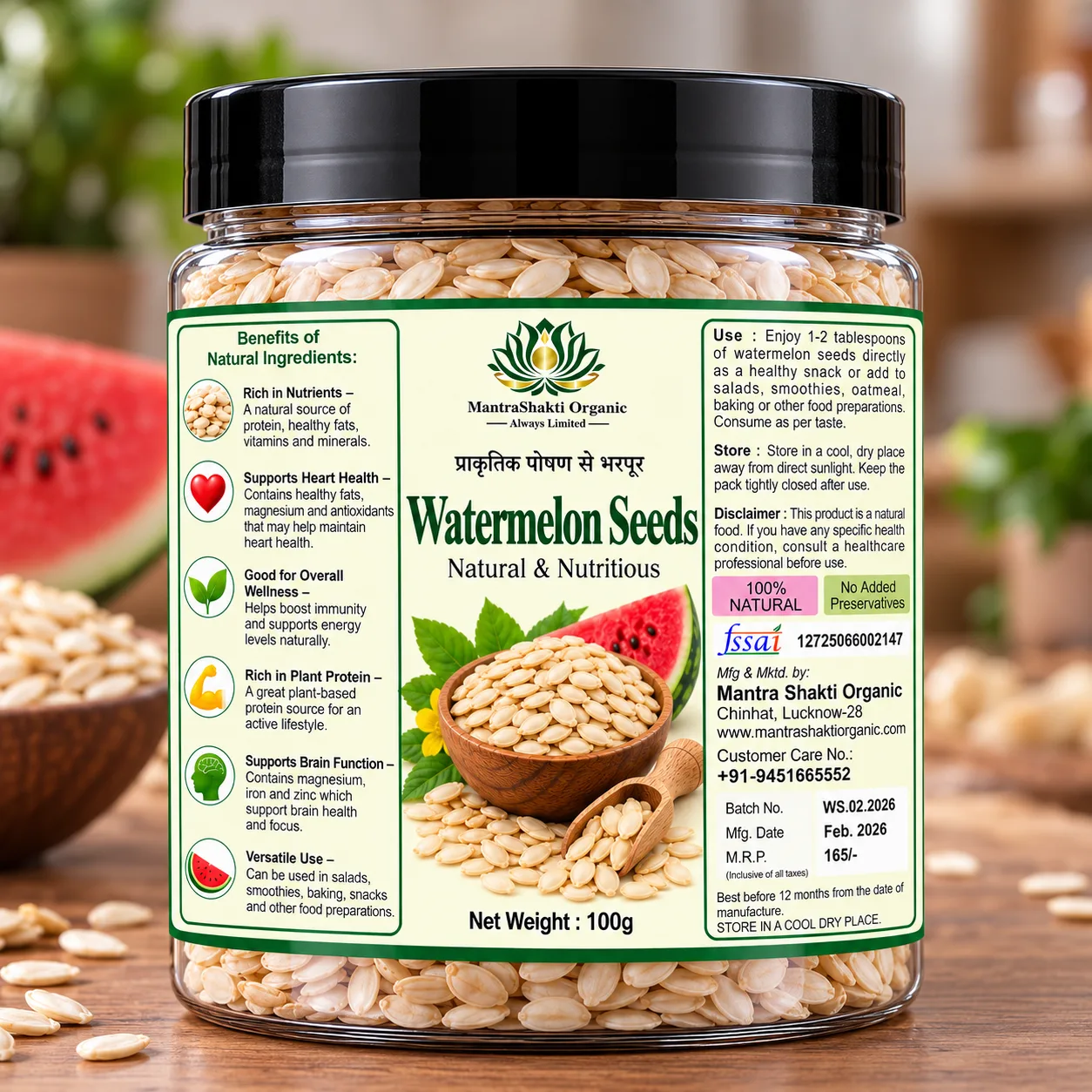
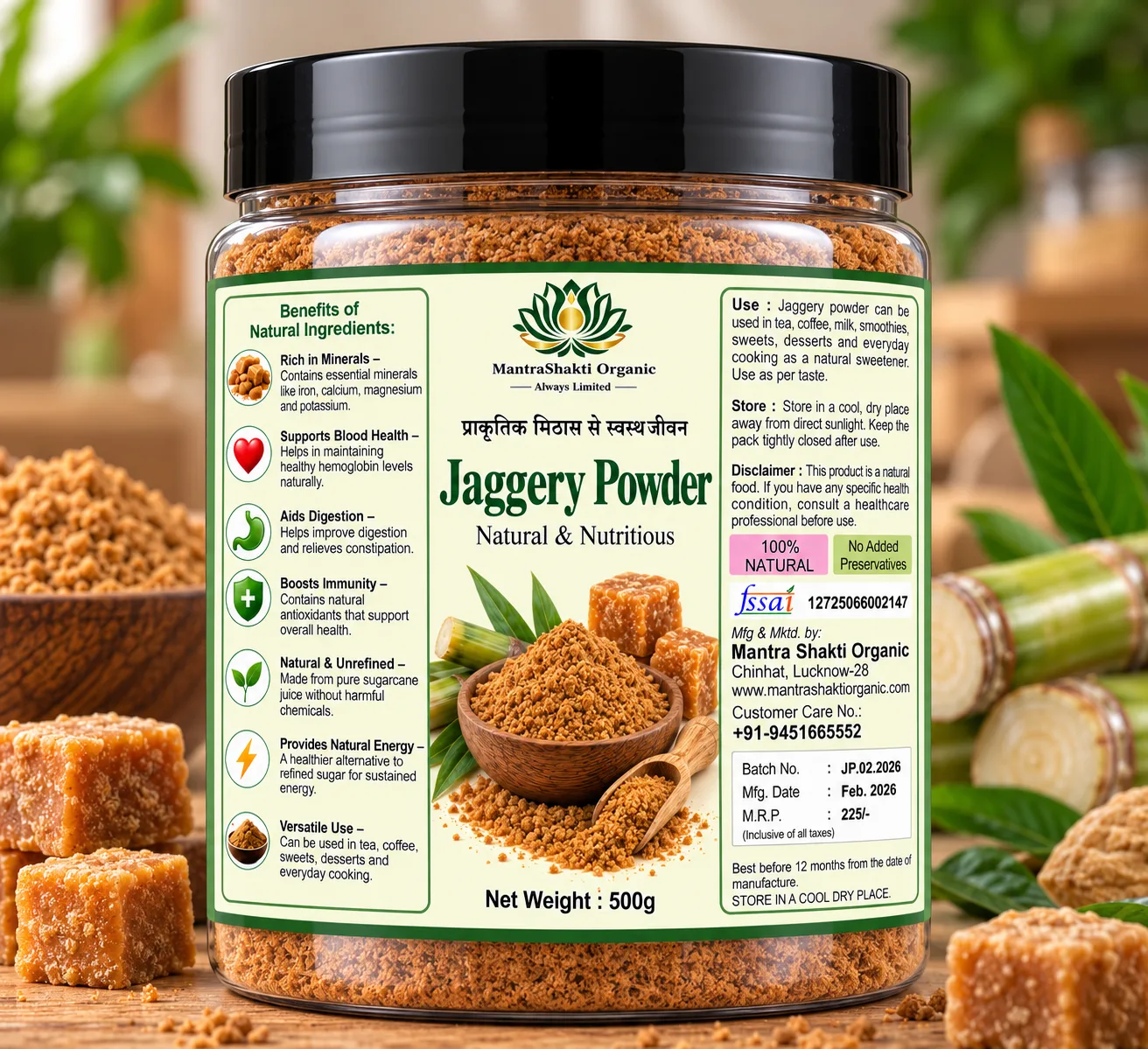
Our Pumpkin Seeds (₹255 for 200 g), Sunflower Seeds (₹277 for 200 g) and Watermelon Seeds (₹165 for 100 g, the magaz) are single-ingredient packs of kernels, and our Jaggery Powder is a single-ingredient pack too (₹225 for 500 g). All are packed in small lots at our workshop in Chinhat, Lucknow. One pack of each seed and one pack of jaggery covers two batches of the base laddoo above. You can read more about the people behind the packs in who makes MantraShakti Organic.
Frequently asked questions
How do you make seed laddoos with jaggery?
Dry-roast pumpkin, sunflower and watermelon (magaz) seeds. Boil jaggery powder with a little water, about 2 tablespoons per 100 g, to soft ball or firm ball, roughly 113 to 121 degrees C. Switch off the flame, stir in the warm seeds and cardamom, and shape the balls with wet hands while the mixture is still warm.
What consistency should jaggery syrup be for laddoo versus chikki?
For laddoo, cook to soft ball (about 113 to 116 degrees C) for a soft laddoo or firm ball (118 to 121 degrees C) for a firmer one. For chikki, cook to the top of hard ball (about 127 to 129 degrees C) for a clean snap, or hard crack (149 to 154 degrees C) for an extra-crisp piece. Confirm with the cold-water test.
How do you test gud ki chashni without a thermometer?
Drop a few drops of the hot syrup into cold water and let them cool for a few seconds before touching. A soft ball that flattens in your palm is soft ball, a firm ball that squashes is firm ball, and a drop that hardens and snaps when bent is ready for chikki. If it only forms a thread, keep cooking.
Why did my chikki turn chewy instead of crisp?
Usually the syrup was pulled too early, leaving too much water in it. Cook to at least hard ball, confirm with the cold-water test, let the chikki cool fully before breaking it, and keep it sealed, because jaggery draws moisture from damp air.
Can I use jaggery powder instead of a jaggery block for laddoos?
Yes. For syrup-based laddoo and chikki, jaggery powder dissolves in the pan water within a minute and measures by weight; use the same weight as a block. For grind-and-roll laddoos without syrup, powder has little moisture and the balls may not hold, so add a little hot ghee.
Which seeds go into winter laddoo?
Pumpkin seeds, sunflower seeds and watermelon seeds (magaz) are a popular mix, often with sesame, chopped nuts, cardamom and sometimes edible gum (gond). Roast each kind separately until it smells nutty, since they brown at different speeds, and keep them warm for the syrup.
How long do seed laddoos keep, and how should they be stored?
Cooled completely and kept in a sealed jar, published recipes give about two weeks to a month. Keep the jar dry. In cold weather the ghee sets and the laddoos harden, which is normal; steam them briefly in a covered container to soften them.
What is edible gum (gond) and how do you fry it for laddoo?
Edible gum (gond) is commonly the dried sap of the babul (kikar) tree, sold as small amber crystals. Fry a few tablespoons at a time in medium-hot ghee, fully covered, until the crystals puff up and look light, then crush them coarsely. It is not gond katira, which is soaked in water and not fried.
Sources and further reading
- Sugar Stages (The Accidental Scientist: Science of Cooking, Exploratorium) Candy-stage temperatures, sugar concentrations, the cold-water test, the burn warning and the altitude adjustment.
- Jaggery Processing (NIFTEM, Ministry of Food Processing Industries) The 115 to 118 degrees C striking point for gur and the Indian standard (IS 12923:1990) for cane jaggery.
- Til Ke Laddu (Sesame Seeds Ladoo) (Swasthi's Recipes) A jaggery-syrup laddu with the soft-ball water test and shaping while warm.
- Gond Ke Laddu, How to Make Gond Laddu (Swasthi's Recipes) What gond is, frying it fully immersed in ghee, the gond katira warning and storage.
- Peanut Chikki (Cook With Manali) A jaggery chikki with quantities, a 260 to 265 degrees F target, the cold-water test and the effects of under- and over-cooking.
- Good old sap (Down To Earth, 2019) Edible gums in India, gond laddus as a winter food and how gond differs from gond katira.
Written by the MantraShakti Organic workshop team, Chinhat, Lucknow. This is general kitchen information, not medical advice. Hot sugar syrup causes serious burns; keep children away while you cook. Jaggery is a sugar; if a doctor has asked you to limit sugar, count it as sugar and follow that advice.
Shop this guide
Made by hand in small batches in Lucknow.
More from the Journal