
How to Do a Patch Test for Skin: Soap, Face Pack and Hair Oil

How do you do a patch test for skin?
To do a patch test for skin, dab a little of the product, used as you normally would, on a coin-sized spot on your inner elbow or behind your ear. Rinse wash-off products after their normal time. Watch the spot for 24–48 hours for redness, itching or swelling, and repeat for a week to be thorough.
Key takeaways
- Test the product the way you will use it: the same amount, the same mix or lather, and the same time on the skin. The American Academy of Dermatology (AAD) says a rinse-off product stays on for five minutes or as long as its instructions say.
- Pick a spot that will not be rubbed or washed, such as the inside of the elbow or underside of the forearm. For face products, test closer to the face, behind the ear or on the side of the neck, because facial skin is thinner than the forearm.
- One day is a quick check; a week is a thorough one. The AAD's method is twice a day for seven to ten days, because allergic reactions are often only evident several days later.
- A reaction looks like redness, itching, swelling, burning or blisters. Wash it off, stop using the product, and see a doctor if it is severe or does not settle.
- A clear result does not rule out every reaction. It tells you how that skin spot responded to that product at that time, nothing more.
- Swelling of the lips, mouth, tongue or throat, or trouble breathing, is an emergency. Call 112 in India.
What is a patch test, and what can it tell you?
A patch test is a small trial of a product on a limited area of your own skin, done before you use the product more widely. It can show whether the product irritates you or sets off an allergic reaction, while the stakes are still one small patch.
The two kinds of reaction behave differently. According to the NHS, an irritant reaction is the more common kind: something damages the skin's outer layer directly, and soaps, detergents and regular contact with water are typical culprits. An allergic reaction is less common and happens when the body reacts to a substance, with cosmetics and metals such as nickel among the triggers. DermNet, a dermatology reference, adds that immediate irritation usually points to an irritant reaction, while allergic reactions often show up only days later. That timing is why a good patch test runs longer than a few minutes.
What a home patch test cannot do is diagnose anything. If you have had unexplained reactions, a dermatologist can run formal patch testing to find the cause, and that is a medical test, not a home routine.
Where on the body should you patch test?
Choose skin that will not be rubbed, washed or sunburnt during the test. The AAD suggests the underside of the arm or the inside of the elbow. DermNet's list also includes behind an ear and the side of the neck, and advises a patch that has not been exposed to sun recently, because sun can hide a reaction.
For anything that will go on your face, test close to it. DermNet warns that testing on skin thicker than the area you will actually use can give a false all-clear, and facial skin is thinner than the forearm. Behind the ear, the jawline or the side of the neck is a better stand-in, kept well away from the eyes.
| Product | Where to test | What to apply | How long to leave it |
|---|---|---|---|
| Bath bar or soap | Inside of the elbow or underside of the forearm | A coin-sized patch of light lather, made as you normally would | Your normal bathing time, up to five minutes, then rinse |
| Face wash or face-wash bar | Behind the ear or along the jawline | A little lather, as you would use on your face | The normal wash time, a minute or two, then rinse well |
| Face pack, including a multani mitti paste | Behind the ear or along the jawline | A thin layer of the same mix you will use, with the same liquid | The time you plan to use it, for example 10 minutes, then rinse |
| Hair oil or hair serum | Behind the ear or the inside of the elbow | A few drops, left uncovered | As long as you would leave it on your hair, then wash it off |
| Shampoo | Inside of the elbow or behind the ear | A little shampoo, diluted as you would on your head | The normal wash time, then rinse well |
| Hair colour | As the maker's leaflet says | Follow the dye maker's instructions exactly | As the leaflet says; repeat before every use |
How do you patch test a soap, face wash or face pack that you rinse off?
Think of the test as one normal wash on a small patch, then watch what happens afterwards. The point is to copy real use, so make the lather or paste the way you would on the day.
- Choose your spot from the table above. Wash it with plain water, dry it, and keep other products off it.
- Make a small amount exactly as you will use it. If you will mix a face pack with rose water, test it with rose water; a test with plain water does not tell you about the rose water.
- Apply a coin-sized patch. The AAD says a spot about the size of a quarter, which is roughly 2.5 cm across. DermNet's repeat test uses about 5 cm by 5 cm.
- Leave it for the normal time. The AAD says five minutes or as long as the instructions say for a rinse-off product. DermNet's repeat test washes cleansers and shampoos off after about a minute. A face pack stays for its normal time, such as 10 minutes.
- Rinse and pat dry. Do not scrub the spot afterwards, and avoid tight sleeves rubbing it.
- Look at the spot the same evening, then after 24 hours and after 48 hours. Check for redness, itching, swelling, burning or small bumps. Compare it with the same patch on the other arm.
- For a thorough check, repeat it. The AAD's method is twice a day for seven to ten days on the same spot, and DermNet's version is twice a day for a week. If the skin still looks and feels normal at the end, a significant allergy to that product is unlikely, although not ruled out.
- If anything shows up, rinse the product off gently and stop using it, as set out in the sections below.
How do you patch test a leave-on product such as hair oil?
A leave-on product stays on the skin, so the test should too. Dab a few drops on the chosen spot, leave it uncovered, and do not wash or rub the spot for the length of time you would normally leave the oil on, then wash the area as you would your hair.
- Choose the spot well. Behind the ear is a good choice for hair products because it is close to the hairline. The inside of the elbow also works.
- Match your real routine. Test for as long as you will leave the oil on, not for five minutes. Our weekly champi guide leaves the oil on for half an hour to a couple of hours, so that is how long the test should run.
- Check at 24 and 48 hours, and again after a few days if you can. Allergic reactions may appear days later.
- Start small on the scalp. Your scalp can respond differently from your arm. After a clear skin test, use the oil on one small section of scalp first, keep it away from your eyes, and wash it off with shampoo at the first itching or burning.
- Hair colour is different. Follow the dye maker's instructions exactly. The US Food and Drug Administration advises a skin test every time before dyeing your hair, not just the first time, and says not to dye your eyebrows or eyelashes.
How long should you wait after a patch test?
Check straight away, again at 24 and 48 hours, and keep an eye on the spot for several days, because allergic reactions are often only evident several days after the product touches the skin. For a thorough check, run the test for a week.
| When | What you might notice | What it may mean |
|---|---|---|
| During the test, within minutes | Stinging, burning or sharp itching | Possible irritation. Rinse off at once, as the AAD advises |
| Hours to a day later | Redness, tightness or soreness at the spot | Possible irritant reaction; the NHS says symptoms typically appear within hours to days |
| A few days later | An itchy, red or raised patch that was not there when you rinsed | Possible allergic reaction, which often shows up only days later |
| After seven to ten days of repeat testing | No change in the skin | A significant allergy to that product is unlikely, but a clear result is not a promise |
What does a patch-test reaction look like?
A reaction looks like red, itchy or swollen skin, according to the AAD. The NHS describes contact dermatitis, the medical name for a skin reaction to something that touched it, as skin that becomes itchy, blistered, dry and cracked. On lighter skin it tends to look red. On darker skin it may look dark brown, purple or grey, so go by itching, swelling, texture and soreness as much as by colour.
- Redness, a warm or tight feeling, or a darker patch that is clearly different from the skin around it
- Itching, burning or stinging, during the test or later
- Swelling or raised bumps
- Small blisters, weeping, or dry, flaking or cracked skin
- A rash that spreads beyond the patch you tested
A faint pinkness that fades within minutes of rinsing may simply be warm water or friction. If you are unsure whether what you see counts, regard it as a reaction and do not use the product on a larger area. Nothing is lost by being careful.
When should you stop and see a doctor?
Stop at the first sign of a reaction, and see a doctor if it is severe, spreads, or does not settle. If you have trouble breathing or notice swelling of the lips, mouth, tongue or throat, regard it as an emergency and call 112, India's single emergency number. The table shows what to do at each level.
| What you see | What to do |
|---|---|
| Stinging, burning or itching while the product is on | Wash it off at once with plain water and do not use the product again |
| Redness, itching or swelling at the patch afterwards | Wash it off gently and stop using the product. The AAD says a cool compress or petroleum jelly can be used while it settles |
| A reaction that is severe, spreads, blisters, or does not improve within a few days | See a doctor or dermatologist. The NHS advises seeing a GP if symptoms are persistent, recurrent or severe |
| Product in or near the eyes, or swelling around the eyes or face without breathing difficulty | Rinse with plenty of clean water and see a doctor the same day |
| Swelling of the lips, mouth, tongue or throat, difficulty breathing or swallowing, wheezing, a swollen itchy rash, or feeling faint | Emergency: call 112 straight away. The NHS lists these as signs of a severe allergic reaction, which usually starts within minutes |
Keep the product's name, the ingredient list and the date. A doctor or dermatologist can use them to work out what caused the reaction.
Does a clear patch test mean a product is safe?
No. The AAD says a test can help predict whether you will react, but it is still possible to end up with a product that irritates your skin. The FDA says the same about hair dye: even with no reaction to the skin test, a reaction is still possible when you dye your hair. A clear result is good news, not a promise.
Labels do not replace your own test either. "Hypoallergenic", "natural" and "herbal" on a pack are not a patch test result. The AAD points out that "unscented" and botanical products can still contain fragrance-related ingredients, and any plant ingredient can set off a reaction in someone.
Is one patch test enough forever?
No. A patch test covers one product, on one spot, at one time. Test every new product, test again if you switch to a new formula or product with a similar name, and test again if your skin has become more reactive.
For hair colour the rule is stricter. The FDA advises a skin test before every use, and DermNet explains why: an allergy may develop only after repeated use, so a clear test last month does not clear this month's dye. The same logic is why we would rather you test than assume.
What can go wrong with a clay face pack (multani mitti ke nuksan)?
Like any face pack, a clay pack can irritate or trigger an allergy, and clay can leave skin feeling dry and tight if it stays on too long or is used too often. The AAD notes that masks can cause irritation if you use them too often or leave them on longer than intended, and that people with very sensitive skin are more likely to react.
The practical safeguards are the ones in this guide: patch-test the exact mix, keep to a short, set time, rinse before the pack cracks, moisturise afterwards, and stop if skin stings, itches or burns. Keep your expectations modest: it is a simple cleansing clay, and a patch test is part of using it well.
Who should ask a doctor before using a new product?
- Anyone with a skin condition or a known allergy: ask a doctor or dermatologist before trying a new soap, face pack or hair oil.
- Anyone who is pregnant, or who takes regular medication: ask a doctor first.
- Children: ask a doctor before using a new product on a child's skin or scalp.
- Anyone who has already had a bad reaction to a product or an ingredient: ask a dermatologist before trying similar products.
- Broken, sunburnt or already irritated skin: wait until it has settled before testing anything.
What mistakes do people make with patch tests?
- Testing for a few minutes only. Allergic reactions often take days. Give it at least 48 hours, and a week if you can.
- Testing somewhere that gets rubbed or washed. A sleeve cuff, a watch strap or a daily shower defeats the test.
- Testing something different from what you will use. Test the actual mix, lather or oil, for the time you will really use it.
- Testing two new products on one spot. You will not know which one caused a reaction. Test one at a time, in different places if you must.
- Skipping the test because a product is herbal or natural. Plant ingredients cause reactions too.
- Testing in strong sun or a sweaty bathroom. Sun can hide a reaction, and sweat and rubbing can create irritation that is not about the product.
How do we approach patch testing for our own products?
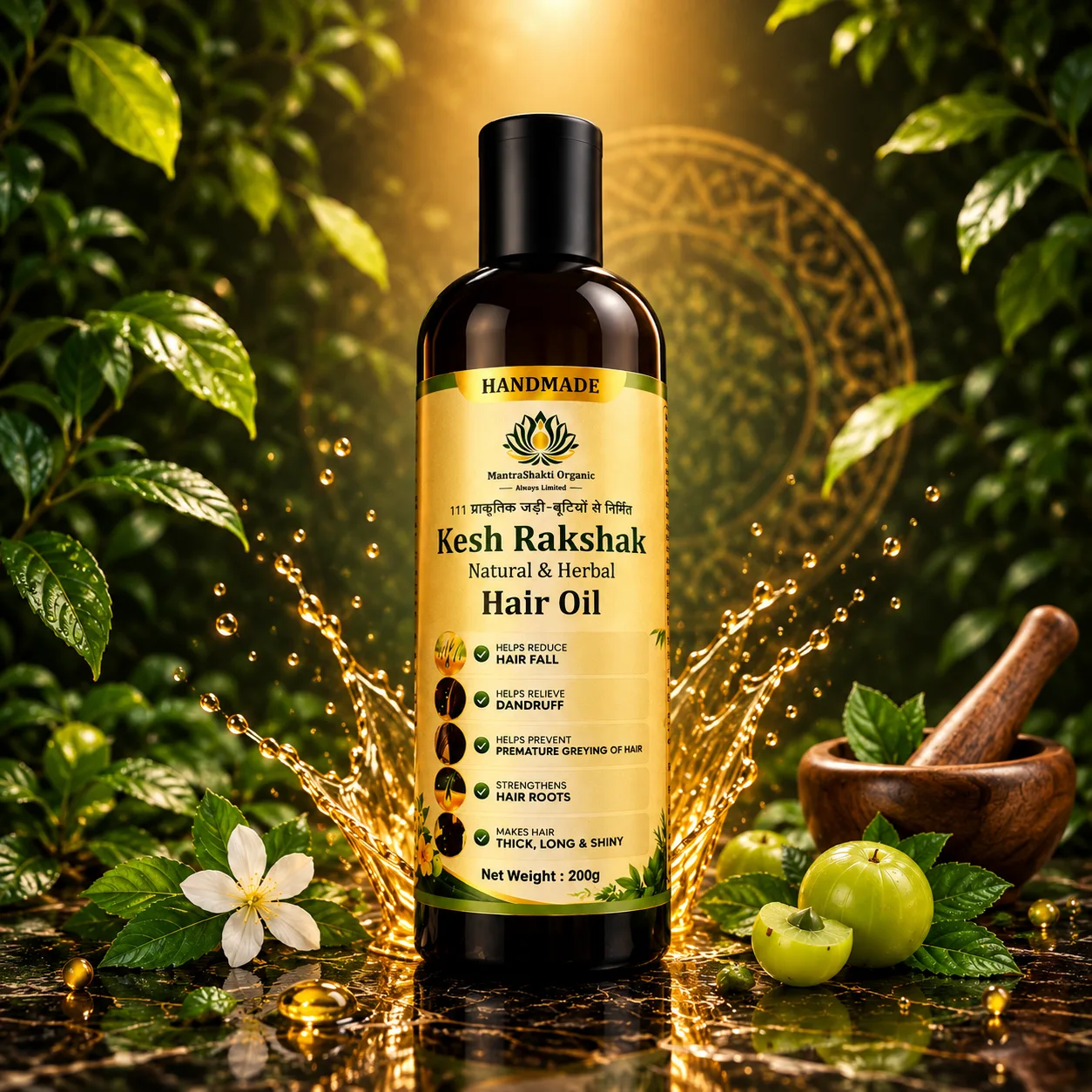
We recommend a patch test with every skin and hair product we make, because nobody can predict how your skin will react to an ingredient. That includes the handmade Divya Snan bath bars, the Divya Snan Face Wash Bar, the Multani Mitti Face Cleanser, the Kesh Rakshak Hair Oil and the Kesh Rakshak Herbal Shampoo. All of them are made at our family workshop in Chinhat, Lucknow, in small batches. A clear test is a good sign, and we still ask you to stop and see a doctor if your skin tells you otherwise.
Frequently asked questions
How do you do a patch test for a face product?
Make a small amount exactly as you will use it and apply a coin-sized patch behind your ear or along the jawline, because facial skin is thinner than the forearm. Leave it for the normal time, rinse if it is a wash-off product, and check after 24 and 48 hours for redness, itching or swelling. For a thorough check, repeat twice a day for a week.
Where on the body should you patch test?
Pick skin that will not be rubbed, washed or sunburnt. The American Academy of Dermatology suggests the underside of the arm or the inside of the elbow. Behind the ear and the side of the neck are also used, and they suit face and hair products better because the skin is thinner and closer to where you will use the product.
How long should you wait after a patch test?
Check straight away, then at 24 and 48 hours, and keep watching for several days, because allergic reactions are often only evident several days later. The AAD's thorough method is to repeat the test twice a day for seven to ten days. If skin stings, burns or itches at any point, wash the product off and stop.
Can you patch test a soap or face wash, which you rinse off?
Yes. Make a light lather as you normally would, apply it to a coin-sized patch, and leave it for the normal wash time. The AAD says a rinse-off product stays on for five minutes or as long as its instructions say. Rinse, pat dry, and check the spot after 24 and 48 hours, repeating for a week if you want a thorough check.
How do you patch test a shampoo or hair oil?
Put a little shampoo, diluted as you would on your head, or a few drops of oil on the inside of your elbow or behind your ear. Leave it for as long as you would leave it on your hair, then rinse or wash it off, and check at 24 and 48 hours. After a clear result, try it on one small section of scalp first. For hair dye, follow the maker's instructions and test before every use.
What does a patch-test reaction look like?
Red, itchy or swollen skin, burning or stinging, small bumps or blisters, and dry, flaking or cracked skin, sometimes with a rash that spreads past the patch. On darker skin the redness may look dark brown, purple or grey, so go by itching, swelling and soreness as well as colour. Wash the product off and stop using it.
Is one patch test enough forever?
No. A patch test covers one product, on one spot, at one time. Test every new product, test again if the formula changes or your skin becomes more reactive, and for hair colour test before every use, because an allergy can develop only after repeated use.
Does a clear patch test mean a product is safe?
No. A clear result lowers the chance of a reaction but does not rule it out, and the American Academy of Dermatology notes you can still end up with a product that irritates your skin. Labels such as hypoallergenic or natural are not a patch test result. If skin stings, itches or swells later, stop and see a doctor if it does not settle.
Sources and further reading
The guidance above draws on these pages, which we opened and read. Where the AAD and DermNet differ, for example on how long a rinse-off product stays on the skin, we give both.
- American Academy of Dermatology: How to test skin care products – the test spot, the seven-to-ten-day method, rinse-off products, what a reaction looks like, and why a clear test is not a promise
- American Academy of Dermatology: Do facial masks work, and should I add one to my skin care routine? – patch-testing a new mask, irritation from overuse or leaving a mask on too long, and when to see a dermatologist
- DermNet: Open application test – repeat testing for a week, test sites, delayed allergic reactions, and why testing on thicker skin can miss a reaction
- NHS: Contact dermatitis – irritant versus allergic reactions, what they look like on lighter and darker skin, and when to see a GP
- NHS: Anaphylaxis – the signs of a severe allergic reaction that need emergency help
- US Food and Drug Administration: Hair Dyes – a skin test before every use of hair dye, why a clear test is not a promise, and keeping dye away from eyebrows and eyelashes
Written by the MantraShakti Organic workshop team, Chinhat, Lucknow. This is general information, not medical advice, and a home patch test cannot diagnose an allergy. If you have a skin condition, an allergy, are pregnant or take medication, ask a doctor before trying a new product. In an emergency call 112.
Shop this guide
Made by hand in small batches in Lucknow.



More from the Journal
18 Sep 2026 · 6 min
Cold-Process vs Melt-and-Pour Soap: How Our Divya Snan Bars Are Made
Read more →