
Difference Between Gond and Gond Katira (Laddoo Gum vs Sharbat Gum)
What is the difference between gond and gond katira?
They are not the same. The difference between gond and gond katira is that gond is fried in hot ghee until it puffs, for laddoos, while gond katira is soaked in water until it swells into a soft jelly, for sharbat. They are different plant gums, and neither can stand in for the other.
Key takeaways
- Gond (edible gum) is the dried sap of the babul or kikar tree in laddoo recipes. You fry it in plenty of ghee, where it puffs up, and it dissolves in water.
- Gond katira is a soaking gum. In the international food specification, tragacanth, the classic katira, swells in water into a smooth, stiff, slightly cloudy gel instead of dissolving.
- In India the word katira covers more than one gum: true tragacanth from Astragalus shrubs, and karaya-type gums from Sterculia trees that were once sold as “Indian tragacanth”. The botanical name on the pack tells you which you have.
- Gond is the winter-sweet gum and katira is the summer-drink gum. “Thanda” and “garam” are a traditional way of sorting foods by season; we do not measure or claim anything about them.
- One glass of water overnight and one spoon of hot ghee will tell the two apart: katira swells into jelly, gond dissolves in water and puffs in ghee.
Why are gond and gond katira so often confused?
The mix-up is easy to understand. Both are sold as hard, dry pieces, both get called “gond” in many shops, and both are plant gum, a sticky sap that hardens where it leaks from a tree or shrub. In Hinglish the whole story fits in one line: ghee ke liye gond, paani ke liye katira (गोंद और गोंद कतीरा में अंतर). This guide sets the two side by side using the food-additive specifications published by FAO and the WHO-FAO expert committee on additives (JECFA), plus well-known Indian cooking references, and ends with a one-night test you can run in your own kitchen.
What are gond and gond katira?
Gond is the Hindi word for edible gum, a plant sap that has dried hard. Swasthi’s Recipes notes that it is called dink in Marathi and antu in Kannada, and describes the gond used in gond ke laddu as the dried sap of the babul (kikar) tree, which that site calls acacia gum, also known as gum arabic.
Gond katira is the other edible gum. It is sold as hard, dry pieces that look unremarkable until you soak them. Over several hours they swell into a soft, nearly clear jelly with almost no taste of its own, and that jelly is what goes into gond katira sharbat, falooda and chilled milk drinks. In English it is tragacanth (gum tragacanth), which carries the food-additive number E413.
The word “katira” is your clue that this is the gum you soak, not the one you fry.
Which plant does each gum come from?
Gond comes from acacia-type trees such as babul. Gond katira comes from thorny Astragalus shrubs, and in India the katira name is also used for gums from a different tree family.
Gond. Gond ke laddu recipes name the babul (kikar) tree. The closest well-documented relative is gum arabic, the acacia gum of the international food trade. The JECFA specification defines it as the dried exudate of Acacia senegal or Acacia seyal and says one gram dissolves in 2 ml of water. FAO’s review of plant gums makes the same contrast from the other side: unlike tragacanth, gum arabic is very soluble in water and stays thin even in strong solutions.
Gond katira. JECFA’s tragacanth specification defines the gum as the dried exudate from the stems and branches of Astragalus gummifer and other Asiatic species of Astragalus. FAO’s review adds that these are small, low, often cushion-shaped shrubs growing wild mainly in Iran and Turkey, tapped at the taproot and branches, and that the gum travels as ribbons or flakes with a horny texture. It also admits that A. gummifer is the species usually cited, with surprisingly little evidence behind it, so several Astragalus species probably contribute.
The Indian twist. In India, katira-like names are also attached to another gum. JECFA’s karaya specification (E416) lists Katilo, Kullo and Kuterra, names that sound very like katira, among its synonyms, and defines karaya as the exudate of Sterculia urens and other Sterculia species, or of Cochlospermum species. FAO’s 1995 review notes that most karaya then came from India and that, in its early commercial years, it was sometimes used as an inferior substitute for tragacanth, which is how it picked up the name Indian tragacanth.
The practical upshot is simple. A pack sold as gond katira may hold true tragacanth or a karaya-type gum. Both take up water and swell instead of dissolving, so both are used the same way in sharbat, but they are different plants. The botanical name on the label settles it, and if a seller cannot name the plant, that tells you something too.
Gond vs gond katira: the side-by-side table
This table collects what the specifications and Indian cooking references say. Shape and colour change with grade and batch, so use the look row as a guide rather than a pass-or-fail rule.
| Feature | Gond (edible gum) | Gond katira |
|---|---|---|
| Other names | Edible gum, babool gond, kikar gond, acacia gum; dink (Marathi), antu (Kannada) | Tragacanth, gum tragacanth (E413); karaya-type gum has been sold as “Indian tragacanth” (E416) |
| Plant | Babul (kikar) tree in laddoo recipes; acacia species in the international gum arabic trade | Astragalus shrubs of Iran and Turkey; in India also Sterculia trees (karaya type) |
| Look, per specifications | Pale to orange-brown, breaking with a glassy fracture; recipe writers call babool gond brownish and shiny | Tragacanth: flat, flaky or twisted pieces, white to pale yellow, horny. Karaya type: irregular pieces, pale yellow to pinkish brown. Recipe writers call good katira dull white with no shine |
| In water | Dissolves (1 g of gum arabic in 2 ml) | Swells into a stiff gel without fully dissolving (1 g of tragacanth in 50 ml) |
| In hot ghee | Puffs up and turns light when fully covered by plenty of ghee | Not used this way; recipes soak it |
| Main dishes | Gond ke laddu, panjiri and other winter sweets | Sharbat, falooda, lemon drinks, chilled milk |
| Kitchen season | Winter | Summer |
| Preparation | Pick out bark and grit, fry in ghee, crush | Rinse, soak overnight in plain water, drain |
| Can it replace the other? | No | No |
How can you tell gond and gond katira apart by looking?
Look at shape and shine first, but never rely on colour alone. The specifications describe the gums quite differently:
- Acacia gum (the gond type): a pale to orange-brown solid that breaks with a glassy fracture. Recipe writers describe babool gond as brownish and shiny.
- Tragacanth: flattened, layered flakes, straight, curved or spirally twisted, up to about 3 cm long and 0.5 to 2.5 mm thick, white to pale yellow (some pieces with a reddish tinge), horny in texture and odourless. Recipe writers describe good gond katira as dull white with no shine.
- Karaya-type gum: broken, irregular pieces with a semi-crystalline look, pale yellow to pinkish brown, translucent and horny. In powder form it has a distinctive vinegar-like smell, from acetic acid.
Two cautions. Grade changes colour: FAO says the better grades of tragacanth and karaya are paler and cleaner, while lower grades are darker and carry bark and other foreign matter, so a darker batch is not automatically a different gum. And shops label loosely, which is why a simple test is better than an opinion.
How do you tell gond from gond katira at home?
Run a one-night water test and, if the gum turns out to dissolve, a one-minute ghee test. Neither is a laboratory method, but together they separate a swelling gum from a dissolving one.
- Check the pack first. Note the ingredient name, any botanical name, the packing date, and the colour and shape of the pieces. If the label only says “gond”, ask which gond.
- Split a pinch in two. Keep three or four dry pieces on a plate for step 4. Put five or six pieces in a clean glass with half a cup of plain water, cover it and leave it for six to eight hours, which means starting in the evening.
- Read the glass in the morning. A swelling gum (katira) has turned into soft, translucent, jelly-like lumps that hold their shape, a little like crushed ice, with mostly clear water around them. A dissolving gum (gond) has softened and run into a thick, sticky liquid.
- Fry the dry pieces only if the glass showed a dissolving gum. Put enough ghee in a small pan to cover three or four pieces, warm it on a medium flame, drop them in and stir. Laddoo gond puffs up and turns light. Cooking references say it needs enough ghee to cover it fully, and that very hot ghee can turn it bitter.
- Never fry gum that swelled into jelly, and never taste raw gum. Katira belongs in water, not in a pan.
If nothing changes overnight, or the result is neither jelly nor sticky liquid, ask the seller what the gum is rather than guessing. Pieces that stay hard and glassy after a night in water are not behaving like either gum.
Can you use gond katira in gond ke laddu, or gond in sharbat?
No, not as a swap. Gond ke laddu is built on gum that puffs in ghee, and sharbat is built on a gum that becomes a jelly in water; each gum does only one of those jobs.
A laddoo recipe asks you to fry the gond in plenty of ghee until every piece has puffed, then crush it and mix it into ghee-roasted flour with sugar and nuts. That puff is the whole point, and it comes from frying the right gum. Katira is the soaking gum, and none of the sharbat or falooda recipes we looked at fries it. The other way round fares no better: a gum that dissolves in water cannot give you the soft, jelly-like pieces that float in a glass of katira sharbat. Anjana Chaturvedi puts it plainly on Maayeka: although both products are called gond, they are not interchangeable.
If you only have one of the two, use it for what it is: gond for laddoos, panjiri and other fried winter sweets; katira for sharbat, falooda and cold milk drinks. For falooda, katira is often paired with sabja seeds and rose syrup.
Which gum is for winter and which is for summer?
Gond is the winter gum and gond katira is the summer gum, going by when each shows up in Indian kitchens. Gond ke laddu are made when the cold sets in; katira appears in sharbat and falooda once the heat does.
Searches for “gond katira thanda hota hai ya garam” are really asking about the traditional way many Indian kitchens label foods garam or thanda by season. Cooking sites repeat that labelling when they say gond is for winter and katira for summer. It is a tradition, and we present it only as one: it is not a measurement, nothing in this article tests it, and we make no claim about what either gum does to your body. What you can check is simpler. One gum is fried in ghee for winter sweets, and the other is soaked in cold water for summer drinks.
If you have a medical condition, an allergy, are pregnant or take medication, ask your doctor before changing what you eat.
Gond katira, gum arabic, edible gum, karaya: what do the names mean?
“Gond” is a general word for tree gum, so shops and labels use it loosely. This table separates the names by what the specifications say each one is.
| Name on the pack | What it usually means | In water, per specification |
|---|---|---|
| Gond, edible gum | Sap of various trees; in laddoo recipes the babul (kikar) tree | Dissolves (cooking references) |
| Gum arabic (E414) | Dried exudate of Acacia senegal or Acacia seyal | 1 g dissolves in 2 ml |
| Gond katira, tragacanth (E413) | Dried exudate of Astragalus gummifer and other Asiatic Astragalus species | 1 g swells in 50 ml into a smooth, stiff gel |
| Karaya, “Indian tragacanth” (E416) | Exudate of Sterculia (or Cochlospermum) trees; Indian names include Katilo, Kullo, Kuterra | 2 g swells in 50 ml into a granular, stiff gel |
What should you check when you buy gond or gond katira?
Ask which plant it is, then look for a clean, labelled pack. These checks cost nothing and catch most mix-ups.
- Ask for the plant. Babool or kikar gond for laddoos; tragacanth or karaya for katira.
- Prefer cleaned gond for frying. Swasthi’s Recipes advises buying gond that is already cleaned, and from a reliable source, because pieces of bark and small stones can be stuck to it.
- Paler and cleaner is the higher grade of katira. Raw gum can carry bark, which JECFA’s specifications say must be removed before it goes into food, so pick out any you find.
- Read the label. Look for the ingredient name, an FSSAI licence number, the packing date and a way to contact the seller.
Common mistakes
- Frying katira for laddoos. It is the soaking gum; the laddoo recipes are written for gond.
- Soaking laddoo gond for sharbat. A dissolving gum turns the glass sticky instead of giving you jelly.
- Too little ghee, or ghee that is too hot. Gond has to be fully covered by ghee to puff well, and very hot ghee can make it bitter.
- Judging by colour alone. Grade, age and cleaning all change colour. Use the water test.
- Eating katira dry. It is meant to be soaked first; the dry pieces swell a great deal when they meet water.
How we pack gond katira
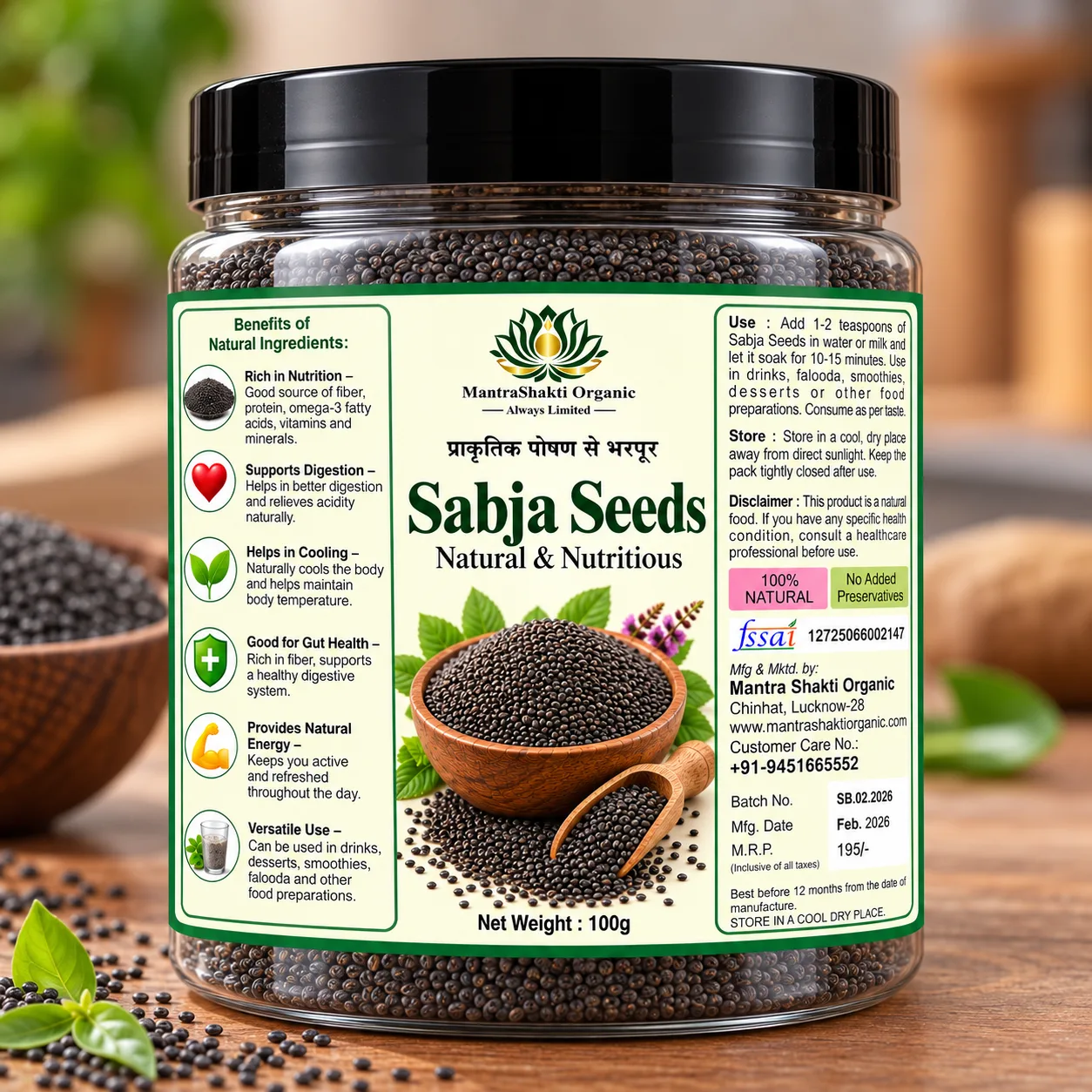
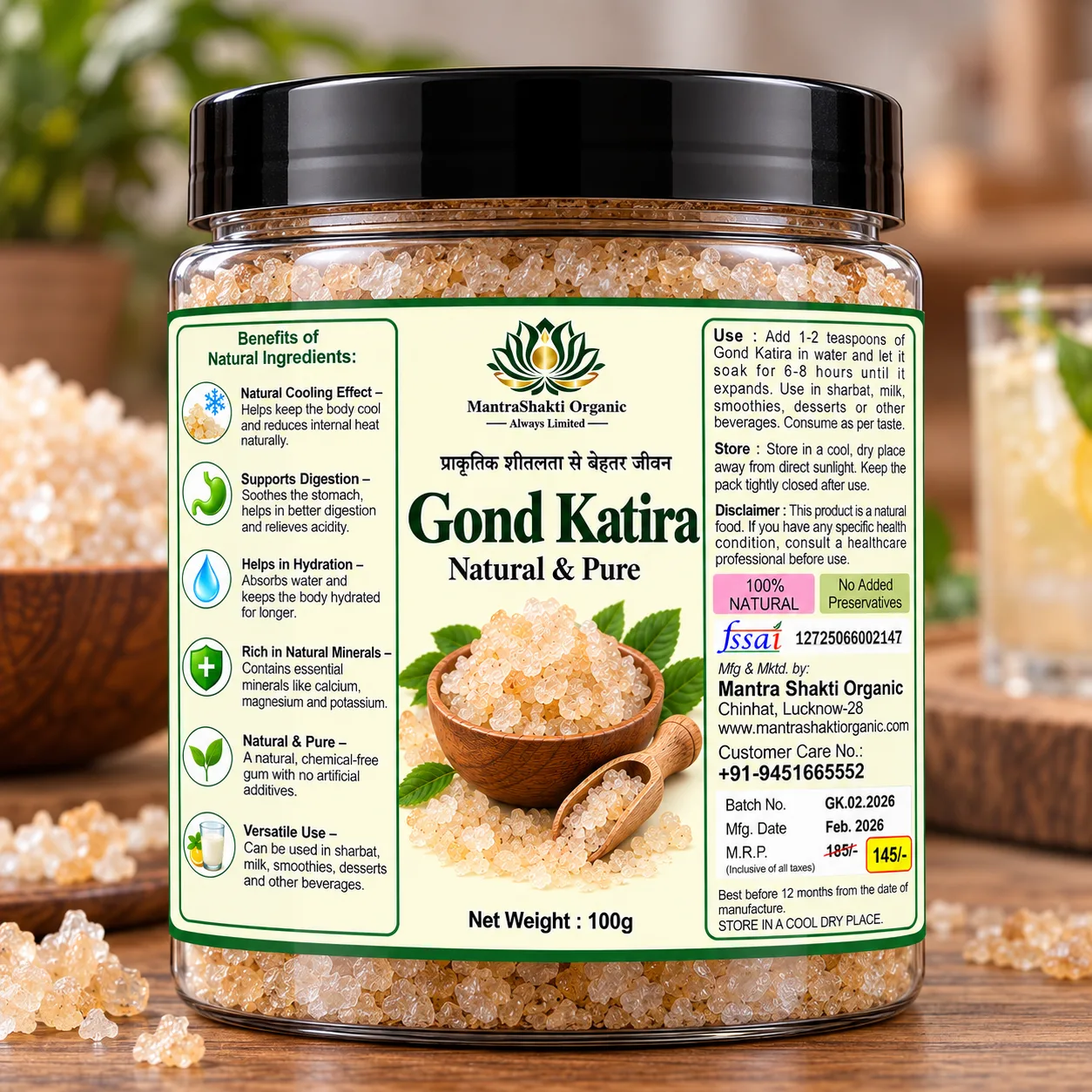
We sell gond katira at ₹145 for 100 g. It is the soaking gum, not the frying gum, so it is for sharbat, falooda and chilled milk drinks and not for laddoos. It is a single-ingredient pack, packed in small lots in Lucknow under FSSAI licence 12725066002147. If you want gond for laddoos, ask a grocer for cleaned babool or kikar gond. You can see the rest of our pantry packs in our pantry range, and read about the people who pack them in who makes MantraShakti Organic.
Frequently asked questions
Is gond katira the same as gond?
No. Gond is edible gum from acacia-type trees such as babul (kikar). It is fried in ghee for laddoos and it dissolves in water. Gond katira is tragacanth, or a karaya-type Indian gum, which is soaked in water until it swells into a jelly for sharbat. They are different plants, behave differently and go into different dishes.
Can gond katira be used to make gond ke laddu?
No. Gond ke laddu recipes rely on edible gond that puffs when fried in plenty of ghee and is then crushed into roasted flour. Gond katira is the soaking gum, and recipes use it for sharbat and cold drinks. For laddoos, buy cleaned babool or kikar gond instead.
What tree does gond katira come from?
True tragacanth is not from a tree but from small Astragalus shrubs, mainly wild in Iran and Turkey. In India the katira name is also tied to karaya-type gum from Sterculia trees, and to Cochlospermum species in the JECFA definition of karaya. The botanical name on the pack tells you which one you have.
Gond katira aur gond mein kya antar hai?
Gond ghee mein talne par phoolta hai aur laddoo mein jata hai. Gond katira paani mein bhigone par jelly ban jata hai aur sharbat mein jata hai. Dono alag paudhon se aate hain, isliye ek ki jagah doosra nahi chalta. In short: gond is fried, katira is soaked.
How can you tell gond and gond katira apart by looking?
By shape and shine. Tragacanth is described as flat, flaky, white to pale yellow and horny, and recipe writers call good gond katira dull white. Acacia gum is described as pale to orange-brown with a glassy fracture, and babool gond as brownish and shiny. Grade changes colour, so confirm with the overnight water test.
Why does gond puff in ghee while gond katira swells in water?
They are different gums. Acacia-type gum is very soluble in water and, per cooking references, puffs when fully covered by plenty of ghee. Tragacanth and karaya take up water without dissolving and form a stiff gel. The specifications document the water behaviour; for the puff we found only cooking references, not a standard that explains why.
What is gond katira called in English?
Tragacanth, or gum tragacanth, food-additive number E413. In Indian trade, karaya gum (E416) has also been sold as Indian tragacanth, because it was once used as a cheaper substitute for it.
Is gond katira thanda and gond garam?
Cooking sites describe katira as a summer ingredient and gond as a winter one, and garam and thanda are the traditional labels many kitchens use for foods by season. That is tradition, not something measured, and we make no claim about either gum and your body. If you have a medical condition, are pregnant or take medication, ask your doctor first.
Sources and further reading
- FAO/WHO JECFA specification: Tragacanth gum (INS 413) — botanical definition, appearance, behaviour in water
- FAO/WHO JECFA specification: Karaya gum (INS 416) — synonyms, plant sources, appearance, odour
- FAO/WHO JECFA specification: Gum arabic (INS 414) — plant sources and solubility
- FAO Non-Wood Forest Products 6: Gums, resins and latexes of plant origin (Coppen, 1995) — tragacanth, karaya and gum arabic chapters
- Swasthi’s Recipes: Gond ke laddu — what gond is, how it puffs in ghee, cleaning it
- Maayeka: Gond katira sharbat — soaking gond katira, and how it differs from babool gond
Written by the MantraShakti Organic workshop team, Chinhat, Lucknow. We pack our foods in small lots; we are not doctors or dietitians, and this guide is general kitchen information, not medical advice. If you have a medical condition, an allergy, are pregnant or take medication, ask a doctor before changing what you eat.
Shop this guide
Made by hand in small batches in Lucknow.
More from the Journal
23 Oct 2026 · 13 min