
What Is Char Magaz? The Four Seeds and How Indian Kitchens Use Them
What is char magaz?
Magaz (मगज़) is the soft inner kernel of melon-family seeds, sold shelled; the word itself means kernel or pith. Char magaz means “four magaz”: usually a mix of watermelon, muskmelon, pumpkin and cucumber seed kernels. Indian kitchens grind it into thandai and creamy gravies, and lightly roast it for sweets such as burfi and panjiri.
Key takeaways
- Magaz is the shelled inner kernel of a seed. In a spice shop it usually means watermelon or muskmelon kernels; char means four.
- Char magaz is most often listed as watermelon, muskmelon, pumpkin and cucumber kernels. One glossary swaps in almonds for cucumber, so mixes are not standardised and the label matters.
- Indian kitchens use it two ways: soaked and ground for thandai and creamy white gravies, and lightly roasted in ghee for burfi, panjiri and other sweets.
- For thandai and white gravies we use it raw, soaked and ground. For sweets, roast it gently.
- Store shelled kernels airtight and cold. Extension-service guidance for shelled nuts and seeds is: fridge for several months, room temperature for only one to two months, roasted kernels within two to three weeks.
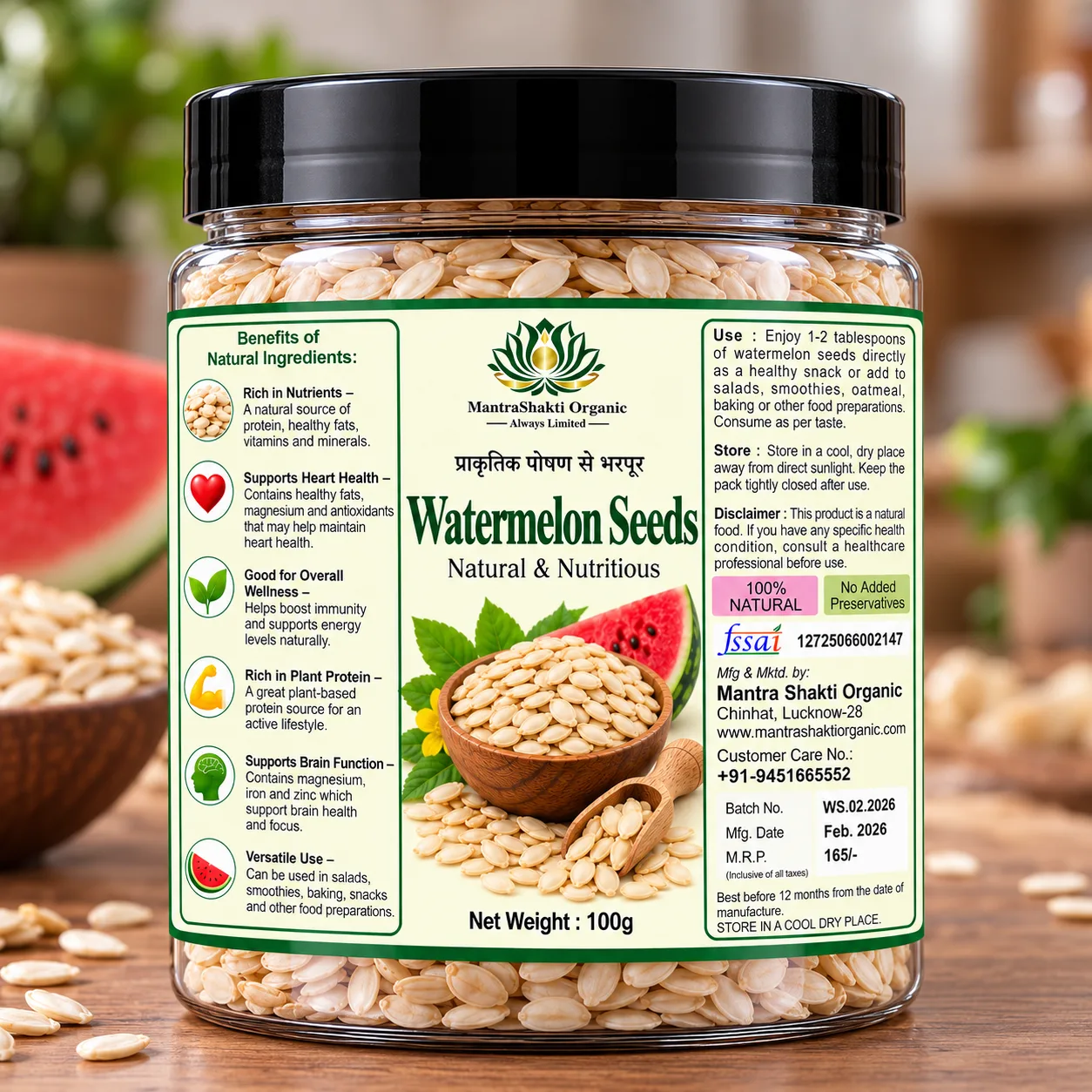
- Our watermelon seeds are shelled kernels, which is the magaz your thandai recipe asks for.
Is magaz one seed or several?
The honest answer is both. On its own, magaz usually means shelled melon-family kernels, often watermelon or muskmelon. As char magaz it is a four-seed blend, and, as you will see below, cooks and glossaries do not all agree on which four. This guide sorts out the word, the seeds, the dishes and the storage, and it makes no claims about what the seeds do for anyone. It is a kitchen guide.
What does the word magaz mean?
Magaz means the inside of something: the kernel, pith or essence. Platts’s dictionary of Urdu, Hindi and English, hosted by the University of Chicago, gives the sense as kernel, pith and pulp, and traces the word to Pehlavi (Middle Persian) mazg.
The Platts entry for magz lists brain and marrow among the senses, alongside kernel, pith, pulp and the crumb of bread, and then the figurative sense: the inside of anything, its chief substance or essence. English does the same thing when it talks about the heart or pith of a matter. So char magaz simply means four kernels. It is a word for the inside of a seed, nothing more.
What are the four seeds in char magaz?
Most cooking references list watermelon, muskmelon, pumpkin and cucumber seeds. Not every source agrees, so check what is actually in a pack.
Mamta’s Kitchen, an Indian recipe site, describes charmagaz as a mix of melon, watermelon, pumpkin and cucumber seeds. The Mangalorean Recipes glossary lists it as almonds, pumpkin seeds, cantaloupe seeds and watermelon seeds, and its author adds that the melon, watermelon, pumpkin and cucumber version is what they understand it to be as well. In other words, the classic idea is four melon-family kernels, but cooks and glossaries fill the fourth slot differently.
| Seed | Hindi name | Mamta’s Kitchen | Mangalorean Recipes glossary |
|---|---|---|---|
| Watermelon | Tarbooz | Yes | Yes |
| Muskmelon or cantaloupe | Kharbuja | Yes (as “melon”) | Yes (as cantaloupe) |
| Pumpkin | Kaddu | Yes | Yes |
| Cucumber | Kakdi or kheera | Yes | Named in a later line, as far as the author knows |
| Almond | Badam | No | Listed in the main entry in place of cucumber |
The practical rule: if a recipe says “char magaz” and your shop sells a mix, read the label to see which four seeds are in it, and if you are cooking for someone with a seed or nut allergy, do not assume.
Is magaz the same as watermelon seeds?
Partly. Shelled watermelon seeds are one of the kernels sold as magaz, but magaz is a wider word, and char magaz is a mix.
Indian recipe writers use the word both ways. Srivalli of Cooking4AllSeasons calls watermelon seeds “Magaz Tari” in Hindi, while Mamta’s Kitchen gives kharbuja beej (muskmelon seeds) as the name of its magaz burfi. So when a recipe says “magaz”, shelled watermelon or muskmelon kernels both fit; when it says “char magaz”, it wants the four-seed mix.
How do Indian kitchens use magaz?
In two ways: wet, as a paste or ground seed in drinks and gravies, and dry, roasted in ghee for sweets. The table shows the main uses.
| Dish | How magaz goes in | What the sources say |
|---|---|---|
| Thandai | Raw, ground with soaked almonds, fennel, poppy seeds, pepper and cardamom, then sieved | Cook With Manali’s thandai masala uses 2 tablespoons of watermelon seeds for 1 litre of milk |
| Creamy white gravies, such as makhmali paneer | Soaked, then ground to a smooth paste and added after the onion, garlic and ginger are sauteed | Srivalli uses 1/4 cup of melon seeds to make the gravy “very creamy” |
| Burfi | Peeled seeds fried in ghee until lightly browned, then set with sugar | Mamta’s Kitchen melon-seed burfi |
| Panjiri | Toasted in ghee along with other nuts and seeds | Archana’s Kitchen describes panjiri as a Punjabi sweet people snack on in winter |
| Ladoo, halwa, kheer and other mithai | Lightly roasted kernels for flavour and crunch | The Mangalorean Recipes glossary says char magaz adds flavour and a bit of crunch to a range of mithai |
How do you use magaz in thandai?
Grind it raw with the almonds and spices into one smooth paste, then whisk the paste into sweetened milk and sieve it. The seeds are a small part of the mix next to the almonds.
Cook With Manali’s thandai (updated June 2024) is a useful yardstick for proportions. For 1 litre of whole milk she grinds 35 to 40 blanched almonds, 20 black peppercorns, 4 teaspoons each of fennel and poppy seeds, 2 tablespoons of watermelon seeds and 15 to 20 green cardamom pods to a smooth paste, and sweetens the milk with about half a cup of sugar, rose water and saffron. She sieves the finished drink, because the ground seeds and almonds leave fibrous bits behind. Thandai is the milk drink many families make at Holi and through the summer, and you can chill it or serve it over ice.
How do you make a magaz paste for gravies?
Soak the kernels, grind them smooth with a little water, and add the paste once the onion base is cooked. It makes a gravy creamy without cream.
- Measure. A quarter cup of kernels is the quantity Srivalli uses to make one paneer gravy creamy.
- Wash and soak. Rinse the kernels and soak them in enough water to cover. The source does not give a time, so soak until a kernel crushes easily between your fingertips.
- Grind. Blend to a smooth paste, adding only as much water as the blender needs.
- Add late. Stir the paste in after the onion, garlic and ginger have been sauteed, and simmer gently.
- Keep the colour pale. Do not roast the kernels first; for a white gravy you want them raw.
Should you roast magaz, or use it raw?
Use it raw for thandai and gravies, and lightly roast it for sweets. Roasting deepens the flavour, but it also darkens the kernels, which you do not want in a white gravy.
The Washington State University Extension handout on nuts and seeds makes the general point: roasted or toasted nuts and seeds have a fuller flavour than raw, dried ones. It also warns that nuts keep browning after you take them off the heat, so avoid over-browning. Magaz kernels are small and thin, so they colour fast.
- Warm a heavy pan on a low flame. Add a little ghee if the recipe is a sweet, as Mamta’s Kitchen does for burfi, or use the dry pan.
- Spread the kernels in one layer and stir constantly.
- Watch the colour, not the clock. Take the pan off as soon as the kernels smell toasted and turn a pale gold at the edges. Mamta’s Kitchen fries them in ghee “until lightly browned”.
- Tip them onto a plate straight away so they stop cooking.
- Cool completely before they go into a jar, or the steam will dampen them.
How do you buy good magaz?
Buy small, buy dry and smell before you commit. Shelled kernels have no shell to protect them, so they go stale faster than seeds sold in their shells.
- Read the label. It should say which seeds are inside, whether it is a single kernel or char magaz, and give a packing date.
- Look for whole, dry, pale kernels without a powdery dust at the bottom of the pack.
- Smell a few. They should smell clean and faintly seedy. A sharp, stale or paint-like smell means the fat in them has turned rancid.
- Buy what you will use in a season, particularly before the monsoon, when damp air is hard on shelled kernels.
It helps to know where they come from. Mamta’s Kitchen notes the seeds were traditionally sun-dried, washed and peeled by hand, and that packaged, washed seeds are now common.
How do you store magaz so it does not go stale or rancid?
Keep it airtight, cool and dry, and put it in the fridge in an Indian summer. The oil in the kernels turns rancid with heat, air and damp.
The WSU Extension handout says most nuts need protection from oxygen and from the high temperatures that can make their fat rancid. It recommends an airtight plastic, metal or glass container kept below 70°F (about 21°C), and says that lower storage temperature means longer storage life. Those are temperate-climate figures, so read them as the ideal case. A Lucknow April or a humid monsoon week is harder on kernels than a Washington cupboard.
| Form | Where | How long |
|---|---|---|
| Raw shelled kernels | Airtight jar in the fridge | Several months |
| Raw shelled kernels | Airtight jar in a cool, dry cupboard | Not longer than 1 to 2 months, and less in summer heat |
| Roasted kernels | Airtight, cool | Use within 2 to 3 weeks |
| Ground thandai or gravy paste | Do not store | Grind only what you will use |
Two small habits help. Let a jar from the fridge come back to room temperature before you open it, because cold kernels draw moisture from the air and turn musty or rancid faster. And keep the jar away from strong smells, because shelled kernels pick up odours from other foods. If a kernel tastes bitter or smells sharp, throw the batch out rather than hiding it in a sweet.
Common mistakes
- Roasting magaz for thandai or a white gravy. Use it raw, soaked and ground.
- Over-browning for sweets. The kernels keep colouring after the pan comes off the heat.
- Putting warm kernels in a jar. Steam makes them damp and stale.
- Buying a large pack for a few spoonfuls. Kernels you use slowly are the ones that go rancid.
- Assuming “magaz” is one particular seed. Check the label, especially if there is an allergy at the table.
- Skipping the sieve in thandai. Ground almonds and seeds leave a gritty residue.
How we pack watermelon seeds
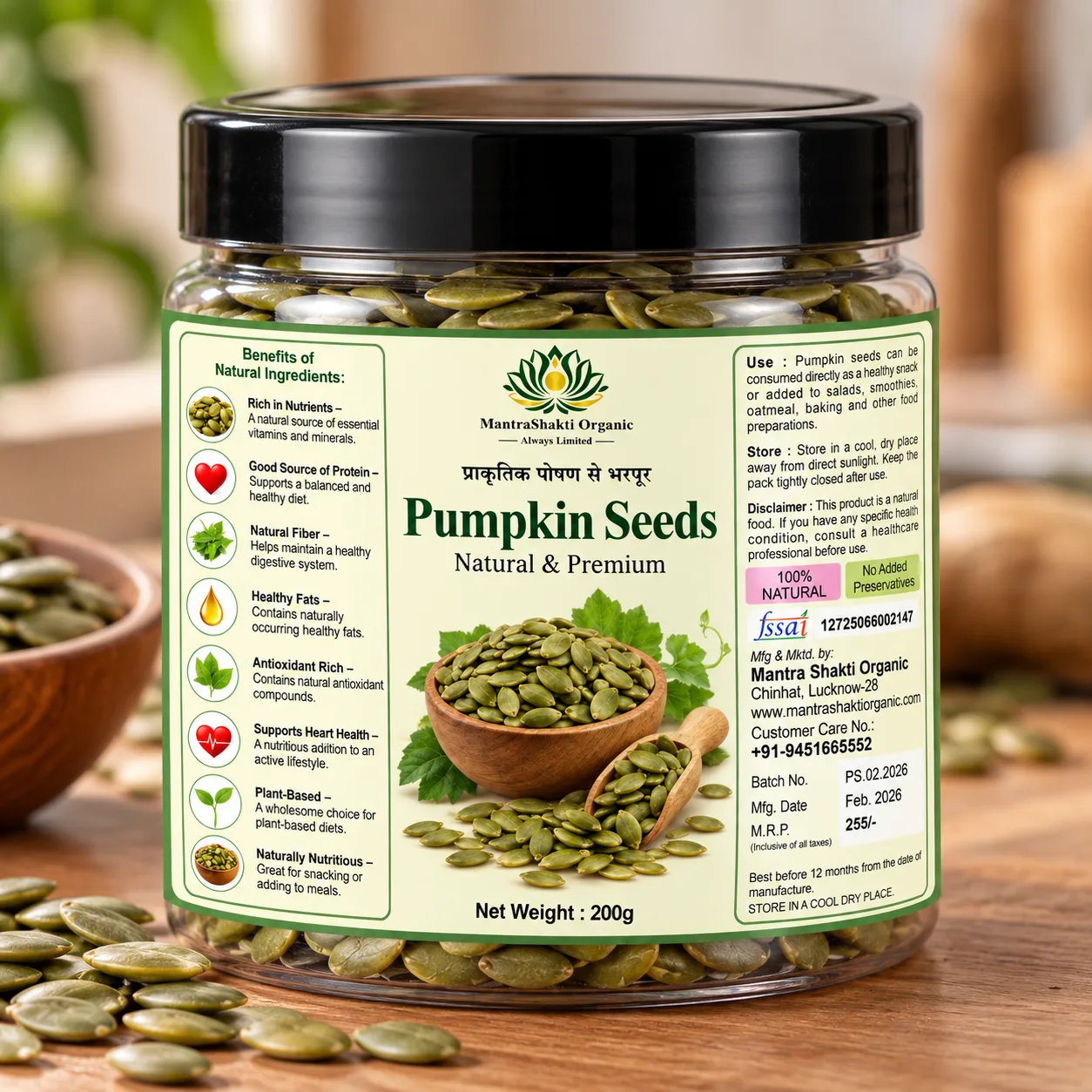
Our watermelon seeds are shelled kernels, the magaz of a thandai or ladoo recipe, at ₹165 for 100 g. It is a single-ingredient pack, packed in small lots in Lucknow under FSSAI licence 12725066002147. We also sell pumpkin seeds, one of the four seeds in the classic mix, but we do not sell a ready-made char magaz blend. You can see our other pantry packs in our pantry range, and read about the people who pack them in who makes MantraShakti Organic.
Frequently asked questions
What is magaz (मगज क्या होता है)?
Magaz is the soft inner kernel of a seed, sold shelled. In an Indian spice shop it usually means the shelled kernels of watermelon or muskmelon seeds. The word comes from a Persian root meaning the inside of something, such as kernel, pith or essence.
What are the four seeds in char magaz?
Most cooking references list watermelon, muskmelon, pumpkin and cucumber seeds. One glossary lists almonds, pumpkin, cantaloupe and watermelon instead, so mixes are not standardised. Read the label on the pack.
Is magaz the same as watermelon seeds?
Partly. Shelled watermelon seeds are one of the kernels sold as magaz, and one Indian recipe site lists them as magaz tari. But magaz is a wider word that also covers muskmelon kernels, and char magaz is a mix of four seeds.
How is magaz used in thandai, laddoo and korma-style gravies?
For thandai, it is ground raw with almonds and spices; one recipe uses 2 tablespoons of watermelon seeds for 1 litre of milk. For white gravies it is soaked and ground to a paste, about a quarter cup for one gravy in one recipe. For ladoo, burfi and panjiri it is lightly roasted, usually in ghee, for flavour and crunch.
Should you roast magaz before using it?
Roast it lightly for sweets and leave it raw for thandai and gravies. For sweets, toast it on a low flame until it smells toasted and turns pale gold, then take it off the heat at once because it keeps browning. For drinks and white gravies, soak and grind it raw.
How do you store magaz so it does not turn bitter or rancid?
Keep it in an airtight jar, away from heat, damp and strong smells. Extension-service guidance for shelled nuts and seeds is several months in the fridge, one to two months at room temperature, and two to three weeks for roasted kernels. In Indian summers, use the fridge and let the jar warm up before you open it.
What is magaz called in English?
Melon seeds, or melon seed kernels; recipe sites also write watermelon seeds. Char magaz is often given as a four-seed melon mix, or simply four seed kernels.
What does char magaz mean?
Char means four and magaz means kernel, so char magaz is four kernels. The seeds usually named are watermelon, muskmelon, pumpkin and cucumber, though mixes vary.
Sources and further reading
- Platts, A Dictionary of Urdu, Classical Hindi, and English (1884): magz — meaning and origin of the word
- Mamta’s Kitchen: Melon seed (magaz) burfi — the four seeds, roasting in ghee, how the seeds are prepared
- Mangalorean Recipes glossary: Charmagaz — an alternative list of the four seeds; use in mithai
- Cook With Manali: Thandai — thandai masala proportions
- Cooking4AllSeasons: Makhmali paneer — melon seed paste for a creamy gravy
- Archana’s Kitchen: Panjiri — melon seeds toasted in ghee for a winter sweet
- Washington State University Extension (Lewis County): Nuts and seeds — roasting, rancidity and storage of shelled nuts and seeds
Written by the MantraShakti Organic workshop team, Chinhat, Lucknow. We pack our foods in small lots; we are not doctors or dietitians, and this guide is general kitchen information, not medical advice. If you have a seed or nut allergy, a medical condition, are pregnant or take medication, ask a doctor before changing what you eat.
Shop this guide
Made by hand in small batches in Lucknow.
More from the Journal