
Switching from Toothpaste to Tooth Powder: The First Two Weeks
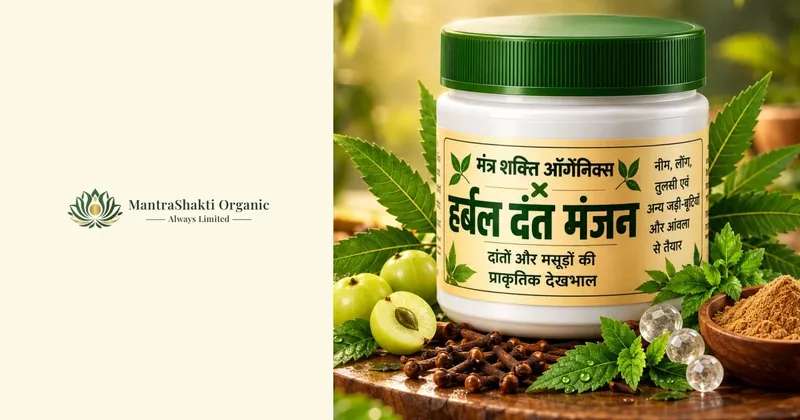
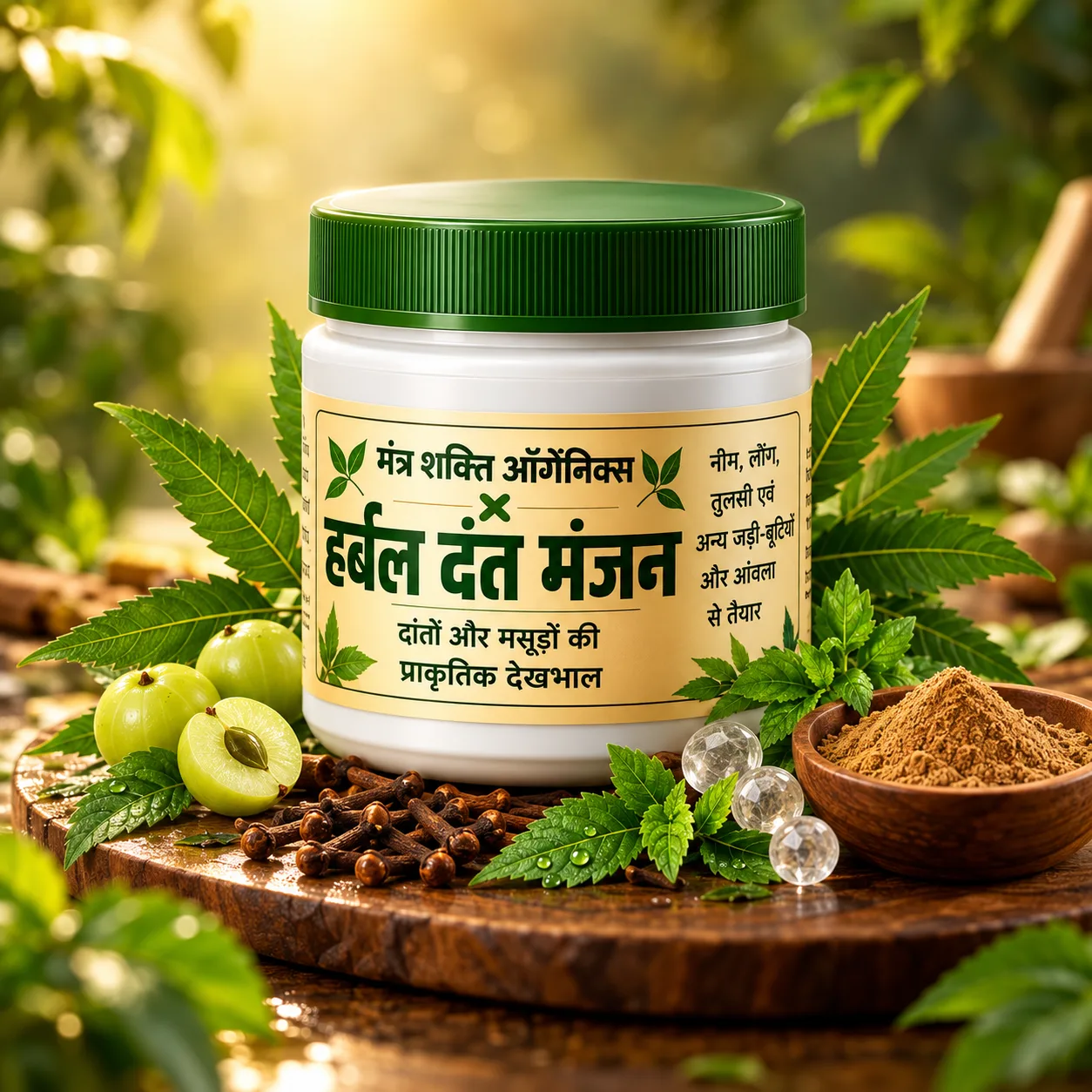
How to use dant manjan tooth powder
To use dant manjan, wet your toothbrush, tap or press the damp bristles into a small amount of the powder so a thin layer clings on, then brush gently for about two minutes as you normally would and rinse well. You can also use a clean finger instead of a brush. A little goes a long way, so start with less than you think you need and add more only if you want to.
Before anything else, two honest lines. We make tooth powder; we are not dentists. Nothing here is dental advice and nothing here should delay a visit to one. And on fluoride: this powder does not contain fluoride. Fluoride has well-established evidence for preventing tooth decay (Cochrane review, Walsh et al., 2019), so if cavity protection is your main priority, a fluoride toothpaste is the better-evidenced choice. Many people use a tooth powder like this one because they prefer a simple, handmade, plastic-free routine, not because it does something a toothpaste cannot.
We do not recommend this product for children, and children's dental care should be decided with a dentist.
What dant manjan is, and who it's for
Dant manjan is a dry tooth powder from the Indian household tradition of oral care. Ours is a hand-ground blend built around neem, clove (laung) and mint (pudina), along with other herbs. These herbs have a long history of traditional use in Ayurvedic mouth care; that is a statement about tradition, not a claim of clinical effect, and the two are not the same thing.
It suits an adult who already has a settled routine and wants to try a powder instead of a paste, usually for the tactile, low-packaging, small-batch appeal. It is probably not for you if you have active dental problems, sensitive teeth, recent dental work, or if you simply want the reassurance of fluoride. In those cases, stay with what your dentist has recommended.
A note on how a dry powder keeps: a tooth powder sits dry in its tin, and a dry powder does not provide the moist conditions bacteria need to grow, which is one reason powders have traditionally been sold this way. That is not the same as saying the powder is sterile or that it kills anything, because it is neither of those things.
How to switch: a simple first-two-weeks method
You do not need to go all-in on day one. The switch is mostly about your hand learning a new amount and a new texture.
- Days 1-3: Use the powder once a day, whichever brushing you are least rushed for, and keep your usual toothpaste for the other. Wet the brush, load a small amount, brush two minutes, rinse.
- Days 4-7: If the texture feels comfortable, move to the powder for both brushings. Expect to get the dose wrong a couple of times; too little feels like nothing, too much feels gritty. Adjust down.
- Week 2: Settle into a fixed amount. By now most people have found the pinch or the brush-tap that works for them and stop thinking about it.
There is no fixed schedule for how your mouth will feel, and anyone who gives you a day-by-day promise is guessing. Honestly, some people take to a powder immediately and some never enjoy the texture and go back to paste. Both are fine.
What tends to feel different (and what that is)
- The texture. A powder feels grittier at first than a smooth gel. That is the physical feel of a powder, not a sign of anything working or not working.
- No foam. There is little to no lather because there is no added foaming agent. Foam is a sensation, not a measure of cleaning.
- A stronger herbal, slightly salty taste. The clove and mint are noticeable and the taste is plainer than a flavoured paste. Most people adjust within a few days.
- Mess. Loose powder can spill. Damp-loading straight from the brush helps.
How much to use, and how long a tin lasts
The honest answer is that a little goes a long way. Each brushing uses only a thin layer of powder pressed onto a damp brush, far less than a ribbon of paste, so a 25g tin lasts a good while for one adult. Exactly how long depends entirely on how heavily you load the brush, so we would rather not quote you a day count we cannot promise. Start light, let your hand settle over the first week or two, and you will quickly get a feel for how long a tin lasts you.
On cost, the tin is ₹105 for 25g. It looks small next to a large toothpaste tube, but because each dose is so light, the running cost per brushing is modest. Weigh it up on the routine you actually want, not on tin size alone.
Why the tin is so small
A 25g tin looks tiny next to a 100g tube, and there is a real reason for it. The powder is hand-ground in small batches and contains no preservatives. A preservative-free powder is better sold in a small tin that gets used up while it is fresh than in a large drum that sits open, catching bathroom damp, for a year. The size is a freshness decision, not a stinginess one. It is the same small-batch thinking behind our handmade soap. It is also why we sieve every batch by hand, so the grind stays even.
Storage and shelf life
Keep the tin closed, dry and away from a wet basin, and take your dose with a dry hand or a dry-tapped brush so you never introduce water into the tin. Stored this way it stays good until the best-before date printed on the base of the tin. As with any dry product, if it ever smells off, clumps hard or changes colour, stop using it.
Limitations and when to see a dentist
This is a plain tooth powder for everyday adult use by people who want a handmade, fluoride-free option and understand that trade-off. It is not a treatment for anything. If you have tooth pain, bleeding, persistent bad taste, loose teeth, sensitivity or any change you are worried about, that is a reason to see a dentist, not to change your tooth powder. If you are unsure whether a fluoride-free routine is right for you, ask your dentist before switching.
As with anything new in your mouth, if you notice irritation, stop and give it a few days. Ready to try it? You can find the tin on the Herbal Dant Manjan product page, or browse the rest of our oral care range.
Frequently asked questions
How much tooth powder should I use per brushing?
Use a small amount; a thin layer is plenty. The simplest method is to wet your brush and tap the damp bristles into the powder so a thin layer sticks. Start with less than you think you need, because too much just feels gritty and gets wasted.
Should I apply it with a finger or a toothbrush?
Either works. A damp toothbrush is the easiest way to pick up an even amount and brush normally. A clean finger is a fine alternative if you prefer it or are travelling. Whichever you use, brush gently for about two minutes and rinse well afterwards.
How long does one tin last for one adult?
Because each brushing uses only a thin layer, a 25g tin lasts a good while for one adult, though exactly how long depends on how heavily you load the brush, so we would rather not promise a fixed number. Two people sharing a tin will finish it in roughly half the time, and using less per brushing stretches it further.
Does tooth powder expire?
Yes. A dry powder keeps well when stored closed and dry, but it still has a best-before date, printed on the base of the tin. Keep water out of the tin, and stop using it if it clumps hard, changes colour or smells off.
Why is the tin so small?
Because the powder is preservative-free and hand-ground in small batches. A small tin gets used while it is fresh; a large one sits open collecting bathroom damp. The 25g size is a freshness choice, so you finish each tin before it ages.
Can I alternate tooth powder with my usual toothpaste?
Yes, and many people do exactly that, especially in the first two weeks. A common approach is the powder for one brushing and a fluoride toothpaste for the other, which keeps fluoride in your routine while you get used to the powder. Alternating like this is a practical way to ease the switch.
Written by the MantraShakti Organic workshop team, Chinhat, Lucknow. Last reviewed: 26 September 2026. We make tooth powder; we are not dentists, and nothing here is dental advice.
Shop this guide
Made by hand in small batches in Lucknow.
More from the Journal
19 Nov 2026 · 12 min