
Chandan Soap, Gulab Soap and Musk Soap: Where the Scents Come From
Is chandan soap made with real sandalwood?
Not necessarily. Genuine sandalwood scent comes from the oil of Santalum album heartwood, one of the most precious materials in perfumery, so a chandan soap may be scented with that oil, with a blend, or with laboratory-made woody aroma compounds. The label and the maker's own description tell you which; the name alone does not.
This guide covers three scents named on many Indian bath bars, gulab (rose), chandan (sandalwood) and musk, and the Kannauj attar tradition. It explains where each scent comes from, how to read a label, and why a soap's name is not a list of ingredients.
Key takeaways
- Real sandalwood oil is steam-distilled from the heartwood of Santalum album, a tree that takes decades to mature and is rated Vulnerable by the IUCN. A 2012 Indian review priced the oil at ₹300,000 a kilogram at a Karnataka Government outlet.
- Rose oil is distilled from petals in tiny yields: a review of Bulgarian damask rose reports 0.032 to 0.049 per cent by weight, roughly 2,000 to 3,000 kg of petals per kilogram of oil. Rose water (gulab jal) is the fragrant water from distilling.
- Kannauj in Uttar Pradesh is famous for attar, made by the deg-bhapka method on a sandalwood oil base. Kannauj perfumes received a Geographical Indication tag in 2014.
- Natural musk comes from the gland of the male musk deer, an endangered animal whose Indian populations are in CITES Appendix I. On a modern soap, "musk" usually names a scent family.
- "Fragrance" or "parfum" on a label can cover natural oils, laboratory-made aroma compounds or both. Patch test any scented bar.
- We describe our bars by scent only. We have not published the fragrance composition of any Divya Snan bar.
What gives sandalwood its smell, and why is it so costly?
Sandalwood's scent comes from the oil in the heartwood of Santalum album, the Indian sandalwood tree, and the oil is costly because the tree is slow-growing, scarce and, for years, state-controlled. A review in Current Science by A. N. Arun Kumar, Geeta Joshi and H. Y. Mohan Ram sets out the facts.
- How the oil is made. It is obtained by steam distillation of heartwood powder.
- How long the tree takes. The review notes it was recognised as early as 1894 that the tree reaches a commercially useful size at 27 to 30 years.
- How costly it is. It calls sandalwood the second most expensive wood in the world, and records the oil at ₹1,500 for 5 g, or ₹300,000 a kilogram, at a Karnataka Government outlet in 2012.
- How scarce it is. The review says the state monopoly on sandalwood trade and its consequences pushed the species into the Vulnerable category of the IUCN Red List.
Perfumers value the oil because its santalols are good fixatives. The review says most Indian attars use sandalwood oil as the base because it absorbs the delicate notes of flowers and herbs and gives them stability. It also notes that the scarcity of the oil has driven a search for synthetic raw materials that imitate its odour.
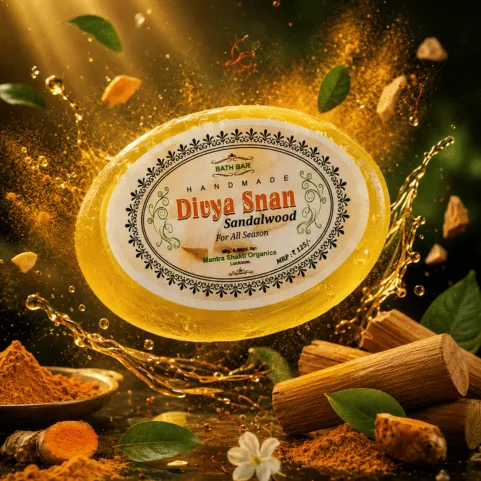
For a soap, that means "chandan" or "sandalwood" can describe real sandalwood oil, a blend with other woody materials, or a laboratory-made sandalwood-type aroma compound. None of these is automatically wrong. They differ in cost and in what you can fairly assume, which is why we describe our Sandalwood bar as sandalwood-scented and nothing more.
What gives a rose (gulab) soap its smell?
A rose scent comes from rose petals, usually damask rose (Rosa damascena), distilled with steam into rose oil and rose water, or from a laboratory-made rose-type fragrance. Rose oil is costly because the yield is tiny: a review of Bulgarian damask rose reports 0.032 to 0.049 per cent oil by weight. That is simple arithmetic for roughly 2,000 to 3,000 kg of petals per kilogram of oil.
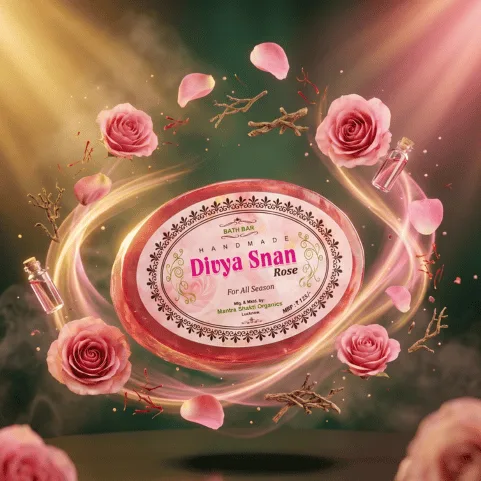
Rose water, or gulab jal, is the fragrant water collected in the same distillation, and it is a different material from the oil. A soap sold as a "gulab jal" soap is describing rose water in the formula, and the ingredient list shows whether rose oil is there too. In Kannauj, the flowers for attar are picked at dawn, according to Outlook India. We describe our Rose bar by its fragrance, a rose (gulab) scent, and do not publish what produces it.
What is the Kannauj attar tradition?
Attar, or ittar, is a perfume oil captured by distilling flowers, herbs or even dry earth into a base of sandalwood oil, and Kannauj in Uttar Pradesh is its most famous centre. The traditional method is called deg-bhapka. Outlook India describes it like this: a copper still (the deg) holds the ingredients and water, sealed with clay and heated in a furnace fired with wood and dung; the vapour travels through a bamboo pipe into a copper receiver (the bhapka) standing in cold water, where it condenses onto a base, usually sandalwood oil.
The flowers include rose, kewra, jasmine and marigold, and the specialities include "mitti attar", which captures the smell of rain on dry earth, and "shamama", a blend of herbs and spices. The same article reports that Kannauj perfumes received a Geographical Indication tag in 2014. It also notes that the craft depends on years of experience.
Attar is a slow, hand-distilled perfume oil. A bath bar's scent is usually a different thing: a fragrance blend mixed into the soap. It may include real attar, other natural oils, aroma compounds or all of these, and the ingredient list may say only "fragrance". If a soap says "attar", it is a claim worth asking the maker about.
What is musk in soap, and does it come from a deer?
Natural musk is a secretion from a gland of the male musk deer, an animal that is endangered in the Himalayas, so natural musk is not something a soap bar should be assumed to contain. Animal Diversity Web at the University of Michigan notes that the musk pod is found only in males, that poaching for musk and habitat loss have greatly reduced the Himalayan population, and that the species is listed as Endangered by the IUCN. It lists the populations of India, Afghanistan, Nepal and Pakistan in CITES Appendix I, the strictest level of international trade control.
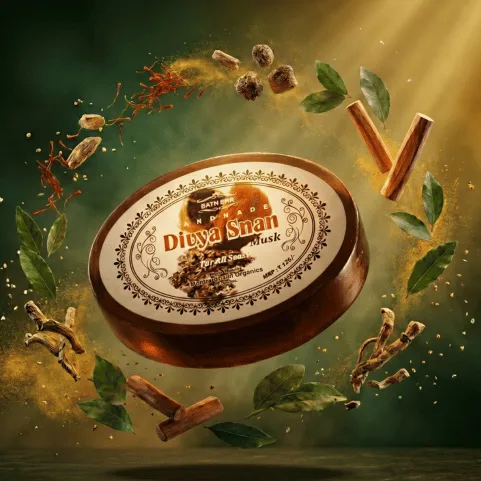
So what does "musk" mean on a modern soap? A general reference on musk notes that nearly all musk fragrance used in perfumery today is synthetic, often called "white musk", and that some plants, such as Abelmoschus moschatus (musk seed), produce musky-smelling compounds used as substitutes. In practice, "musk" on a soap usually names a scent family: warm, soft and skin-like, not animal-derived. We describe our Musk bar as having a warm, musky fragrance, and we do not state what produces it.
Chandan sabun kaisa hota hai? Gulab sabun kaisa hota hai?
In short: a chandan or gulab soap is named for a scent, and the name does not say what makes the scent. Real sandalwood oil is costly and comes from the Santalum album tree; rose scent can come from rose oil, rose water or a laboratory-made fragrance.
Hinglish mein: chandan sabun ki khushboo chandan (sandalwood) par based hoti hai. Asli chandan ka tel Santalum album ke heartwood se nikalta hai aur mehnga hota hai, isliye naam mein "chandan" hone ka matlab yeh nahin ki sabun mein asli tel hai. Gulab sabun ki khushboo gulab ke tel, gulab jal ya taiyaar fragrance se aa sakti hai. Ingredient list padhein, ya banane wale se poochhein.
How do you read a scent claim on a soap label?
Read the product name, then the ingredient list, and take the name as a description of the scent, not of the contents. The table shows what each wording does and does not tell you.
| What the pack says | What it tells you | What it does not tell you |
|---|---|---|
| "Sandalwood" or "chandan" in the product name | The scent the maker is aiming for | Whether sandalwood oil is in the bar |
| "Sandalwood-scented", "rose fragrance", "musky fragrance" | The character of the scent | What the scent is made from |
| A botanical name such as Santalum album in the ingredients | Material from the sandalwood tree itself is named | How much, or whether it is the whole scent |
| "Fragrance" or "parfum" | A blend of scent materials listed as one item | Which materials: natural oils, aroma compounds or both |
| "Rose water" or "gulab jal" | Rose water is in the formula | That rose oil is, or how strong the scent is |
| "Attar" or "ittar" | A distilled perfume oil on a base, traditionally sandalwood | Whether it is traditional Kannauj attar, unless the maker says so |
| "Musk" in the product name | A musky scent family | That it contains animal musk; modern musk notes usually do not |
To check a scent claim, work through these steps:
- Read the name as a scent. "Chandan", "gulab" and "musk" tell you what the soap smells like.
- Read the ingredient list. Look for botanical names, rose water, or the single word "fragrance".
- Remember the cost of the raw materials. Real sandalwood oil is among the costliest perfumery materials, so ask what the scent is made from if it matters to you.
- Ask the maker. A maker who knows the scent source can say whether it is a natural oil, an aroma compound or a blend.
- Patch test. Lather a little on the inner forearm, rinse, and watch the skin for at least 48 hours before full use.
Why does a soap's scent fade after a bath, and which scents last longest?
A soap's scent fades because a bar is rinsed off within minutes, so only a trace stays on skin, and light, volatile notes evaporate first. Heavier woody and musky notes tend to linger longer than light citrus ones. The Current Science review describes sandalwood's santalols as good fixatives, which is why sandalwood oil is used to hold other notes in perfumes and attars. How long a scent lasts on you also depends on the soap, your water and your skin.
Can sandalwood, rose or musk soap cause a reaction?
Any scented product can. The US Food and Drug Administration notes that some fragrance components may cause allergic reactions or sensitivities in some people, and it notes that fragrance can be listed simply as "Fragrance". Patch test a new bar. If you have a skin condition, an allergy, are pregnant, or take medication, ask a doctor before changing your soap.
Common mistakes when choosing a scented soap
- Reading the name as an ingredient list. "Chandan" names a scent; the label shows the contents.
- Assuming "musk" means animal musk. It usually does not today, and natural musk is tied to an endangered animal.
- Assuming every rose soap holds rose oil. Rose oil yields are tiny, so check for rose water or oil in the ingredients.
- Taking "attar" at face value. Ask whether it is a traditional distilled attar or a fragrance blend.
- Expecting the scent to last all day. A rinse-off bar leaves only a trace.
- Skipping the patch test. Any fragrance can bother some skin.
How we describe our scented bars
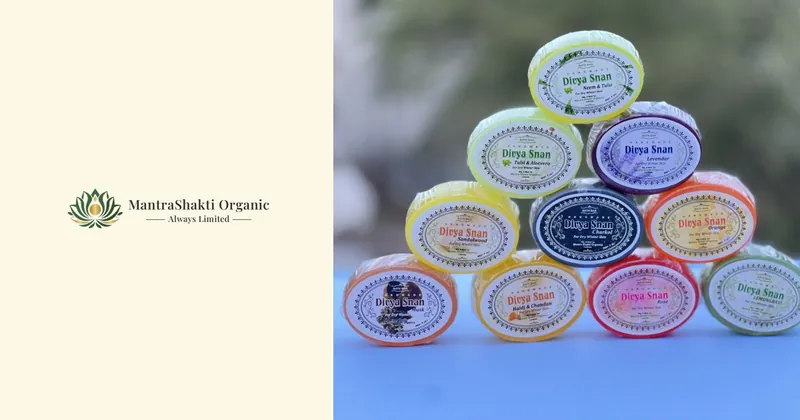
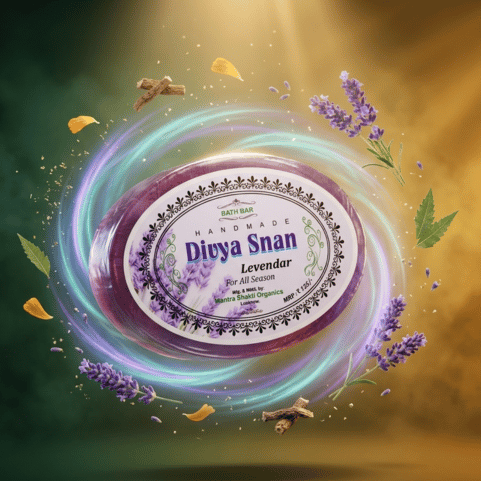
We make the Divya Snan bars by hand in small batches at our family workshop in Chinhat, Lucknow, and we describe them by scent only: the Rose bar by its rose (gulab) fragrance, the Sandalwood bar as sandalwood-scented, the Musk bar as a warm, musky fragrance, and the Lavender and Haldi & Chandan bars by their names. We have not published the fragrance composition of any bar, so we do not say whether one uses essential oils, attar or aroma compounds. For questions about a particular bar, write to care@mantrashaktiorganic.com. Our guide to choosing a Divya Snan bar compares the scents side by side.
Frequently asked questions
Is sandalwood soap made with real sandalwood?
Not necessarily. Real sandalwood oil comes from the heartwood of Santalum album and is very costly, so a sandalwood or chandan soap may be scented with that oil, a blend, or laboratory-made woody aroma compounds. Check the ingredient list for a botanical name, and ask the maker.
What gives a rose (gulab) soap its smell?
Rose scent can come from rose oil or rose water distilled from petals, usually damask rose, or from a laboratory-made rose-type fragrance. A review of Bulgarian damask rose reports an oil yield of only 0.032 to 0.049 per cent by weight, which is why true rose oil is costly.
What is musk in soap, and does it come from a deer?
Natural musk is a secretion from the gland of the male musk deer, an endangered animal whose Indian populations are listed in CITES Appendix I. A general reference notes that nearly all musk fragrance in perfumery today is synthetic. On a soap, musk usually names a scent family, not an animal ingredient.
Chandan sabun kaisa hota hai?
Chandan sabun ki khushboo chandan (sandalwood) par based hoti hai. Asli chandan ka tel Santalum album ke heartwood se nikalta hai aur mehnga hota hai, isliye naam mein chandan hone ka matlab yeh nahin ki asli tel hai. Ingredient list dekhein ya banane wale se poochhein.
Why does a soap's scent fade after a bath, and which scents last longest?
A bar is rinsed off within minutes, so only a trace of scent stays on skin. Light, volatile notes such as citrus fade first, while heavier woody or musky notes tend to linger longer. The Current Science review describes sandalwood's santalols as good fixatives, which is why they hold other notes in perfumes.
What is Kannauj attar, and is it used in soap?
Attar, or ittar, is a perfume oil distilled from flowers, herbs or earth into a base such as sandalwood oil, using the deg-bhapka method; Kannauj in Uttar Pradesh is its most famous centre. Whether a soap uses attar is for its maker to say, and we do not state it for ours.
What does "fragrance" or "parfum" mean on a soap label?
It is a blend of scent materials listed as one item. The US FDA notes that fragrance can be listed simply as "Fragrance" instead of naming each component. The blend can include natural oils, laboratory-made aroma compounds or both, so ask the maker if the source matters to you.
Can sandalwood, rose or musk soap cause a reaction?
Any scented product can. The US FDA notes that some fragrance components may cause allergic reactions or sensitivities in some people. Patch test a new bar on the inner forearm, and if you have a skin condition or an allergy, ask a doctor before changing soaps.
Sources and further reading
- Kumar ANA, Joshi G, Mohan Ram HY. Sandalwood: history, uses, present status and the future. Current Science, 2012;103(12):1408-1416
- Mahboubi M. Rosa damascena as holy ancient herb with novel applications. J Tradit Complement Med, 2016 (oil yield figures)
- Gangopadhyay U. Do you know why Kannauj is called the perfume capital of India? Outlook India, 2022 (updated 2024)
- Animal Diversity Web, University of Michigan Museum of Zoology: Moschus chrysogaster (musk deer)
- Wikipedia: Musk (overview of animal, synthetic and plant-derived musk)
- US Food and Drug Administration: Fragrances in Cosmetics
Written by the MantraShakti Organic workshop team, Chinhat, Lucknow. This guide is general information about soap scents, not medical advice. If your skin reacts to a product, stop using it and ask a doctor.
Shop this guide
Made by hand in small batches in Lucknow.
More from the Journal
18 Sep 2026 · 6 min
Cold-Process vs Melt-and-Pour Soap: How Our Divya Snan Bars Are Made
Read more →